Politics
/ArcaMax

Mary McNamara: The golden idol at the center of Trump's presidential library is a terrible idea -- even for him
The recently revised food pyramid may put fruit as a medium priority, but there is nothing the Trump administration likes more than the apple of discord.
Every news cycle, the president seems intent on introducing something new for Americans to argue about: the wisdom (and legality) of war in Iraq; the term “affordability”; the efficacy of ...Read more
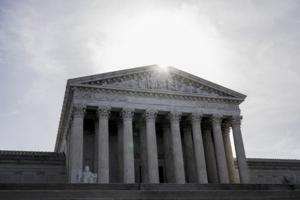
Editorial: A victory for the First Amendment at the high court
Progressives wasted no time characterizing the Supreme Court’s decision Tuesday on “conversion therapy” as an attack on the LGBTQ community. It is no such thing, representing instead a victory for the First Amendment.
The justices ruled 8-1 in favor of a religious counselor who challenged a 2019 Colorado law banning attempts to “change ...Read more

Commentary: How the White House can cut prices at the pump -- and elsewhere
Gas and diesel prices have soared since the start of the Iran war, but the situation could get even worse later this year because of ethanol requirements and problems with fertilizer supply chains.
To help keep a lid on prices at the pump, just days ago, the Environmental Protection Agency waived the summertime cap on the amount of ethanol ...Read more
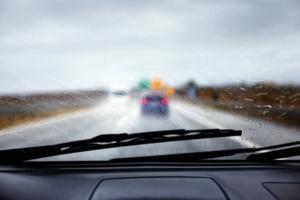
John M. Crisp: I have a car that drives itself; you should have one, too
No one has ever accused me of being overly eager to adopt emerging technologies.
Our house came with an automated irrigation system, but we haven’t used it in years. I write on a word processor, of course, but I keep seven manual typewriters around. I still enjoy the old-fashioned thwack of keys against the platen. I understand that there is ...Read more

Commentary: Donald Trump's gut instincts on Iran have failed since his first term
President Donald Trump once remarked that his intuition and instincts were the key factors separating him from the mere mortals trying to negotiate good deals. “I have a gut, and my gut tells me more sometimes than anybody else’s brain can ever tell me,” the president said at one point during his first term.
And in many cases, Trump’s ...Read more

Mary Ellen Klas: A crackdown on Dreamers is a crackdown on the American Dream
As a high-achieving college kid, Alex Vallejo wasn’t surprised by the kind of young people he met at the Society of Hispanic Professional Engineers’ national conference in Salt Lake City three years ago. Like him, there were other computer-science students who were in their school robotics clubs. Like him, there were other web developers and...Read more

Allison Schrager: $100,000 in Social Security benefits is too much
When someone says a retiree is “living off Social Security,” it’s not usually $100,000 a year. But some U.S. retired couples will be receiving that much in a few years — and a proposal to cap their benefit at that amount has started a painful and much-needed conversation about who should get government benefits and how much.
America’s...Read more

Editorial: Cool it on piling extra energy regulations on new home construction
The Chicago suburb of Naperville already has an extensive system of building codes and inspections, so when it began to consider adding another layer earlier this year, area homebuilders were alarmed.
Adopting a “stretch” energy code that goes beyond existing conservation requirements would add thousands of dollars to the cost of a new home...Read more

Commentary: The tax-season trap: When refunds become a child care safety net
Most parents are more than happy to receive a tax refund. That money can help pay bills, fund a long-overdue vacation or simply offer breathing room. But for too many families, especially Black families, that refund is not extra. It too often becomes a temporary relief from a child care gap created by school systems that are no longer designed ...Read more

Editorial: The fallout of California's minimum wage folly
Some things in life are difficult. Predicting the negative consequences of exorbitant and rapid minimum wage hikes isn’t one of them.
In 2023, California Gov. Gavin Newsom signed a $20-an-hour minimum wage law for fast-food workers. It went into effect in April 2024. For all workers, the minimum wage in California is $16.90 an hour.
This ...Read more

Editorial: Pete Hegseth's holy war
As Donald Trump’s war with Iran grows more volatile by the day, Defense Secretary Pete Hegseth’s bloodthirst and proselytizing risks spinning the conflagration further out of control.
In a war with no clear purpose, Hegseth has celebrated unleashing “death and destruction from the sky all day long.” He also has dismissed international ...Read more
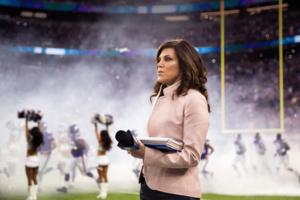
Rochelle Olson: As gas prices soar, Tafoya wants Americans to eat cake
Let’s talk about U.S. Senate candidate Michele Tafoya’s viral quote about Starbucks, war and patriotism.
The Republican podcaster and former TV sports reporter is running to become one of two U.S. senators from Minnesota, succeeding the retiring DFL Sen. Tina Smith.
Her entry into the race has given us a front-row seat to Tafoya’s ...Read more

Editorial: Federal workers go without pay as lawmakers take a break
Let them eat giant turkey legs.
Members of Congress have been spotted at Disney World, home of the enormous treat, at casinos and ballgames during their two-week, so-called “work from district” time. Right after the Senate adjourned, Sen. Lindsey Graham, R-S.C., was spotted at Disney World with a bubble wand. Graham claims he was there to ...Read more

Commentary: How will Iran war end? Americans' pain will become unbearable
Caskets demand explanations.
Thirteen American service members have been killed and more than 300 wounded since President Donald Trump and Israeli President Benjamin Netanyahu launched their war against Iran a month ago. For the families who’ve lost sons and daughters, the American commander in chief’s shifting explanations for the war are ...Read more
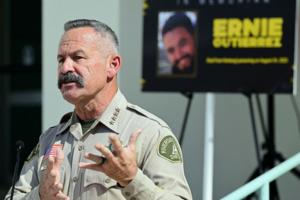
Anita Chabria: The real questions facing the courts after Riverside County sheriff seized those ballots
Riverside County Sheriff Chad Bianco says he'd like to be our governor, but more and more, it's looking to me like the real goal for the far-right provocateur is just to be MAGA-famous.
That's cool. That's fine. Honestly, who in Southern California hasn't dreamed of their 15 minutes? And he certainly has the cop-stache to play the role of rogue...Read more
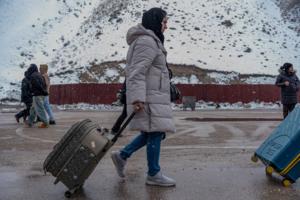
Commentary: At Passover, I think of families like mine, forced to wander
The Soviets labeled my grandparents “ bezhenets.” It’s the only Russian word my grandmother Peshke uttered in the hours of testimony she gave about the six years she and my grandfather Mottel spent as refugees in the Soviet Union during World War II.
Bezh e nets literally translates to the “ones who run.” But as I researched my ...Read more
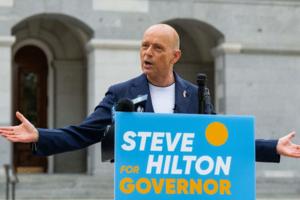
Robin Abcarian: Not even the threat of two Republicans facing off for governor will drive Dems out of the race
It's difficult to imagine that, come the general election, California voters will be asked to choose between two Republicans for their next governor.
Scratch that. It's actually the stuff of nightmares.
We aren't talking Arnold Schwarzenegger-style moderate Republicans who could end up vying to lead this very blue state. We are talking about a...Read more
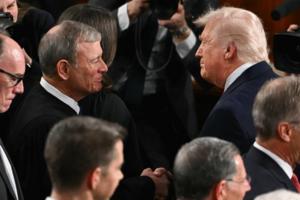
Commentary: Trump's 'rogue judges' rhetoric breaches his oath
President Donald Trump asked Congress last Wednesday to pass legislation that “cracks down on rogue judges.”
Trump has repeatedly blasted jurists who issue decisions he doesn’t like, even calling them “criminals” and “a disgrace to our nation.” But demanding that the legislative branch enact laws that punish the judiciary is a ...Read more

Jill Burcum: Two deaths, zero accountability
MINNEAPOLIS — An alarming question remains unanswered after the deaths of Minnesotans Renee Good and Alex Pretti earlier this year:
Does the United States now have a federal immigration force that can kill Americans in front of the public yet operates beyond accountability’s reach?
Good, a 37-year-old mom and poet, and Pretti, a 37-year-...Read more

Commentary: You're rooting for eagle eggs. What about chickens this Easter?
As Easter approaches — a holiday centered on renewal and new life — millions of people are glued to a livestream in Big Bear, California, watching a bald eagle named Jackie tend to her eggs. After ravens destroyed her earlier clutch, viewers mourned alongside her. Now they’re cheering her on, hoping the eggs hatch safely.
It’s moving to...Read more
Related Channels

ACLU
By The ACLU

Amy Goodman
By Amy Goodman

Armstrong Williams
By Armstrong Williams

Austin Bay
By Austin Bay

Ben Shapiro
By Ben Shapiro

Betsy McCaughey
By Betsy McCaughey

Bill Press
By Bill Press

Bonnie Jean Feldkamp
By Bonnie Jean Feldkamp

Cal Thomas
By Cal Thomas

Clarence Page
By Clarence Page

Danny Tyree
By Danny Tyree

David Harsanyi
By David Harsanyi

Debra Saunders
By Debra Saunders

Dennis Prager
By Dennis Prager

Dick Polman
By Dick Polman

Erick Erickson
By Erick Erickson

Froma Harrop
By Froma Harrop

Jacob Sullum
By Jacob Sullum

Jamie Stiehm
By Jamie Stiehm

Jeff Robbins
By Jeff Robbins

Jessica Johnson
By Jessica Johnson

Jim Hightower
By Jim Hightower

Joe Conason
By Joe Conason

John Stossel
By John Stossel

Josh Hammer
By Josh Hammer

Judge Andrew Napolitano
By Judge Andrew P. Napolitano

Laura Hollis
By Laura Hollis

Marc Munroe Dion
By Marc Munroe Dion

Michael Barone
By Michael Barone

Mona Charen
By Mona Charen

Rachel Marsden
By Rachel Marsden

Rich Lowry
By Rich Lowry

Robert B. Reich
By Robert B. Reich

Ruben Navarrett Jr
By Ruben Navarrett Jr.

Ruth Marcus
By Ruth Marcus

S.E. Cupp
By S.E. Cupp

Salena Zito
By Salena Zito

Star Parker
By Star Parker

Stephen Moore
By Stephen Moore

Susan Estrich
By Susan Estrich

Ted Rall
By Ted Rall

Terence P. Jeffrey
By Terence P. Jeffrey

Tim Graham
By Tim Graham

Tom Purcell
By Tom Purcell

Veronique de Rugy
By Veronique de Rugy

Victor Joecks
By Victor Joecks

Wayne Allyn Root
By Wayne Allyn Root
Comics