Gautam Mukunda: Americans are better preppers than their government
Published in Op Eds
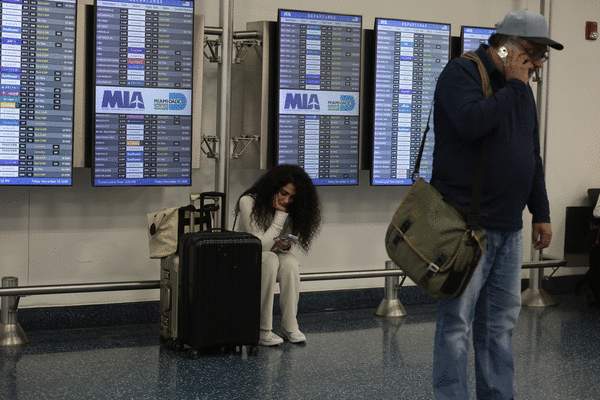
Shortly after the tech outages and glitches that plagued airports, inboxes and surveillance networks in November, Vice President JD Vance was asked whether Americans should prepare for a crisis. “My answer to that is no,” he said. Maybe so, but Americans don’t seem to be listening: Retailers such as Walmart and Costco are reporting increased sales of everything from propane tanks to canned food.
Even if the disaster never comes, U.S. families are showing more foresight than their government. For decades, U.S. politicians have explained that acting on climate change is something that the country just can’t afford, even though it can afford to pour 3% of GDP into a speculative AI buildout. The difference is who suffers from the disasters — and who profits from the investments.
The damage is mounting. In the 1980s, the U.S. averaged 82 days between weather and climate disasters that did at least $1 billion in damage. Over the past decade, the gap shrank to 16 days, according to Climate Central. Climate disasters cost all of us. Rising seas caused by climate change added about $8 billion, or 13%, to the damage from Hurricane Sandy in 2012, according to a Climate Central study. Congress approved $50.5 billion in disaster aid, most of it for Sandy, paid for by taxpayers everywhere.
In 2016, The Army Corps of Engineers began studying how to protect New York Harbor from the next Sandy. Its most ambitious option, a sea wall across the mouth of the harbor, carried an estimated price of $119 billion. In January 2020, President Donald Trump called it “a costly, foolish & environmentally unfriendly idea.” Weeks later, the study lost its funding. The money was restored in 2021, and in 2022 the Corps proposed a $52.6 billion plan. The same reasoning, and result, returned in Trump’s second term.
Protection might be expensive, but it pays. The Congressional Budget Office estimated in October that each dollar spent on flood protection would cut future flood damage by $3 to $4 over 30 years, not counting deaths and injuries. The National Institute of Building Sciences, a nonprofit established by Congress, estimates that federal mitigation grants since 1995 will ultimately save $6 for every $1 they cost.
And it’s not nearly as expensive as AI. Research from Columbia Business School estimates that the AI buildout will cost about $9 trillion from 2025 through 2032, averaging 3.2% of GDP a year. That’s a bigger share of the economy than the railroads absorbed from 1870 to 1890 (2.24%) or the interstate highways from 1956 to 1973 (1.13%). At the buildout’s average pace, the price of that sea wall goes into AI about every five and a half weeks. And unlike protection against climate disasters, it’s an open question whether those AI investments will pay off.
This isn’t an American problem, or a recent one. In Victorian London, cleaning up the Thames, which served as the city’s main sewer, was seen as too expensive even as cholera killed 14,137 Londoners in 1849 and 10,738 in 1854. The Metropolitan Board of Works wanted to rebuild the sewers but didn’t have the money, and Parliament argued over who should pay. A proposal to treat London’s sewage as “an Imperial matter,” paid for by the whole country, collapsed after objections from outside London.
Then came the hot summer of 1858. The river began to reek so badly the Palace of Westminster’s curtains were soaked in chloride of lime to block the smell. It barely helped. On July 15, Benjamin Disraeli, then chancellor of the Exchequer, introduced a bill letting the board borrow £3 million with a Treasury guarantee, to be repaid by a tax on Londoners over 40 years. The bill became law in 18 days. Thousands of deaths in the city hadn’t produced the money. A stink in Parliament’s own chamber did.
The contrast between the willingness to pour money into AI and the refusal to pay for climate adaptation is another example of the pathologies that happen when gains are private and losses public. Investors who believe they might profit are willing to commit trillions of dollars to speculative AI investments, even as politicians are uninterested in spending money to avert virtually certain future disasters. From 2005 through 2014, under presidents of both parties, the federal government committed at least $277.6 billion to disaster assistance and just $600 million to FEMA’s program for reducing risk in advance. Trump ended his 2020 post about the sea wall by telling New Yorkers: “Sorry, you’ll just have to get your mops & buckets ready!”
Now some Americans have decided to take that advice. That might help their families, but climate change is not something that can be addressed family by family. The argument that we “can’t afford” to protect against climate disasters is no longer believable. The AI buildout has shown that we can. We’re just ignoring the smell.
____
This column reflects the personal views of the author and does not necessarily reflect the opinion of the editorial board or Bloomberg LP and its owners.
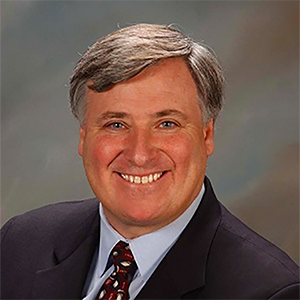
Gautam Mukunda writes about corporate management and innovation. He teaches leadership at the Yale School of Management and is the author of "Indispensable: When Leaders Really Matter."
©2026 Bloomberg L.P. Visit bloomberg.com/opinion. Distributed by Tribune Content Agency, LLC.









































Comments