Commentary: The next big hurdle for Democrats is finding ideological balance
Published in Op Eds
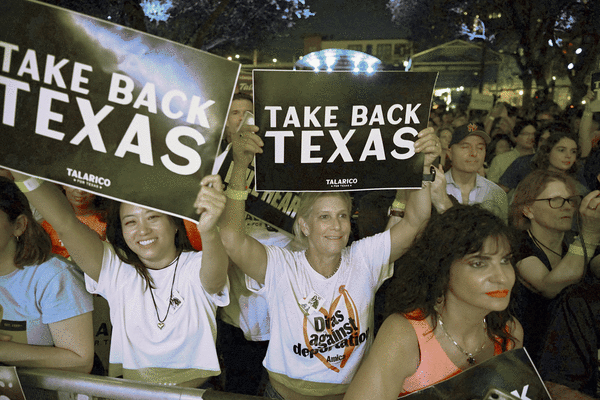
The 2028 presidential election kicked off moments after the polls closed Nov. 3. Ambitious and impatient politicians on both sides of the national aisle already are in high gear, posturing and pontificating on talk shows, podcasts and social media.
There are problems. For Republicans, it means maneuvering around the massive lame-duck boulder known as President Donald Trump.
For Democrats, the blue wave and their stunning victories across the national landscape are bound to lead to unrealistic expectations for future presidential aspirants.
A lot of Democrats may be jumping into the race.
“I just met with my 29th person who’s thinking about running for president the United States,” Jim Messina, campaign manager to former President Barack Obama, said on Bloomberg News shortly before the polls closed. “Just on the Democratic side,” he added. “Everyone is kicking tires.”
As they all ponder and pose, the presidential wannabes bring wide diversity in ideology, demographics and viability. They also will offer wildly diverse interpretations of their blue wave wipeout.
Our time finally has arrived, progressives will cheer. Moderates will point to their victories in Congress and the statehouses, inconceivable just months ago, as proof of their dominance. The victors in red states will declare they are the true blue-wave winners.
Jon Ossoff’s 18-point triumph in the Georgia U.S. Senate race will plunge some Democrats into paroxysms of delight and fancy. Adam Hamilton, the Methodist megachurch pastor and newly elected U.S. senator from Kansas, represents a new path for Democratic Party gains in the future.
Yet the party of the big tent is unlikely to coalesce around one dominant political viewpoint.
There is no easy path through the multitentacled obstacle course that is the Democratic Party. The 2028 presidential contests are sure to feature fierce and sharp ideological battles between center-rights, moderates and progressives.
That is not going to be a helpful talking point for Democrats. Speaking of talk, expect plenty in the runup to 2028.
You can bet on an ungodly amount of verbiage and verbosity from a massive crowd of warbling politicians.
There will be supersize claims and off-the-chart rhetoric from more than a few politicians. There is no need to name the biggest offenders. You know who they are.
Take, for example, the elected officials who have built their careers on warbling their way through the impeachment hearings and investigations of Trump’s first term. They are just getting started on term two. In politics, grandstanding is the name of the game.
If the Democrats go down this road, be prepared for rhetoric overload. It will be vicious and counterproductive, but do they realize voters want results, not rhetoric?
The Democrats are not the only culprits. Republicans are more than capable of “Hakn a tshaynik.” That’s a Yiddish zinger for making a lot of pointless noise, “to knock a tea kettle.” The GOP has its own share of camera-ready bigmouths.
However, I digress. Back to the age-old schism in the Democratic Party. There always has been a left-right divide, and nothing is going to make that go away. It’s a challenge that must be managed.
Take the last two Democratic presidential nominees. Joe Biden, a lifelong moderate, won the presidential nomination in 2020. The progressive, Kamala Harris, got her party’s nod in 2024.
It is like a ping-pong match. One side gets the upper hand, then the ball bounces to the other. In the party, there are more moderates who tend to prevail in general elections, while the left brings the loudest voices, and take primaries.
One wing of the party is then left deeply disgruntled and under-represented, depressing voter turnout. That trend could doom the Democrats’ chance of regaining the White House.
How about this strategy to take back power? Bridge the centrist and left wings of the party. Ensure the 2028 presidential ticket has ideological balance.
Whoever the nominee is, he or she should make a pledge. Promise to choose a running mate who represents the opposite ideological side. A moderate presidential nominee would choose a progressive as their running mate. Conversely, on the left, that nominee could commit to tapping a moderate.
The pledge could be a constructive strategy to maintain enthusiasm and voter engagement.
U.S. Sen-elect Roy Cooper, for example, could team up with Ossoff. U.S. Sen. Elizabeth Warren with Adam Hamilton. California Gov. Gavin Newsom can hang out with Josh Shapiro, the Pennsylvania governor.
Such a pledge would enforce discipline on the Democrat’s unruly tent and get the troops to fall in line. It gives everyone a stake in the game.
Not going to happen, you say? Try.
Anything is possible in American politics. Can you say President Donald Trump?
____
Laura Washington is a political commentator and longtime Chicago journalist.
___
©2026 Chicago Tribune. Visit at chicagotribune.com. Distributed by Tribune Content Agency, LLC.












































Comments