Lisa Jarvis: Measles is officially back -- to America's shame
Published in Op Eds
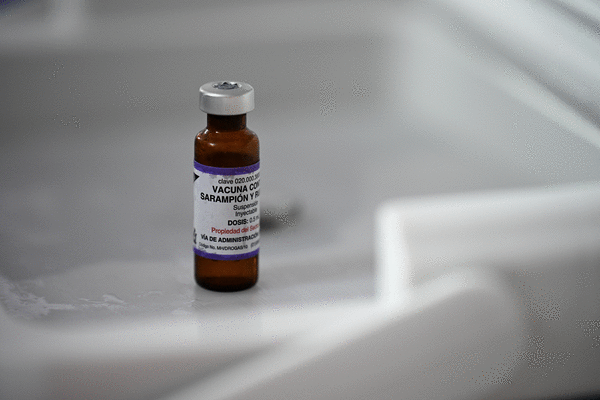
Measles is endemic again in the U.S.
Such is the verdict of global health experts who met last week to consider the country’s measles elimination status, granted in 2000. Their decision — which is expected to be announced on Tuesday, but was reported over the weekend — wasn’t a shock. Rather, it was a confirmation of what experts have long warned: The U.S. is giving up decades of hard-won public-health gains.
You might expect the federal government to be laser-focused on turning the situation around. Instead, Health Secretary Robert F. Kennedy Jr.’s misinformation and harmful policies will probably exacerbate it. Worse, measles is likely only the first health victory that will be undone under his watch.
How depressing.
The Pan American Health Organization’s reported decision to downgrade the country’s measles status came after independent scientific experts convened to analyze the virus’s spread. For a country to be considered measles-free, the virus can’t spread continuously for a year. Researchers studied the genomes of patient samples to determine if cases in, say, Utah and Arizona this past summer stemmed from outbreaks that began in 2025.
They did. That’s unsurprising: The U.S. map has lit up with measles hotspots over the past two years, including several that have grown to hundreds of infections. Since the start of last year, the U.S. has tallied more than 7,700 measles cases and 13 (1) deaths from the virus. That’s more cases than the country saw in the previous 30 years combined.
From the earliest days of the outbreak, Kennedy has downplayed the gravity of the situation and offered a pat list of excuses. For example, he likes to point out that the U.S. track record on measles is better than Canada’s and Mexico’s, and that many affected communities have long eschewed vaccinations.
Both points are true. Yet our declining public health record — even if slightly better than our neighbors’ — shouldn’t be a point of pride. And while religious communities require tailored public health responses, Kennedy is conveniently ignoring the larger risk posed by declining vaccination rates across much of the country.
It’s also true that measles cases started flaring up in Texas around the same time that Kennedy was confirmed, meaning he didn’t start that fire. But at nearly every opportunity, he fanned the flames. That included pushing junk science and fake cures, and spending months equivocating over the value of the measles, mumps and rubella shot. (Eventually, he did say that the MMR vaccine offers the best protection against the virus.)
What followed was even worse: devastating cuts at the Centers for Disease Control and Prevention, an overhaul of the agency’s influential vaccine advisory committee to appoint vaccine skeptics, and a suite of policies seemingly crafted to further erode Americans’ confidence in and access to early childhood vaccines.
And then there was the rhetoric coming from the White House. In August, as the number of measles cases continued to tick up to embarrassingly high levels, President Donald Trump issued an executive order calling for fewer childhood shots and demanding that states review their vaccine laws.
He also falsely claimed the long-used combination MMR shot, which protects kids against measles, mumps and rubella, is potentially “quite lethal,” and ordered it to be broken into three shots to be administered across multiple doctors’ visits — a move based not on science, but seemingly on his gut feelings. Physicians decried Trump’s order as impractical, expensive and likely to further push down vaccine rates.
Just weeks later, Pennsylvania reported its first deaths amid a quickly spreading outbreak. Both were infants too young to be vaccinated. When asked about the deaths, Kennedy questioned their link to measles, pinned the blame on Covid lockdowns, and defended his own record. “Every place there’s been a measles outbreak, I’ve sent the CDC in to cooperate with the state health agencies, and we’ve brought it to an end overnight,” he claimed.
The facts show something different. Since that comment, 2,000 more measles cases have been reported in the U.S. and another eight Americans have died from complications of the virus. Three of those deaths, across three states, occurred within the span of a week. Babies have died in New York, Pennsylvania and Wisconsin, states that had gone 30 or more years without losing anyone to measles.
What should scare us most is that the return of widespread measles could be just the start as Kennedy’s influence over Americans’ health grows. Diseases that have long been kept in check — some, like measles, that doctors rarely encountered outside of medical textbooks — are being given room to spread and once again cause widespread suffering.
For example, a recent study found Kennedy’s recommendation to forgo routinely vaccinating newborns against hepatitis B could lead to a disturbing rise in infections and, ultimately, chronic disease. Similarly, the U.S. is already seeing a rise in bleeding among newborns whose parents have refused the vitamin K shot — which isn’t even a vaccine, but has been swept up in the climate of distrust.
Those risks aren’t really captured by a largely technical ruling from a global health body. Unfortunately, many Americans will feel them — in the continued spread of preventable diseases and, tragically, the lives that are lost.
____
(1) This figure reflects state rather than CDC reporting on measles deaths. The CDC, which under Kennedy has controversially changed its approach to reporting measles deaths, currently lists nine fatalities.
____
This column reflects the personal views of the author and does not necessarily reflect the opinion of the editorial board or Bloomberg LP and its owners.
Lisa Jarvis is a Bloomberg Opinion columnist covering biotech, health care and the pharmaceutical industry. Previously, she was executive editor of Chemical & Engineering News.
©2026 Bloomberg L.P. Visit bloomberg.com/opinion. Distributed by Tribune Content Agency, LLC.














































Comments