Editorial: Chicago Public Schools wants Google without the AI. That shouldn't be an impossible ask
Published in Op Eds
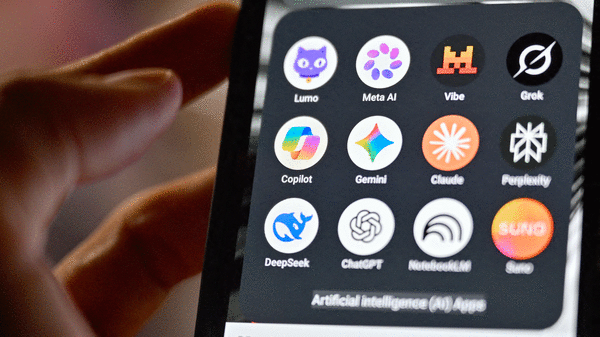
Chicago Public Schools is blocking artificial intelligence, such as ChatGPT and Google Gemini, on school devices in order to protect student privacy and safety. CPS isn’t alone in this. Los Angeles and New York both have school district AI bans of their own.
Problem is, in doing so CPS may have Google search access cut off, too.
Google now argues AI is so integrated into search that it would be impossible to separate the two. If CPS turns off generative AI, it loses search.
Yet the AI summaries that appear at the top of Google searches today are a relatively new feature for a search engine that has long dominated the marketplace. And CPS — a large and not insignificant client — is telling its vendor it wants one product but not the other.
Is it really impossible to separate the two?
Yes, says Google, though we don’t see how such a request presents a technical impossibility. But even if it is, this is a challenge worth solving.
CPS hardly is the only school calling for this arrangement, concerned that access to Google search results is essential for students’ schoolwork. The AI that comes with it? Well, that’s another story entirely, and presents tempting shortcuts that undermine the learning process by depriving kids of the chance to develop analytical and research skills.
We are not privy to the proprietary inner workings of Google’s products, and we understand the value of having access to search tools, which we of course use daily in our own research, both personal and professional.
Google boasts a case study on its own website (which we found thanks to its handy search engine) explaining the depth of its partnership with CPS. The district has 400,000 some-odd Chromebooks. Kids use these devices to conduct research, communicate and do their homework, among other things. As intricately as CPS Chromebooks are embedded with Google software, so, too, is the student experience embedded with it.
We will not today debate the wisdom of tech in the classroom. Our point is simply: Schools are right to limit students’ use of AI as they’re learning how to write and think.
Google should work with them to ensure the district has access to the search tools it wants without the AI it doesn’t want.
The world is grappling with what rapidly advancing AI technology means for science, for people’s jobs and for humanity as a whole. School districts are right to be cautious about the role AI should play in education, and adults are rightly concerned about granting kids unfettered access to AI more broadly.
A lawsuit filed last week in California alleges a 13-year-old girl talked to Google Gemini on her school-issued laptop, getting information on how to commit suicide. This case will work its way through the courts, but even the possibility of such harm warrants restraint.
Again, we like Google. It makes everyone’s lives easier. We understand the optimism behind AI to broker marvelous advances in health care and beyond. But given that even some of the brightest minds can’t fully grasp the significance of this technology, it makes sense to be extra cautious with kids.
It’s not unreasonable for CPS to request an off button.
_____
©2026 Chicago Tribune. Visit at chicagotribune.com. Distributed by Tribune Content Agency, LLC.

















































Comments