Editorial: Legislation would help save sloths. It's a good start
Published in Op Eds
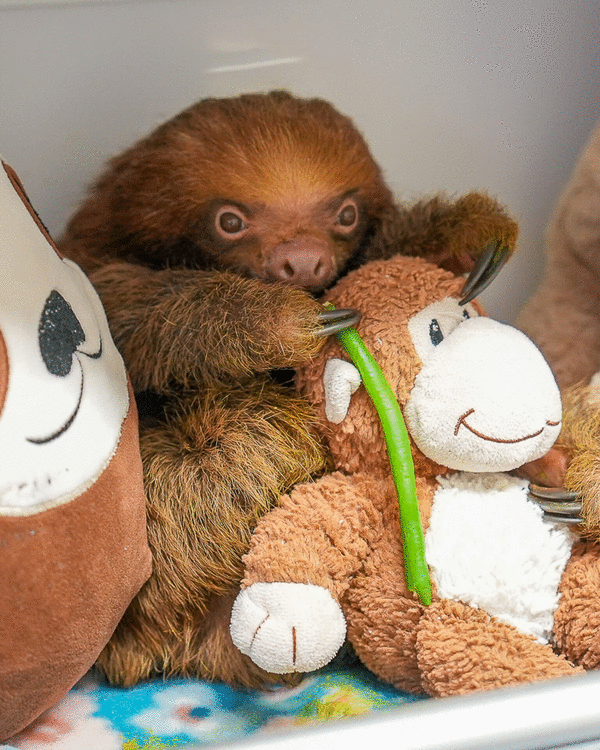
When promoters first announced plans to build a sloth-themed attraction on Orlando’s International Drive, they made it sound as if they were inviting the animals to a five-star resort where they could live their “slowest, happiest lives,” complete with spacious habitats and gourmet cuisine. The reality was as far away from that as possible: Sloths warehoused in an unheated garage, crammed in small cages with no access to the food they needed to survive.
Predictably, they died. First a few, then dozens. By the time wildlife officials visited the building in March, they were told that 31 sloths were already gone, some dead in transit and others killed by a deadly combination of inadequate food, cold temperatures and above all, stress. Officers would eventually learn that the real death toll topped 50. Thirteen living sloths were seized and rushed to the Central Florida Zoo in Sanford, where a skilled veterinary team fought day and night to save their lives. Five more sloths died, but eight are still alive and stable, says Richard Glover, executive director of the zoo.
An outraged public wanted justice. But neither Florida nor federal law seemed to prohibit the events that led up to the slaughter, or the sorry trade in sloths and other exotic animals that strips them from their native habitat and sends them to the U.S. to live (if they survive) in roadside zoos and as pets. Right now, attractions across Florida and the nation are advertising sloth encounters that go for a few hundred dollars a person — and are often conducted under circumstances guaranteed to be stressful for sloths, which are meant to live their lives in the treetops of rain forests with no human interaction.
A good first step
A bill filed last month by U.S. Rep. Maxwell Alejandro Frost, D-Orlando, and Rep. Laurel Lee, R-Brandon, would change that. The legislation is titled the “SLOTHS Act”— which stands for Stopping Legalized Organized Trafficking and Harm to Sloths. And its aim is simple: If the legislation passes, it would be illegal to import sloths into the U.S. — live or dead — unless the animal is en route to an accredited research facility or breeding program. That’s a very high bar that only includes institutions with legitimate scientific credentials. The legislation would allow steep fines and potential criminal charges — and, perhaps most importantly, strip anyone caught bringing sloths into the country illegally of any license to handle, sell or transport exotic species.
With the current session of Congress running out of time, it seems likely that Frost will need to re-file his bill in 2027. But this is bipartisan, feel-good legislation.
There are a few significant things to keep in mind. First, sloths are not the only animals that need protection. The Central Florida Zoo is silent witness to that: Over the years, it’s taken in many abandoned or rescued exotic animals — at the moment it’s housing two spider monkeys (a third one died after rescue). Another heavily trafficked group of animals are lemurs, intelligent and social primates that are often stripped from their family groups and brought to the United States where they end up in someone’s home or a tourist attraction. The Central Florida Zoo is constantly getting requests to take in confiscated animals that require expensive care — to the point where zoo officials sometimes have to say no, Glover says.
These animals deserve protection as well. There’s just no good reason to rip them from their habitats and bring them to the U.S., where they end up so traumatized and maladjusted that they can never return to the wild. Once the SLOTHS Act is in place, legislators should use it as a base to extend protections to other species.
More protection needed
The legislation Frost and Lee are proposing wouldn’t do anything to stop the sale of animals that are already in the country. That’s a worthy topic for follow-up legislation. A simple Google search reveals how easy it is to purchase an exotic animal: “You can have it delivered to your door almost as easily as a new pair of shoes,” says Dr. Rebecca Cliffe, executive director of The Sloth Institute in Costa Rica. Owners of exotic animals are supposed to have licenses issued by the state, but oversight has been far too lax — as was obvious during the Sloth World investigation. The Florida Fish and Wildlife Conservation Commission is making some changes that should better protect vulnerable animals.
There’s one more notable feature of this legislation. Sam Trull, executive director of the Sloth Institute (also in Costa Rica) made a good point when the Sloth World scandal first erupted. Most of the nation’s species-specific bans are meant to protect humans from dangerous or invasive exotic species — big cats and apes, pythons and lizard species that escape into the wild and start breeding. This legislation is different. It’s purely meant to protect sloths from human beings, recognizing that these gentle animals pose no threat to humans — outside of broken hearts.
“They’re not props. They are not photo opportunities and they should not be treated as commodities for someone else’s profit,” Frost said at last month’s press conference announcing his legislation. The same holds true for many other species, so we hope the SLOTHS Act is just the first legislation of its kind.
_____
©2026 Orlando Sentinel. Visit orlandosentinel.com. Distributed by Tribune Content Agency, LLC.














































Comments