Commentary: Impeaching Pete Hegseth is a first step to restoring America's position in the world
Published in Op Eds
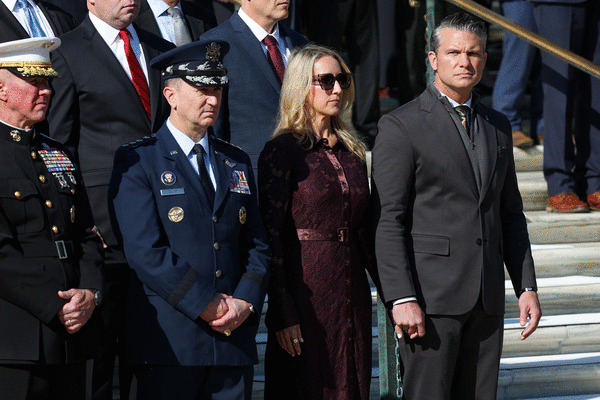
The failure to impeach Secretary of Defense Pete Hegseth was a missed opportunity to demonstrate the United States is ready to resume a more responsible role in the world again.
The midterm elections delivered historic losses to President Donald Trump’s party in a clear indictment of the direction his administration has taken this country. Foreign policy proved a big factor. A large majority of the American people want Congress to end the war in Iran to help bring down costs and redirect U.S. government focus and resources to problems at home instead.
But Trump learned nothing from the losses and has doubled down on his most extreme acolytes, like Hegseth, who helped deliver this outcome. He reportedly pressed Republican members of the House to send the impeachment resolution to committee, effectively killing it.
This means it will be up to the Democratic majority in Congress come January to attempt changing America’s course in the world. This is essential to regain our global influence, end unnecessary risks to our service members and ensure our government can address Americans’ needs at home.
Impeaching and convicting Hegseth is the best place to start, so the new Democratic-led Congress must make it an early priority. Hegseth has led America’s feckless military adventurism under Trump and represents in human form this administration’s contempt for the international order on which American power and prosperity has relied for generations. Holding him to account would send a clear message that America no longer will lead with aggression, illegal wars, disregard for civilians and disdain for international and national laws.
The Constitution gives Congress the power to impeach for “high crimes and misdemeanors.” This phrase is not defined in U.S. law but came to our Constitution from English tradition where it had been used to remove officials for everything from military mismanagement to giving the sovereign bad advice. More recently, it has mostly been associated with abuse of power. Hegseth is guilty of all of this and more.
Republican Rep. Thomas Massie’s impeachment articles enumerate many of his worst offenses. Any one would be valid grounds for impeachment. Taken together, they paint a horrifying picture of the unjust and unpredictable bully America has become, squandering our moral authority and undermining our powerful alliances.
The first three address the Iran War. Hegseth is accused of waging the war without congressional authorization and absent any imminent threat; continuing the war in violation of Congress’ explicit demand in June to terminate the hostilities; and failing to end it after the War Powers Resolution’s 60-day termination period expired.
The fourth article charges Hegseth with “ignoring laws that minimize civilian casualties.” Both international and U.S. law require militaries to minimize harm to civilians, but Hegseth has been open about his disdain for “tepid legality.” He even dismantled the Pentagon’s program to prevent civilian deaths. The results have been shocking. As just one example, the war in Iran began with a strike on an elementary school, killing more than 100 children. Nine months later, Hegseth’s Pentagon still has failed to address this crime.
The fifth addresses the extrajudicial killings of at least 220 people in boats in the Caribbean as part of the campaign against alleged drug traffickers. The Pentagon hasn’t even provided evidence the victims are part of the drug trade. In at least one case, U.S. forces launched a second strike to kill survivors clinging to wreckage from the first, which would be a clear war crime, if this were, in fact, a war. These strikes would be illegal even if they were effective in their asserted aim of halting or reducing drug trafficking, but both the Drug Enforcement Administration and the Pentagon have concluded this campaign has done neither, suggesting it’s little more than performative state violence.
The sixth article accuses Hegseth of attempting to punish Sen. Mark Kelly by reducing his military rank and pension for exercising his free speech, when he participated in a video calling on troops to refuse illegal orders. A federal judge blocked the punishment, but the attempt to intimidate members of Congress is a serious abuse of power.
The seventh article, addressing the capture of Venezuelan President Nicolás Maduro, accuses Hegseth of kidnapping a foreign leader, an act of war against a sovereign country. The eighth accuses Hegseth of conducting an unauthorized war in Yemen for a military campaign conducted last year, better known for the Signal-gate scandal in which Hegseth revealed highly classified information regarding attack plans over an insecure commercial communications app on his personal cell phone. This not only violated national security regulations but potentially endangered U.S. operations and service members. The offense only became public because someone had accidentally added a reporter to the group chat.
Under the American system, the president and his Cabinet hold a lot of power over foreign policy, but Congress has tools to restrain it. If it chooses not to use them despite the American people’s demand for change, this country may miss the opportunity to turn the page on this ugly chapter of America’s bad behavior. Holding Hegseth to account for his crimes and misuse of our armed forces is a great place to start.
____
Elizabeth Shackelford is a foreign affairs columnist for the Chicago Tribune and a distinguished lecturer with the Dickey Center at Dartmouth College. She was previously a U.S. diplomat and is the author of “The Dissent Channel: American Diplomacy in a Dishonest Age.”
___
©2026 Chicago Tribune. Visit at chicagotribune.com. Distributed by Tribune Content Agency, LLC.














































Comments