Aaron Brown: What's wrong with political polls these days?
Published in Op Eds
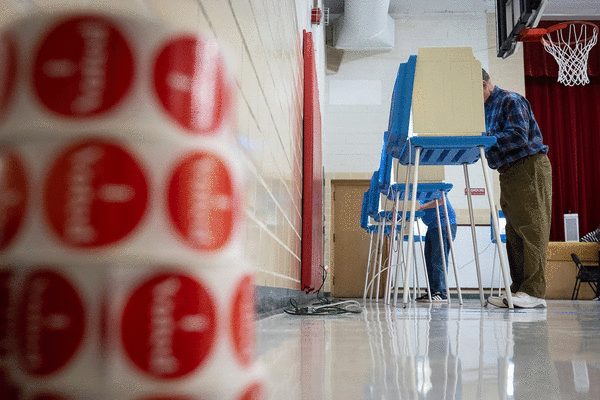
I haven’t seen a news story about a political poll in recent years that wasn’t heckled for its sample size, crosstabs or bias. The identity of the hecklers depends largely on whose candidate comes out looking worse.
That’s how it goes when everyone’s a pundit. It’s about time we act like voters instead. As we barrel toward another consequential election on Nov. 3, we should reconsider the role of polling in our political discourse.
Complaints that our political system is too obsessed with polling are old. What’s new is how difficult it is to collect a meaningful sample of likely voters. Since 2016, when polls badly underestimated President Donald Trump’s support against former Secretary of State Hillary Clinton, every election has been an exercise in statistical pearl-clutching.
“You can poll ten thousand people and still be wrong if they don’t represent the electorate,” said Duke Skorich, president of Duluth-based Zenith Research Group. “The central question we all ask ourselves is not necessarily how many responded, but who’s invited? Who responded? And then who did we miss? I know that I need to reach people and it’s more difficult. That’s the hardest part of polling.”
My only experience with professional polling happened in 2003 when I supervised a mayoral election poll at my college radio station. This was before smartphones and caller ID, when most people had landlines. We literally called everyone in the phone book. (Historical note: The phone book was a thick tome including the name and phone number of everyone in town. It mysteriously appeared on your porch, like it or not).
This experience gave me a good story. Most of our callers were college basketball players with more court vision than political acumen. I overheard one of the student athletes calling the next name on the list.
“Oh, wow, you’re the candidate?” he said. “But who are you going to vote for?”
A moment later, the student looked at me and said, “He wouldn’t say. He just hung up.”
Back then they would call 10 or 12 people before someone would complete the survey. Now they must call 40, said Skorich. Since COVID, nearly all polling uses an automated voice with push-button selections or text message links to online surveys.
“It’s not that polling is impossible,” said Skorich. “It just means that it’s more complicated.”
Caller ID makes it less likely that people answer their phones. A culture of advertising and scam calls discourages people from completing a survey. Regulations surrounding cellphones and text messaging makes it harder to reach certain demographics.
Skorich said pollsters now start with a list of registered voters and sort them by ZIP code, balancing for population size. Then demographic questions and other inputs help put survey responses into “baskets” that become weighted to the approximate electorate.
Skorich said a sample should include at least 400 respondents. That leaves a margin of error of 5%. Six hundred gets you a more respectable 4%. His preference is to reach 1,000 respondents, for the optimal 3% margin of error, a figure you often see in major public polling.
Good polls should not only use robust samples but should also reveal the wording of their questions and the organization that commissioned the poll, he said.
“Transparency doesn’t necessarily guarantee the quality but if you’re secretive it makes that quality almost impossible to evaluate,” said Skorich.
My problem with political polls is not that they might be slightly off. Rather, it’s that talking about polling is not the same thing as talking about politics.
Polls provide useful data, but too often they are used to close the conversation on a campaign or policy debate. New ideas or candidates are often dismissed before people get to know them well enough to show up in the polling. This discourages major reforms needed across our state and federal governments and locks us into a static political landscape that voters then complain about.
Skorich was a longtime television journalist before founding his research company. He said the emotional aspects of political issues should not be ignored.
A democratic republic like ours indeed runs on public opinion, but a voter should prioritize their own values and interests. Even the pollster agrees that voters shouldn’t rely on political polling, advertising or campaign rhetoric to make their decisions.
“I would rather you trust what you know for yourself is happening in your family,” said Skorich. “You don’t need five pollsters to tell you where this election is going. You are talking to your friends. You’re talking to your relatives and neighbors. And those conversations are going to be more indicative of how this election will turn out.”
It’s an old cliché that the only poll that counts happens on Election Day. It is certainly true that the only vote you get is your own. You get to ask the questions that matter most.
_____
©2026 The Minnesota Star Tribune. Visit at startribune.com. Distributed by Tribune Content Agency, LLC.













































Comments