Commentary: Public execution? This really is who we are
Published in Op Eds

Former Army psychiatrist Nidal Hasan murdered 13 people and wounded 32 others at Ft. Hood, Texas, in 2009. His guilt is not in doubt. Nothing about his crime invites sympathy. But Defense Secretary Pete Hegseth wants Americans to watch him die.
After Hegseth announced plans to livestream Hasan’s Dec. 3 execution by firing squad, retired Admiral James Stavridis, a former NATO supreme allied commander, condemned the spectacle. “ It is not who we are as a military or a nation,” he said.
Stavridis is right about who we should be. The moral character of the condemned does not determine the moral obligations of the state. Executing a paralyzed prisoner before a public audience demonstrates nothing about American strength. It transforms state violence into grotesque entertainment. But I fear the admiral is wrong about who we are.
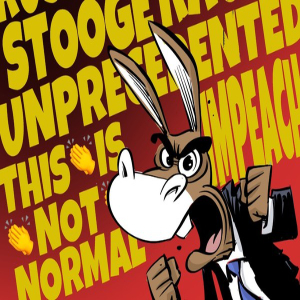
Americans have repeated some version of “this is not who we are” whenever the government crosses another boundary we once considered unthinkable. The phrase draws a reassuring line between the country we believe in and the cruelty before us.
But repeated often enough, it becomes a means of absolution. If cruelty is inherently un-American, then acts committed by American institutions somehow don’t really count as evidence about the country itself. We can condemn each new abuse as an aberration while avoiding the harder question raised by their accumulation.
Masked federal agents now patrol American neighborhoods, seize people and move them through a detention system largely hidden from public view. Families and children are confined in degrading conditions, and people are deported to countries they may never have seen. The military kills people aboard small boats without publicly identifying them, presenting the evidence against them or explaining the legal authority for their deaths. American forces destroyed a school filled with children more than seven months ago, yet the government has neither acknowledged responsibility nor held anyone publicly accountable.
These are not warnings about what America might someday become. They are happening now, carried out by American institutions, under American authority and in the name of the American people.
This is who we are.
It is not all that we are, and it is not who we must remain. But we don’t defend America’s character by refusing to recognize ourselves in the conduct of our own government. We are simply protecting ourselves from having to confront it.
The administration’s treatment of violence follows a consistent logic. It conceals victims, evidence and consequences that might expose its failures while displaying violence it believes will demonstrate its power. In both cases, the people involved cease to be treated as human beings. They are political instruments — invisible when their suffering is inconvenient and displayed when their punishment is useful.
The proposed execution of Hasan matters beyond the death penalty itself. By livestreaming it, Hegseth would turn the soldiers carrying it out into performers in a government production and the public to become its audience. The spectacle is meant to teach us something about power. If we choose to watch, it will also teach us something about ourselves.
Calling this “who we are” will understandably anger Americans who have opposed these policies, marched against them, challenged them in court or exposed them through journalism. Responsibility is not distributed equally. The official who orders an abuse bears more responsibility than the citizen who struggles unsuccessfully to stop it.
Slavery was American, and so was abolition. The incarceration of Japanese Americans was American, and so were those who opposed it. Abu Ghraib was American, and so were the people who exposed it. Resistance to cruelty is also part of who we are.
But a history of resistance does not allow us to disown the cruelty. The Constitution begins with “We the People.” Those words claim democratic power, but they also assign democratic responsibility. We cannot take collective credit for the country’s achievements while treating its abuses as the work of some alien government. What is done under American authority and in our name belongs to all of us. So does the responsibility to decide whether it continues.
The Constitution does not assume that American virtue is fixed or automatic. It charges us with forming a more perfect union. Those words acknowledge failure and impose an obligation to demand more from ourselves.
That obligation becomes concrete this November. Most of the officials responsible for these acts will not appear on the ballot. But Americans will decide whether to elect a Congress willing to hold them accountable.
Congress can compel testimony and obtain records. It can investigate killings at sea, the deaths of children in their school and the conditions inside detention facilities. It can restrict the money used to carry out violence in our name and insist that executive power operate under law and in public view. The Congress Americans elect will help determine whether cruelty is constrained or rewarded.
Candidates for Congress should be asked whether they will use those powers. Voters should listen carefully to the answers — and to the silence that so often substitutes for one. If we elect lawmakers who excuse these acts, conceal them or refuse to investigate them, we cannot continue calling the conduct an aberration. We will have chosen to permit it.
“This is not who we are” is a noble aspiration. But aspirations do not enforce themselves. In a democracy, they become real only when citizens insist that their government honor them. If this is not who we are, we must prove it.
____
Jon Duffy is a retired naval officer. He writes about leadership and democracy.
©2026 Los Angeles Times. Visit at latimes.com. Distributed by Tribune Content Agency, LLC.
















































Comments