Commentary: It's time for state lawmakers to rethink the mobile home
Published in Op Eds
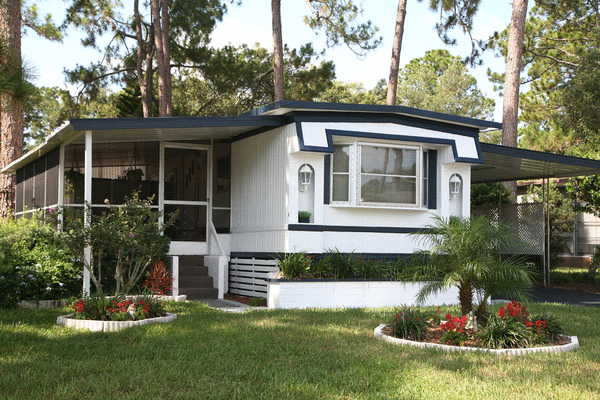
Manufactured housing, colloquially known as the “mobile home,” has a reputation for low quality, but that stereotype is outdated. As states grapple with ways to relieve home prices for beleaguered residents, they need to rethink this option and clear the obstacles to constructing more of it.
Homes built to the modern Department of Housing and Urban Development (HUD) Code are high-quality and substantially safer than those built under old guidelines. They also pack a serious affordability advantage.
A single-section manufactured home — or “single-wide” — costs just 35% as much as a site-built home of the same size and quality. This includes the costs of transportation and installation, making it the least expensive type of new housing that can be built in the U.S. today.
The savings come from a few sources. The HUD Code is more cost-conscious than the patchwork of building codes for traditional housing implemented in states and localities across the country. Factory construction largely eliminates weather delays that can plague on-site construction, and it can also reduce materials waste. Additionally, the federal inspection process for manufactured housing is predictable and enables builders to avoid some of the permitting delays that are common features in some parts of the country.
Prior to the adoption of the HUD Code in 1976, factory-built housing was often manufactured outside of any building code. These trailer homes were often towed from place to place, and they presented higher fire risks and performed much worse in tornadoes and hurricanes than site-built homes. Homes built since 1976, and especially homes built since the 1994 HUD Code updates, perform very well from a safety perspective.
Newer HUD Code homes are much larger and sturdier than the trailer homes that came before, and they’re also less mobile. Moving them is expensive, and the vast majority are installed once and never moved again.
That has opened the door to a new federal law which will soon make manufactured homes even less expensive and more flexible. One persistent, historic downside has been that they are required to sit on a permanent steel chassis that costs several thousand dollars. The law changes this by making the frame optional.
Chassis-less homes will have an even greater cost advantage and sit lower to the ground, looking more than ever like any other house. And perhaps more importantly, eliminating the requirement will allow them to be stacked in multistory configurations as townhouses or apartments.
In order to take advantage of this option, though, state policymakers need to act. Many state statutes also define manufactured housing as sitting on a permanent steel chassis, effectively banning the new option despite the federal law.
A new law in North Carolina provides one model for allowing chassis-less homes. It simply acknowledges the latest Department of Housing and Urban Development definition, ensuring that the latest options in manufactured housing will be allowed there.
Other states – Montana, for example– already have definitions that allow for this new housing type. However, they can still have other statutes that refer to aspects of “mobile homes” that are no longer necessary. Montana requires the wheels to be removed from the chassis in order to tax manufactured housing as real estate. Anywhere that state rules refer to the chassis of a manufactured home, people may be prevented from taking full advantage of the new option.
Other states have transportation rules that refer to towing the home on its chassis and mandating an escort vehicle. With homes now being built without ever having a chassis, smaller units could leave the factory on a flatbed truck, enabling transportation savings. This possibility will require state policymakers to go through their rules carefully to ensure that the next generation of homes will actually be allowed.
Manufactured housing already serves as an essential source of low-cost housing, making up about 10% of the country’s new single-family homes. The elimination of the chassis requirement will boost its affordability advantage and increase its flexibility, but these advantages will only be available in the states that proactively allow them. Now is the time for state policymakers to act. They should ensure that outdated rules and definitions don’t stand in the way of much-needed homes.
____
Emily Hamilton is a senior research fellow and director of the Urbanity Project at the Mercatus Center at George Mason University. She is the author of a new policy brief on legalizing manufactured housing.
_____
©2026 Tribune Content Agency, LLC.


















































Comments