Commentary: Roadless areas in our national forests need to stay roadless
Published in Op Eds
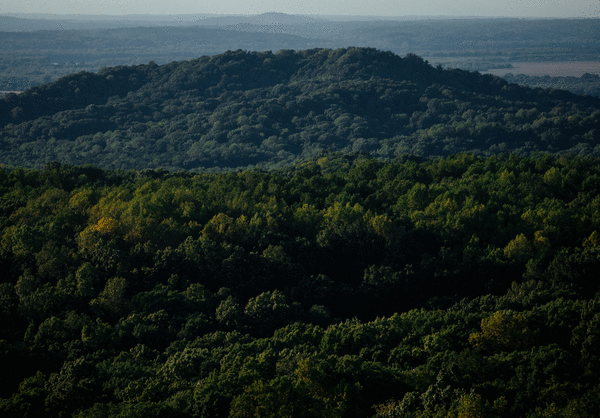
Public comments quietly closed Oct. 6 in response to the proposed rescission of the 2001 Roadless Area Conservation Rule, an undercelebrated piece of federal legislation that has protected about 58.5 million acres of roadless areas across our National Forest System. That’s about one-third of the 193 million acres that make up our national forests.
According to U.S. Agriculture Secretary Brooke Rollins, removing the national policy for about 45 million of those acres and shifting oversight to local leaders would reduce regulatory burden, mitigate wildfire risk and provide greater flexibility for land management.
I don’t buy it. And I imagine I’m not alone.
Like many, I have loved forests all my life. From our base camp here in Edwardsville, Illinois, where I’ve lived for the past 25 years, my family has hiked, kayaked and explored so many magnificent state and national forests across the U.S. for decades — from Coconino, Sequoia and Willamette out West, to our very own Shawnee National Forest here in southern Illinois. The Ocala and Apalachicola national forests are rare remnants of the wild Florida from my childhood.
These days, I bet that a love of forests is rare common ground across party lines.
But here we are, with an administration looking to pave roads in roadless areas — a move that devalues science, ignores data and evidence, and seeks short-term gains at the expense of long-term public benefit. The U.S. Department of Agriculture’s own draft environmental impact statement, or DEIS, indicates that repealing the rule would likely trigger a range of negative impacts, from harms to backcountry forests, rivers, wetlands and wildlife to higher costs for maintaining roads.
The kicker? Proponents of rescinding the roadless rule say it would help reduce the risks of wildfires. The USDA’s own DEIS concludes that doing so would deliver little to no wildfire risk reduction and acknowledges that road-building within forests can actually lead to more human-caused fires.
Make it make sense.
Fueled by a mix of frustration and forest love, I was one of many last week to submit a public comment to the U.S. Forest Service strongly opposing the proposed rescission of the 2001 Roadless Area Conservation Rule.
Here are my three reasons.
1. Nature: The proposal would drive further biodiversity loss, thus weakening the ecological functionality of forests. These lands do far more than provide beauty and inspiration to hikers such as my family and me. They protect our drinking water. They clean and cool our air. They serve as vast wildlife corridors and habitat for countless species of plants and animals. They prevent costly and devastating floods by soaking up stormwater, preventing erosion and keeping nutrients in the ground versus polluting our creeks and streams. Expanding road networks is the primary driver of habitat fragmentation, creating smaller, isolated “islands” that make long-term survival almost impossible. More roads would also foster the spread of invasive species, which would crowd out native species that rely on healthy, intact forests.
2. Science: The proposal ignores what actually reduces wildfire risk. A major motivation claimed by those pushing to rescind the roadless rule centers on wildfire risk reduction. However, experienced foresters, wildfire experts and other environmental specialists have shared data and evidence that more roads can actually increase human-caused ignitions. As is, the rule already allows thinning and fuel reduction near communities. Rescinding the rule entirely would create more problems than it aspires to solve. If changes are needed for specific wildfire concerns, they should be targeted and made through a transparent, locally informed and evidence-driven process.
3. Taxpayer costs: The proposal adds more infrastructure to an already-overflowing maintenance backlog. Today, the U.S. Forest Service is responsible for maintaining more than 370,000 miles of roads. From publicly available data, it’s clear that the agency cannot adequately maintain the roads it already has. Opening millions more acres to road-building would add costs the agency has not shown it can bear. This would be wasteful and illogical.
In 2025, a similar proposal drew upward of 625,000 comments. The USDA’s own DEIS indicated about 99% of those comments expressed opposition to the rescission. This time, I understand more than a million comments expressing opposition to this newest proposal flooded the department’s inboxes in the form of official comments, postcards, petitions and long-form letters.
This land, after all, is our land.
____
Sheila Voss, a resident of Edwardsville, Illinois, is a lifelong biodiversity advocate and avid hiker.
___
©2026 Chicago Tribune. Visit at chicagotribune.com. Distributed by Tribune Content Agency, LLC.


















































Comments