Zinke PAC gave to family foundation he was investigated for
Published in Political News
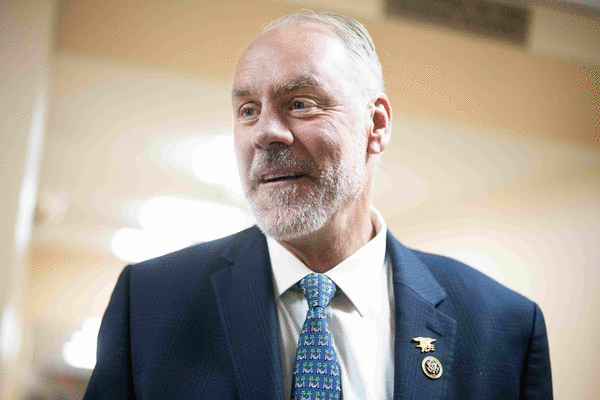
WASHINGTON — Outgoing Montana GOP Rep. Ryan Zinke gave $200,000 in campaign cash to a family foundation headed by his wife that was once at the center of a federal investigation and an ethics scandal that led him to resign as Interior secretary in 2019.
The gift, which has not previously been reported, was made on Aug. 31 from Zinke’s leadership political action committee to the nonprofit Great Northern Veterans Peace Foundation, campaign finance records show. The donation is more than the foundation has reported receiving in any year since it was founded nearly two decades ago.
Zinke’s wife, son, and sister currently serve on its board of directors, according to the foundation’s annual filing with the state of Montana.
In a brief interview, Zinke denied that any portion of the money transferred to the foundation will directly benefit him or any of his family members who sit on the board of directors. “No, no, never,” he said when asked if any family members will draw a salary from the gift.
The money will instead go to building a storage barn and kid’s sledding park on the property controlled by the foundation, Zinke said.
None of the records indicate Zinke violated the law or directly benefited from the gift to his foundation.
“While it’s not uncommon for a politician to transfer leftover money from a political war chest to charity, it is pretty rare for a politician to transfer leftover political funds to a charity that they or a relative controls,” said Michael Beckel, director of money in politics reform at Issue One, a bipartisan group that seeks to reduce influence of money in politics.
Instead, outgoing members typically transfer remaining campaign cash to local party committees or candidates, Beckel added.
Ethics experts say Zinke’s move highlights ongoing concerns over the broad latitude campaign finance law gives leadership PACs in how they spend money.
“I definitely think it is something to be concerned about,” said Stuart McPhail, director of campaign finance litigation at Citizens for Responsibility and Ethics in Washington, a nonprofit watchdog.
“Leadership PACs are really nothing more than personal slush funds under today’s rules,” he said, noting that unlike regular campaign committees, member leadership PACs are not prohibited from donating to charities or organizations that could directly benefit the member or relative.
Zinke, a former Navy SEAL who commanded special forces during the Iraq War, converted his traditional campaign committee to a leadership PAC — Commander Zinke Leadership Fund — in March 2026, shortly after announcing he would not run for reelection. It last reported having $1.4 million cash on hand in October of this year.
It marks the second time one of Zinke’s political committees made a payment to the organization. In 2019, the committee Zinke ran during his earlier years in Congress — he served one term in the House before being tapped as Trump’s first-term Interior secretary — gave over $11,000 to the foundation before winding down operations.
The Great Northern Veterans Peace Foundation was founded by Zinke and his wife in 2007 in his hometown of Whitefish, Mont., with plans to provide winter recreational activities for children. Its latest tax filing reports revenue of $15,000 and roughly equal expenses in 2024 for snow plowing and park maintenance.
Zinke’s dealings with the organization were the subject of an ongoing inspector general investigation when he resigned as Interior secretary in January 2019.
Investigators ultimately did not find that Zinke violated conflict-of-interest laws, but they concluded that he failed to comply with federal ethics obligations and “misused his official position in violation of federal regulations.” The Justice Department declined to prosecute Zinke.
Zinke stepped down from the foundation in 2017, shortly after his Senate confirmation. But investigators found that he continued to represent the organization in negotiations with the developers of a commercial project adjacent to the foundation’s land and lied to an ethics agent about his involvement in the project.
The project’s investors included David Lesar, then-chairman of oil services company Halliburton.
Family ties
Another Zinke-tied leadership PAC has previously raised eyebrows in Washington.
Supporting Electing American Leaders PAC — known as SEAL PAC — where Zinke serves as chairman, has been marred by accusations that it funneled money to political consultants instead of candidates. A 2022 CQ Roll Call analysis found that 87% of the PAC’s spending went to operating expenses.
The PAC also made recurring monthly payments to a company registered to Zinke’s son, Wolfgang Zinke, and based at a Zinke family-owned home in Whitefish.
SEAL PAC’s executive director, Rob Catron, maintained that the payments constitute a consulting fee to Wolfgang Zinke for management of the PAC website, among other tasks. “He earns every penny of it,” Catron said.
Since May 2022, the PAC has given roughly $270,000 to Wolfgang Zinke’s company, FG Solutions, for mailing and printing, records show — more than any individual candidate or committee supported by the PAC. The company also received $5,000 from a related super PAC, SEAL PAC USA, which can solicit unlimited contributions for independent expenditures but can’t donate directly to candidates.
Montana corporate records show Wolfgang Zinke founded FG Solutions – which says it provides services including “personal assistant and any lawful purpose” – just 10 days before it received its first payment from the PAC in 2022.
Catron defended how the PAC spends money on veterans running for the House, arguing that it takes money to raise money.
“We raise a lion’s share of our funding through national direct mail fundraising, which is very expensive to do,” he said, citing the PAC’s use of a national text message fundraising campaign as a major expense.
SEAL PAC raised about $9.6 million this election cycle, distributing about $1.1 million to GOP lawmakers and candidates, according to Federal Election Commission filings. Most of the committee’s funds went to operating expenses, including over $3 million paid to Direct Support Services, a Washington-based vendor, for direct mail postage.
‘Gray area’
Zinke’s not the only lawmaker to face scrutiny over how they spent surplus campaign cash in recent years.
In 2023, Sen. Bernie Sanders, I-Vt., set off alarm bells for transferring $200,000 from his campaign committee to The Sanders Institute, a nonprofit founded by his wife and stepson, following a $350,000 donation from his 2020 presidential campaign coffers.
The organization briefly shut down during Sanders’ presidential run in 2019 to avoid the appearance of impropriety.
Sanders’ stepson, David Driscoll — a former executive at Nike and snowboard manufacturer Burton — is listed on the think tank’s website as its executive director, drawing a six-figure annual salary according to tax filings.
It’s unusual, though not unheard of, for campaign committees to pay family members of the candidate for bona fide work.
“If (Wolfgang Zinke) is actually performing this work, he’s qualified to do it, and this is his typical market rate for this kind of contract, then it would be permissible, even if this was a campaign account,” McPhail said about SEAL PAC’s payments.
But the payments could present a legal “gray area” over whether personal-use restrictions apply to certain PACs, according to McPhail.
_____
©2026 CQ-Roll Call, Inc., All Rights Reserved. Visit cqrollcall.com. Distributed by Tribune Content Agency, LLC.













































Comments