US-born children of immigrants hope their votes in this year's election propel reform
Published in Political News
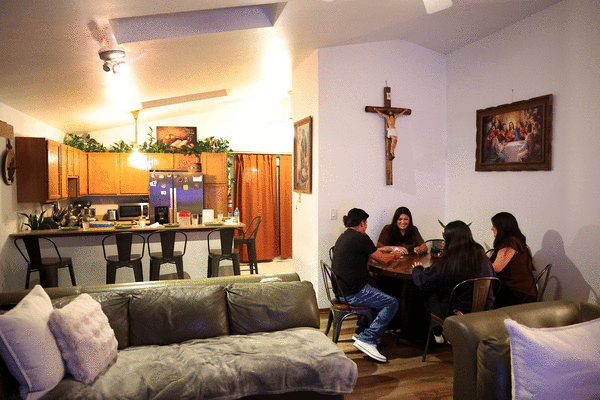
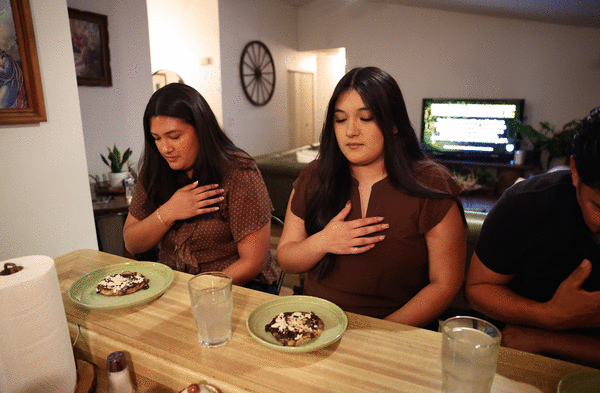


CHICAGO — For nearly a month before the midterm elections, every weekend Arleth Salas knocked on doors around her neighborhood in McHenry County, asking people to go out and vote. McHenry, one of the state’s most Republican-leaning counties, has been her home for the past two decades.
But this was her first time appealing to her neighbors. Because this year’s election was personal to her.
Salas was born in the Chicago area to parents without legal status in the country. Last fall, one of her uncles was detained by federal immigration agents while working a landscaping job “for seemingly no reason other than being brown,” she said.
He had worked in the country for more than 20 years and had a clean record, she said. Still, he was quickly deported. Since then, the Salas family has lived in fear that their parents will be next.
Salas chose to turn that fear into action, encouraging her younger sister, cousins and friends, all children of immigrants, to vote for Democratic candidates, including Gov. JB Pritzker, who heavily criticized President Donald Trump’s immigration enforcement and vowed to protect immigrants.
“The only thing I could do to help protect them (my parents) was to go out and vote,” Salas said. “Now we have to push, not only to stop the cruelty but for an immigration reform.”
Now, Salas and other children of immigrants are feeling cautiously hopeful after Democrats swept elections earlier this month across the country, including McHenry County, which voted for a Democrat in the gubernatorial race for the first time since 1852. The national shift has mobilized the immigrant community and its leaders to begin pushing newly elected officials to work toward immigration reform.
The Illinois Latino Agenda, a coalition of Latino leaders and community organizations across the Chicago region, said Latino voters rejected the Trump administration’s policies, pointing to election results showing about 6 in 10 Latino voters supported Democratic House candidates, a double-digit shift from 2024. It also cited polling showing that 60% of Hispanic voters believed immigration enforcement had gone too far before the election.
In Chicago, the coalition said, nearly 85% of voters demanded that the federal government answer for the harm Operation Midway Blitz inflicted on residents, workers and small businesses.
Latino voters who helped Trump win in 2024 shifted back toward Democrats in 2026, partly in response to immigration enforcement. A Tribune analysis of city election data found that the higher the rate of Latinos in a ward, the greater the shift back toward Democrats. Two wards swung by more than 20 percentage points.
On Wednesday, congressional Democrats gathered in Washington with business leaders and immigration advocates, calling for solutions to immigration and border security. That includes work permits and a path to legalization for long-term immigrants.
“If they (the Trump administration) want to work with us, we will work with them,” said Benny Melendez, vice chair of the Texas Builders Association. “If you want to continue harassing our communities … These same communities you’re now harassing will make sure you lose the White House.”
Closer to home, newly elected leaders, including congresswoman-elect Patty Garcia, acknowledged the votes of children of immigrants and the overall Latino participation that solidified Illinois as a blue state. Garcia vowed to work toward a path to citizenship for Deferred Action for Childhood Arrivals program recipients, and a path to legalization for long-term immigrants without status, many of whom have been targeted by Trump’s immigration enforcement.
For Salas and her younger sister, Aolany Salas, the election results have provided a sense of relief and hope. Their parents, she said, feel “a bit safer.”
On the morning of Nov. 3, Aolany Salas, 19, went to the polls with her older sister, Arleth Salas, her cousin and three friends from school, all of whom were voting for the first time, all children of immigrants living in the country without authorization.
They were encouraging one another to participate, Aolany Salas said. When she walked into the polling place in a predominantly white community, she felt nervous. “A bit intimidated,” she recalled.
She quickly noticed that she was perhaps the only person of color and likely the youngest person there. She wondered whether their votes would make a difference.
But she cast her ballot anyway.
For the first time, she felt she had a voice in a political process that could shape the lives of her parents and her future.
When she returned home, her mother hugged her and her sister. “She was proud,” Salas recalled. They cannot vote, so her mother took a photo of her daughters’ “I Voted” stickers to commemorate the moment.
For Salas, the hope is that the growing political participation of young people like her will eventually translate into a more humane immigration system, one that recognizes the importance of keeping families together.
She said her mother had helped her understand that even if the election did not immediately change what was happening to immigrants, it showed that a new generation was finding its voice and standing up for their parents.
“Maybe not for us right now, but our future, but mostly our parents,” Salas said.
Across the Chicago area, the new generation of Latino voters went to the polls with a shared motivation: protecting their families and having a say in the policies shaping their futures.
“Children of immigrants grew up translating for their parents at the doctor’s office, at the bank, at parent-teacher conferences,” said Erendira Rendon of the Resurrection Project, a nonprofit that provides resources for immigrants in Chicago. “This time, they spoke up for them at the ballot box, they rejected hate and voted to secure permanent protection for their parents. It is now time for the elected to act and pass immigration reform.”
At 18, Ruby Rodriguez had waited years for the opportunity to cast her first ballot. She finally got her chance soon after her birthday, joining her older sister at an early voting site near their home in Belmont Cragin on Chicago’s Northwest Side.
Rodriguez, a senior at Prosser High School, turned 18 on Oct. 24. The day after her birthday, she registered to vote and cast her ballot.
Her parents immigrated to the United States from Ecuador when they were about 17 and have lived in the country without authorization since.
For Rodriguez, voting was an opportunity to exercise a right her parents do not have.
“I know they moved here so that I could have these opportunities and to be able to get an education and use my voting rights,” she said. “And overall, to also help elect people who will not harm my parents or my community in any way.”
The fear surrounding immigration enforcement has made that responsibility even more personal.
Rodriguez remembers coming home one day during the immigration raids in Chicago and finding her mother crying on the couch as she watched the news. It was the first time she could remember seeing her mother cry.
Her mother, she said, had spent years trying to remain strong for her children. But the arrests and the possibility of families being separated had made the threat of losing everything they had built in the United States feel painfully real.
“She was just crying,” Rodriguez recalled. “We talked about how scared she was and how she’s been here for so long, yet she still hasn’t been allowed to get her documents and to become a citizen.”
The thought that her parents could one day simply disappear from her life was frightening, she said.
“I am voting for those who can’t. I’m voting for my parents who can’t, and I’m voting for my community who can’t, for my uncles who can’t, for my cousins who can’t, for my friends who can’t,” she said.
Rodriguez said the election results gave her hope that the political conversation around immigration and the future of immigrant families could change.
She is particularly looking toward the next presidential election, when she hopes to see a renewed push for immigration reform and a pathway for families like hers to obtain legal status.
After the election results, Illinois U.S. Sen. Dick Durbin said there is an opportunity to advance the DREAM Act and protections for temporary protected status holders before the end of the year. He pointed to a discharge petition led by Texas Democrat Rep. Sylvia Garcia that needs one additional signature to move forward in the House.
If successful, the effort could bring the legislation to a House vote and allow the Senate to consider it, Durbin said. He hopes both chambers could vote on the measure before the current Congress ends.
Durbin, who has advocated for the DREAM Act for nearly 25 years, said lawmakers, including Republicans, recognize the need for a more sensible immigration system that balances border security with opportunities for immigrants to contribute to the country.
Asked by the Chicago Tribune whether the election results represented a broader opening for immigration reform or primarily a reaction to the Trump administration’s enforcement policies, Durbin said the two issues were connected.
“We can have a safe and secure country, we can have a border policy that makes sense as well, and we can treat people humanely,” Durbin said. “You can’t separate these things.”
Over the past year, the majority of immigrants arrested and deported in the Chicago area have been Mexican nationals who had lived in the United States for an average of 15 years. Most had no criminal record, and many had children born in the United States.
Many of them are now motivated to vote for their parents.
____
Chicago Tribune’s Joe Mahr contributed.
____
©2026 Chicago Tribune. Visit at chicagotribune.com. Distributed by Tribune Content Agency, LLC.

















































Comments