Editorial: Voters rejected tariffs. Congress should too
Published in Political News
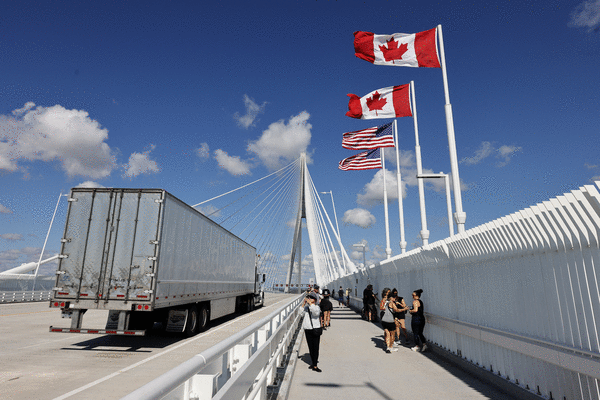
Amid the drubbing Republicans received in midterm elections on Tuesday, one point shouldn’t get lost: Voters have summarily rejected the president’s tariffs, and the new Democratic congressional majority should do what it can to overturn them.
Erratic tariff policy has now been disrupting the the U.S. economy for close to a decade. Although the full consequences will take time to emerge, it’s clear that the costs to date are heavy, and falling on Americans. Voters have noticed: Large majorities told pollsters that tariffs had hurt the economy, punctuating the electorate’s overall dissatisfaction with rising prices.
Tariff advocates — notably the president — have argued that an economy as big as the U.S. has untapped market power in global trade, meaning high tariffs can force foreign suppliers to cut their prices. In effect, foreigners will pay the tax, leaving domestic consumers no worse off.
A tempting prospect, and in theory not entirely implausible.In practice, though, the evidence is clear: The idea is just plain wrong.
This should’ve been obvious long before Election Day. Multiple studies of duties imposed in 2018-19 had already found their effects were fully passed through to the U.S. side of the border. Newer work finds the same of those imposed in 2025.
Higher costs get spread around different kinds of buyers: importers, wholesalers, retailers, producers using imports as inputs, and final consumers. This dispersal obscures and delays the eventual effects of tariffs on headline inflation — which is concerned only with that last category, the prices of final consumer goods. Despite such complexities, the basic fact remains that Americans have been picking up the bill.
Volatile policy has further complicated the picture. Rates applied to particular countries have often been wildly at odds with what was first announced. Tariffs have veered up and down in response to trade partners’ concessions, legal setbacks and shifting rationales. With the outlook so uncertain, importers have likely chosen to absorb some of the higher costs for now, rather than risk losing customers because of what might be a temporary disruption. But such relief is likely to be temporary.
Surveys this year found that more than 40% of businesses hit by tariffs expected to pass through more in due course.Economists at the Federal Reserve Bank of New York have clarified two other indirect channels through which, after a delay, tariffs raise consumer prices. First, they push up the costs of inputs in production, which makes other final products more expensive. Second, they let sellers of competing goods raise their prices too. These additional effects represent about 30% of the measured pass-through to consumer prices, according to the study.
The authors find that, as of February, tariffs had added nearly three percentage points to consumer prices.Consumers are eventually on the receiving end in other ways as well. Studies have shown that they’ve switched to buying products with higher price per unit weight, “half of which is achieved via smaller package size.” Tariff-induced shrinkflation, in other words. As in 2018-19, they’re also gravitating to cheaper, lower-quality goods.
To be sure, these findings barely scratch the surface of the harm the new tariff policies will do if allowed to persist. The biggest long-term costs of protection, even when it’s well-executed, are diminished competition, mounting inefficiency and slower innovation — burdens that would gradually undermine the U.S. economy’s core strengths.
Democrats are rightly celebrating a huge victory this week. They should recognize that few issues are more responsive to voters’ concerns about inflation — or more urgent to quickly address.
____
The Editorial Board publishes the views of the editors across a range of national and global affairs.
©2026 Bloomberg L.P. Visit bloomberg.com/opinion. Distributed by Tribune Content Agency, LLC.












































Comments