Supporters of Alaska's election system are far outspending a group seeking to repeal it
Published in Political News
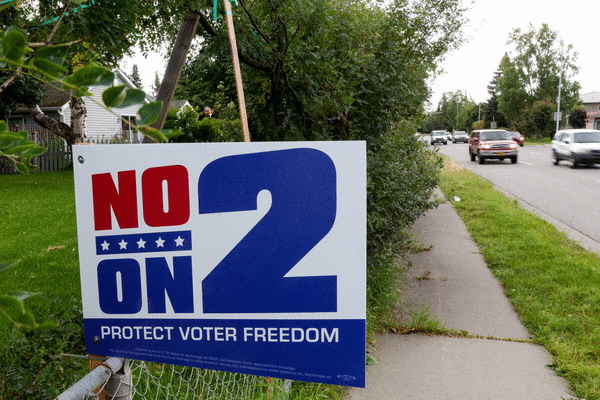
With a week to go until Election Day, the campaign in favor of repealing Alaska's election system has raised $2.5 million — less than a quarter of the amount raised by the campaign seeking to protect the state's election laws.
Ballot Measure 2 would repeal Alaska's open primaries, ranked choice general elections and campaign finance reporting requirements.
The No on 2 campaign has raised $10.4 million this year, including $1.7 million since the beginning of this month.
Supporters of the campaign in favor of the initiative include leaders of the Alaska Republican Party, Elon Musk and other GOP-aligned Outside megadonors. President Donald Trump has railed against Alaska's election system, and a series of statewide Republican leaders, including Gov. Mike Dunleavy and the Republican candidates running to succeed him, have endorsed the initiative.
Alaska's election system was adopted by voters in 2020, also by ballot initiative. An effort to repeal the open primary and ranked choice voting system failed narrowly in 2024. Since then, Alaska Republicans have made the repeal effort one of their top priorities, reasoning that the system is confusing, and that it has made it more difficult for the state to elect conservative leaders.
Recent polling predicts a tight race on this year's initiative. More than 58,000 Alaskans have already cast their ballots since early voting began.
Supporters of the state's election system — who oppose Ballot Measure 2 — argue that the system favors more moderate candidates and has helped promote bipartisanship in the state Legislature.
Backers of the No on 2 campaign also include wealthy Outside donors, including Kathryn Murdoch, a billionaire who has invested heavily in promoting Alaska's election reform since 2020.
Keeping the existing election laws is also favored by a wide spectrum of Alaskans, including leaders of the state's bipartisan coalitions in the House and Senate, labor unions and the Alaska Federation of Natives, the largest organization promoting the interests of Alaska Native people.
In 2024, when a grassroots effort sought to repeal open primaries and ranked choice voting, the campaign opposing the initiative raised a total of $14.8 million. Meanwhile a group supporting that year's repeal effort raised less than $170,000. The sponsor of the 2024 initiative called it a "David and Goliath story."
Sponsors of this year's effort have sought to harness a network of GOP donors to erase the fundraising disparity, but have struggled to keep up with insatiable spending by the No on 2 campaign, which has bought up millions of dollars' worth of air time for advertising.
The No on 2 campaign has downplayed the effect of ranked choice voting, which only comes into play when the top vote-getter in a race fails to get more than 50% of votes — a relatively uncommon outcome. Meanwhile, the campaign has emphasized the importance of the open primary system, which has repeatedly prevented more conservative candidates from defeating moderates since it was implemented in 2022.
Supporters of the existing election laws have also sought to highlight the importance of the campaign disclosure laws that would be repealed under Ballot Measure 2. Those laws have made it possible to track the names of political spenders who otherwise funnel their money through so-called "dark money" groups, including those spending money on this year's ballot initiative.
Sponsors of the Repeal Now campaign, meanwhile, have focused almost entirely on the top-four ranked choice general election system, pointing to unlikely outcomes under the system — like a namesake challenger in the U.S. Senate race and an East Coast felon running in the state's U.S. House race — with a slogan of "yes to end the mess."
_____
© 2026 Anchorage Daily News. Visit www.adn.com. Distributed by Tribune Content Agency, LLC.

















































Comments