Where Florida AG candidates Uthmeier, Rodriguez stand on abortion, surrogacy
Published in Political News
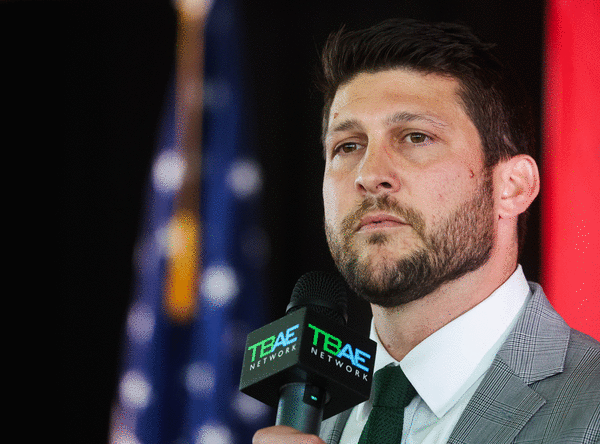
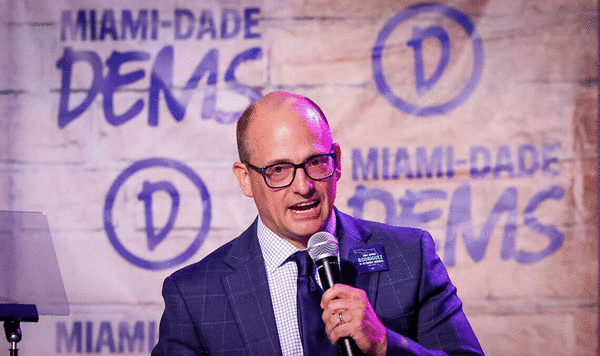


TALLAHASSEE, Fla. — Abortion isn’t on the ballot this year in Florida. But reproductive rights have become an issue in the attorney general race, where staunch anti-abortion Republican James Uthmeier faces Planned Parenthood-endorsed Democrat Jose Javier Rodriguez.
In a podcast episode posted earlier this month, Uthmeier sat down with anti-abortion activist Lila Rose and said he prayed for an end to abortion entirely.
Florida law restricts most abortions after six weeks of pregnancy. There are exceptions for women with documented proof of rape, incest or sex trafficking up to 15 weeks. There are also exceptions for instances when the life of the mother is at risk.
Uthmeier’s office has already challenged the Food and Drug Administration over federal approval of abortion medication and sued Planned Parenthood over how it has marketed that pill.
“We’re going to use every tool we have to go after the abortion clinics that are killing babies,” Uthmeier said in the video posted on Live Action’s social media.
Uthmeier, who was appointed attorney general by Gov. Ron DeSantis, has also gone after surrogacy. The Times/Herald first reported earlier this year that his office has intervened in a confidential Broward County surrogacy case despite the wishes of the surrogate mother and couple.
He has likened surrogacy to slavery and said it should be deemed unconstitutional. His legal arguments in that case go after not only surrogacy, but attack reproductive technology more broadly, an attorney on that case said.
Rodriguez, a former state senator from South Florida, has been a supporter of abortion access.
In response to Uthmeier’s statements in the Live Action podcast, Rodriguez said in an interview this month with CBS Miami that Uthmeier “should not be trying to use the court system to push a very radical agenda.”
Ahead of Election Day, a GOP operative sent out text messages that tried to paint Rodriguez as not being a supporter of reproductive rights. The message criticized Rodriguez for not voting on a 2015 bill that required women to wait 24 hours after an initial consultation before getting an abortion.
Rodriguez voted no on the bill after the final roll call. His campaign said the text messages were misleading and meant to confuse voters.
“His record and commitment to protecting a woman’s right to choose speak for themselves,” a Rodriguez spokesperson told the Orlando Sentinel.
Here’s what to know about where the candidates stand on some key reproductive issues.
Parental consent
In 2020, Florida’s Republican Legislature pushed for a bill to require parental consent for any minor getting an abortion. Rodriguez, then a Florida state senator, voted no on the proposal. The bill still passed.
That law offers an option for minors to avoid getting parental consent if they go through the judicial waiver process, which puts the decision in the hands of a judge. Those cases are confidential.
Last year, a Florida court invited Uthmeier’s office to intervene in a 17-year-old’s request for an abortion without parental consent. After Uthmeier’s office argued that the waiver process violated parental rights, the court agreed.
Based on that court ruling, the majority of minors cannot use the waiver process to get an abortion without their parents knowing. Only children in select circumstances can, like if they are victims of child abuse.
Uthmeier celebrated the court’s decision.
Surrogacy and IVF
Uthmeier has compared surrogacy to slavery, a point he reiterated on the podcast with Rose.
His office’s involvement in a private family law case in Broward County has the potential to reshape not only surrogacy law in Florida, but a range of reproductive issues, including the question of fetal personhood. If the court accepts his office’s view, it could prohibit or heavily restrict surrogacy in Florida.
On the podcast, Uthmeier said surrogacy was “dangerous and horrific” but could bring the conversation about fetal personhood to the forefront.
“If it is a human being, you cannot contract to buy and sell this individual,” Uthmeier said, adding that he “unequivocally” believes fetuses to be human beings.
The surrogacy case that his office intervened in was expected to be routine. The couple, two men living in France, had contracted with a Broward woman to carry their child. But when the couple went in front of Judge Marlon Weiss to petition for early parental rights, Weiss wrote an order suggesting that surrogacy itself may be unconstitutional.
Roughly 24 hours after the fathers told the court about the surrogate giving birth, Uthmeier’s office petitioned to intervene as a party in the court case. It isn’t clear how his office heard about the case. The child has been with the fathers since birth and is not likely to be removed from their care.
That case is pending in the Fourth District Court of Appeal. The documents on either side are not public, but an attorney on the case previously told the Times/Herald about some of Uthmeier’s arguments.
Uthmeier’s office has reportedly argued that the government has a duty to protect children who didn’t have a say in not being raised by their biological parents. His office has also suggested that people who donate sperm, eggs or embryos may need to maintain parental rights and obligations.
Those arguments could impact not only surrogacy, but also reproductive technology like in vitro fertilization. And if a court were to find that fetuses have the same rights as born people, it could prohibit abortion.
In response to Uthmeier’s actions in the surrogacy case, Rodriguez has defended reproductive technology.
“The fact that James Uthmeier has a radical ideology does not give him the right to control your healthcare decisions,” Rodriguez said in a video on social media. “Whether, when and how to have children is your decision; it is not the government’s.”
Planned Parenthood
Rodriguez has been endorsed by Planned Parenthood — an organization that is being sued by Uthmeier’s office.
Uthmeier has accused the health organization of lying to women about the abortion medication mifepristone.
His office is challenging Planned Parenthood under the state’s Deceptive and Unfair Trade Practices Act and its anti-racketeering law for saying the medication is “safer than Tylenol.” His office is asking the court to fine Planned Parenthood $10,000 for each medication abortion provided since the marketing language went up in June 2023.
It has also asked the court to consider taking steps like requiring Planned Parenthood to give up real estate, stopping it from providing abortion medication or suspending the organization’s license to do business in Florida.
On the podcast, Uthmeier said the lawsuit could bankrupt the group if the state wins.
“I’m excited to go fight for truth, fight for life, take the enemy down using any tool we have above and beyond just our (six-week abortion ban),” Uthmeier said.
_____
©2026 Tampa Bay Times. Visit tampabay.com. Distributed by Tribune Content Agency, LLC.

















































Comments