The lawyer overseeing the Justice Department's election monitoring in Pa. is part of a national effort
Published in Political News
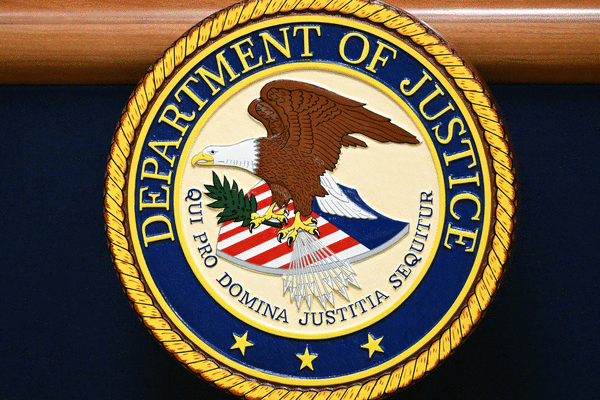
PHILADELPHIA — The Justice Department’s plan to send monitors to polling places in four Pennsylvania counties is being overseen by a lawyer who joined the agency earlier this year, and whose background includes stints at private firms working on municipal law, corporate issues, and labor and employment matters.
James T. Catania, a trial lawyer in the Justice Department’s Civil Rights Division, sent a letter last week to Pennsylvania Secretary of State Al Schmidt saying federal monitors would be sent to Philadelphia, Allegheny, Luzerne, and Lehigh Counties for the Nov. 3 election to ensure polling places were complying with federal election laws, including the Voting Rights Act.
Catania — who joined the Justice Department in May, according to his LinkedIn page — is not alone in helping coordinate that effort. In his letter to Schmidt, he said he was the “regional coordinator” overseeing monitors in Pennsylvania, and he sent similar letters to officials in Michigan and Ohio in which he said at least one other attorney would be providing additional assistance.
At least five other Justice Department lawyers have sent letters with the same messages to election officials in states including Georgia, Indiana, Maine, Colorado, and Washington.
And Assistant Attorney General Harmeet Dhillon — who leads the agency’s Civil Rights Division — has said in television appearances and on social media in recent weeks that she is spearheading the national monitoring effort.
In all, Dhillon said, the Justice Department plans to deploy 1,000 monitors to all 50 states, and personnel — which will include lawyers and other staff — will be seeking to ensure polling places have proper disability access, offer sufficient language assistance for voters who speak or read limited English, and look out for instances of voter intimidation.
“We are going to have the largest number of monitors and observers at the polls on Election Day this year in American history,” Dhillon said on Newsmax earlier this month.
The expanded use of election monitors comes as some election officials nationwide worry about whether President Donald Trump will use the power of the federal government to act on his longstanding belief that many contests are “rigged.”
In Alaska, the Justice Department has already filed a lawsuit asking a federal judge to block the results if the Republican candidate loses because of potential confusion over two candidates on the ballot who have nearly-identical names.
Still, federal election monitors are neither new nor particularly controversial if they perform the functions Dhillon has described, election experts say.
The American Civil Liberties Union of Pennsylvania said President Joe Biden’s administration used monitors in the same counties in previous elections without issue.
And Philadelphia City Commissioner Seth Bluestein said when Justice Department monitors were deployed to Philadelphia for the 2022 midterms — under Biden — their main focus was ensuring polling places had materials available in both Spanish and Chinese.
Bluestein said he did not believe this year’s monitoring announcements were cause for concern.
“It is my expectation that anybody who is in Philadelphia on Election Day will follow all applicable state and federal laws,” he said. “And I have every expectation that that will be the case here as well.”
The Justice Department declined to make Catania available for an interview.
A spokesperson said Catania, like the other regional coordinators involved in the monitoring effort, would be based in Washington, D.C., on Election Day. The spokesperson did not specify how many regional coordinators there are, but said each oversees a group of monitors and supervisors in the field, and are expected to “field any issues or questions reported up” by those making observations at polling places.
“All of this is in keeping with prior election monitoring practice at the DOJ,” the spokesperson said.
An Inquirer review of publicly available records did not appear to show a history of political donations by Catania.
He is listed in court records as a participant in lawsuits attempting to obtain the unredacted voting records of Virginia and West Virginia — but both lawsuits, which have been dismissed and are currently on appeal, were filed before he joined the agency earlier this year.
Catania earned his bachelor’s degree from Rutgers University in 2009, then earned a master’s degree in military strategic intelligence from American Military University, his LinkedIn page says. He was twice deployed twice to Afghanistan while serving in the Air Force, according to an archived online biography from an old job.
He briefly worked in the White House’s Office of Science and Technology Policy in 2016, his LinkedIn says, but then went on to study at Seton Hall University’s law school, where he was an associate editor at the Seton Hall Circuit Review, a student legal journal, and the president of the Student Veterans Association.
Bluestein, the Philadelphia city commissioner, said he expected to speak with Catania before Election Day about the monitoring effort.
And Catania, in his letter to Schmidt, said he would set up online conference calls with each jurisdiction to explain what Justice Department monitors planned to do — which he said was to ensure compliance with the Voting Rights Act, National Voter Registration Act, and Americans with Disabilities Act, among other provisions.
_____
©2026 The Philadelphia Inquirer. Visit inquirer.com. Distributed by Tribune Content Agency, LLC.












































Comments