Adam Minter: The NFL's CTE research can't stop with the pros
Published in Op Eds
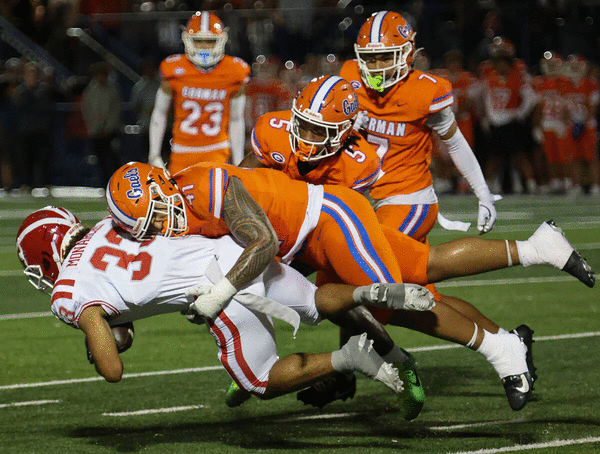
Most Americans who play tackle football never get anywhere near the National Football League. The vast majority don’t play past high school.
So when a new study in JAMA Network Open, a major medical journal, estimated that 74.5% of former NFL players who died between 2008 and 2023 had chronic traumatic encephalopathy at death, another finding stood out to me even more. There’s no data to make a similar estimate for those who played football only through high school.
According to Professor Yorghos Tripodis of Boston University, the JAMA study’s corresponding author, those data can be collected and analyzed. But doing so requires time and money.
The NFL has plenty of both. While it already supports research into football safety at the high school level, it still has an obligation to help close this significant gap. The league can’t spend millions of dollars promoting youth tackle football while leaving unanswered questions about the people who play it.
Since launching Punt, Pass, and Kick in 1961, the league has been convincing children and families to embrace the sport. In 2014, for example, the NFL Foundation committed $45 million over five years to “support the growth of youth football.” And it continues to provide grants to high school football programs.
To its credit, the NFL has also invested tens of millions of dollars in research on head impacts, concussions and their long-term effects. In 2018 alone, the league awarded $35 million to five projects, including $9.4 million for concussion reduction research in high school athletes. “We have a lot of resources that no other league in the world has,” Dr. Allen Sills, the NFL’s chief medical officer, told me during a video call.
They’ve used them. Dr. Douglas Terry, the league’s senior director of research, provided a lengthy portfolio documenting dozens of published studies on brain injuries and their prevention, among other areas of study, dating back to 2016. In conversation, both Sills and Terry emphasized that reducing impacts and concussions is their priority.
Yet amid all these research and safety initiatives, a noticeable gap in what we know about CTE in high school players persists.
A 2019 Mayo Clinic study tried to close it by using obituaries and high school yearbooks to identify former athletes among people whose brain tissue was already available for examination (in an autopsy registry). But the sample wasn’t representative of football players nationwide.
That’s a formidable scientific challenge. The JAMA estimate about deceased NFL players rests on almost two decades of research, including a Boston University brain bank established in 2008. Notably, the NFL played a role there: It helped fund BU researchers and has encouraged current and former players to donate their brains.
Because families of players with cognitive problems are more likely to donate brains, researchers also needed to assemble thousands of death records and findings from a separate, NFL-funded study of neurological problems in retired players. Those data allowed researchers to come to their estimate.
In an email, Tripodis said that adapting a similar approach to high school football players would require a well-defined population of athletes, cultivating brain donors from within that population, and assembling health and death information on donors and non-donors alike.
He added that building up a sufficient number of brain donors would be a long-term undertaking. But other parts of a prospective study could begin now, including the identification of former high school players and the collection of health and mortality information about them. All of these tasks would require, in the words of Tripodis, “sustained funding and partnerships with schools and communities.”
That’s where the NFL’s deep relationships with schools and football organizations can be helpful. The connection would help researchers recruit participants, while the league’s financial resources could establish an endowment to support the work for decades. All the while, it's essential that a study remains independent of the league.
The public health stakes are huge. The National Federation of State High School Associations counts more than 1 million tackle football players in 2025–’26 alone.
Research could begin with those who played in the 1960s and 1970s and are now older adults. An estimate of CTE prevalence among those who have died wouldn’t tell today’s players exactly what risks they face, given the increased attention to player safety and efforts to make football safer. But it would establish a historical baseline against which the effects of decades of changes to the game could eventually be measured.
A league that embraces the ideal of being America’s Game has every reason to make this long-haul commitment. The NFL inspired generations to play football; now it should help us understand the risks they faced.
_____
This column reflects the personal views of the author and does not necessarily reflect the opinion of the editorial board or Bloomberg LP and its owners.
Adam Minter is a Bloomberg Opinion columnist covering the business of sports. He is the author, most recently, of “Secondhand: Travels in the New Global Garage Sale."
_____
©2026 Bloomberg L.P. Visit bloomberg.com/opinion. Distributed by Tribune Content Agency, LLC.















































Comments