Commentary: A big tent revival -- Faith and pluralism in the 2026 midterms
Published in Op Eds
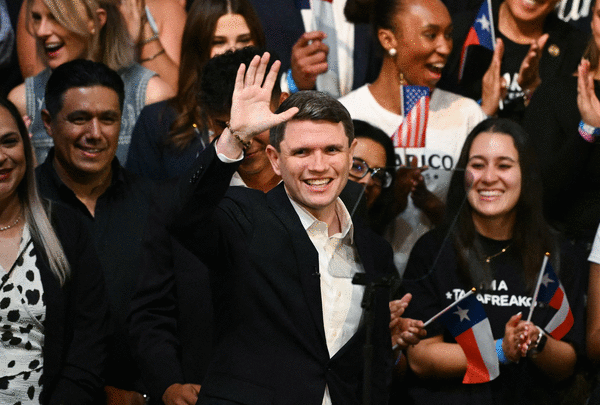
The morning after the Democratic electoral tsunami, the map looked different. Democrats reclaimed both chambers of Congress, won in states long treated as Republican strongholds, and strengthened their hold in Pennsylvania. James Talarico prevailed in Texas. Adam Hamilton, a United Methodist pastor, won in Kansas. Abdul El-Sayed’s victory in Michigan made him the first Muslim elected to the U.S. Senate. Wes Moore and Josh Shapiro won reelection as governors.
The results rebuked President Donald Trump and his party. They also invited voters to ask what kind of public life they want next.
The familiar phrase “big tent” describes a coalition broad enough to gather people with different histories, beliefs, and priorities. But this election suggests something more active: a Big Tent Revival. A revival is not just a gathering. It is a call to renewal, a test of whether shared conviction can become changed practice. The election has opened that question. The answer will come in the work of governing.
Consider the candidates whose victories helped give the night its breadth. Moore has spoken of faith as a source of service and moral responsibility. Talarico, a Christian and seminary student, has argued that faith can shape public commitments without giving government license to privilege one religion. Hamilton, a pastor before entering the Senate, said he would defend people's rights whether they have faith or not. These are distinct expressions of religious conviction, but each points toward a public ethic concerned with the lives and dignity of others.
Shapiro’s Jewish faith brings another moral tradition into view. His public language has drawn on tikkun olam, the Jewish call to repair the world. El-Sayed’s election carries a different significance: a Muslim American will enter a Senate where no Muslim has served before. His victory does not make him a proxy for every Muslim, just as Shapiro cannot be asked to represent every Jewish American. It does challenge the persistent assumption that some faith communities are guests in American civic life rather than participants.
The coalition’s importance lies in this combination of difference and common purpose. Voters did not have to share a theology to support candidates who spoke to everyday concerns: economic security, health care, education, safety, and the dignity of work. Nor did the candidates need to hide the sources of their moral commitments. The task was to translate conviction into a public program that could serve people beyond a single congregation, community, or party.
That distinction matters. Faith in the public square can widen our concern for one another; it can also be wielded to divide the worthy from the unworthy. Religious language is not proof of good leadership. A politician’s claim to faith deserves the same scrutiny as any other claim: Does it lead to service? Does it help carry the burdens people face? Does it honor the equal dignity of neighbors who worship differently—or not at all?
In my socio-theological commentary, I have returned to a basic question: Does our faith enlarge the circle of care, or narrow it? The answer cannot rest on how often a leader invokes God. It must be visible in choices—in whose needs count, whose voices are heard, and whether public power is used to repair harm or reinforce exclusion. A faith-informed politics is credible when it makes room for the vulnerable and holds the powerful accountable.
That is why “revival” is the right word only if it comes with responsibility. Election-night speeches can promise a new chapter; governing writes the sentences. The new majority will have to show that it heard the people who made this result possible. That means translating empathy into policy, and policy into tangible improvements in people’s lives. It also means governing with enough humility to recognize that a broad coalition contains real disagreements, not just convenient campaign imagery.
The tent will not hold because its members agree about everything. It will hold if they can work together without requiring anyone to surrender a name, a history, or a faith tradition to belong. Christians, Jews, Muslims, people of other faiths, and people of no faith can share a civic purpose while remaining different. The Constitution makes that possible; the moral labor of democracy makes it meaningful.
A wave election signals political change, not proof of moral transformation. The revival begins after the votes are counted, when elected leaders decide whether to spend the trust they received on spectacle or service. If this Big Tent Revival is to endure, it must become more than a coalition that won. It must become a public witness that keeps faith with people across difference—and makes the common good something everyone can recognize in their daily lives.
____
Rev. Dr. F. Willis Johnson is a spiritual entrepreneur, author, and scholar-practitioner whose leadership and strategies around social and racial justice issues are nationally recognized and applied.
_____
©2026 The Fulcrum. Visit at thefulcrum.us. Distributed by Tribune Content Agency, LLC.












































Comments