Aaron Brown: Is human progress leaving humans behind?
Published in Op Eds
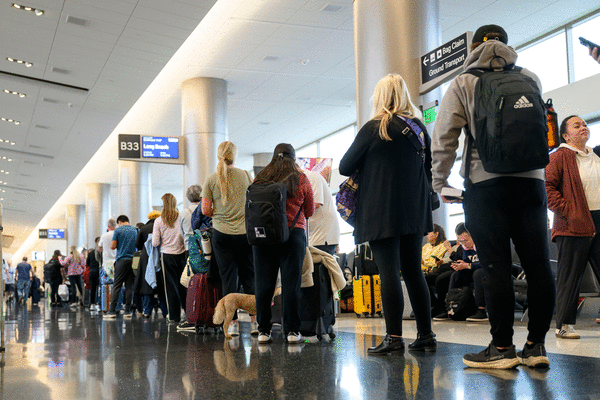
After the recent worldwide Microsoft outage, grounding of domestic air travel and this week’s online banking failure, what exactly can we count on in these times of massive technological change?
Each other.
Maybe not all of us, all the time. We see that some people are better at running governments and introducing new technology than others. But all of us, holding each other accountable, honing the everyday skills that make the world work, can rise to any occasion. Agents of progress would be well served to remember the human element in change.
For me, this story started a few weeks ago when Verizon announced it wanted to end the legacy landline service provided by its recent acquisition, Frontier Communications. Customers in Scandia, Minn., and on the North Shore of Lake Superior complained that cell coverage just wasn’t good enough to rely on for primary phone service. Having spent time around both places, I concur.
I live in a part of northern Minnesota that had copper lines until 10 years ago. There were drawbacks, including a loud buzz on the signal accumulated over many miles of lines. But when the power went out, a non-rare occurrence, our landline remained functional. Now, it’s tied to the internet, which requires full power to work.
It’s a minor thing, perhaps. Our cell service is better than before, and most of the time everything works fine. But when there’s a problem, it’s far away. And so are the people who fix it. And the cause of the problem? We might never know. I liked it better when the answer was “a tree fell” or “a squirrel got fried in the transformer.”
Why did the world’s largest software company go dark for four hours last week? Some early answers referenced Microsoft code glitches, Teams traffic and server problems, but there’s much more to learn. For offices around the world, including mine, the experience was simply an exercise in acceptance. There were no pipes to wrench or wires to check. It was “Waiting for Godot” if Godot was the sum of U.S. employment productivity.
Ditto for the Federal Aviation Administration ground stop on Friday, the effects of which still linger. The planes weren’t the problem. The passengers kept their shampoo in those tiny little bottles, just as they were told. Things seemed OK, but the communication system conked out because some very new software was sprung on very old infrastructure, or maybe a router was fried. Some details are missing from the story.
I’m reminded of the old Glen Campbell song, “Wichita Lineman,” sung from the point of view of a solitary worker who repairs rural power lines.
According to author Dylan Jones in his book about the 1968 song, Bob Dylan called “Wichita Lineman” the best song ever written. Songwriter Jimmy Webb’s sparse lyrics and the track’s bittersweet sound convey the sense of electricity moving through wires. It’s a burden that one man carries, and the song helps us know his inner life. He’s a human, just like the people who don’t even notice him as they drive by. He feels. We all do.
It’s hard to tell what’s “singing in the wires” these days. Software bugs, mostly. Screeching political diatribes, to be sure. There’s no better time to be in the construction trades, but the impetus is to build data centers that few of us truly understand.
Let’s be clear. The Microsoft 365 outage that stalled popular programs like Outlook and Teams, and the apparent overload that snarled air traffic control systems, are not reasons to reject technology. They are reminders, however, that distrust of technology is rooted in the way it affects people. Events like these remind of the complexity of the world we’ve made, and the financial and political profits so many have made in dismissing the people who keep, or perhaps kept, this system working.
We may now make machines — whole digital realms — capable of overwhelming our senses and capturing the physical world we’ve been building since humans first made tools. We are told these are merely new tools, a bold step forward in the development of humanity.
That’s certainly an exciting thought, but who wears the overalls and climbs the ladder to change the part? Is it our neighbor? When accountants, computer scientists, graphic designers (and, for that matter, newspaper columnists) lose jobs, where do they sign up for the new ones? Will there be a uniform? Will we work midnights, riding the lines out to Module 61C, ready to transfigure the whosaywhatsit at a moment’s notice? Or will we all serve each other coffee and takeout, telling ghost stories about the middle class?
Seriously, some of us would like to know. Until then, we’re still on the line, trying to keep society going. If that were somehow a political party, it would never lose. A revived spirit of community will hold if nothing else works.
_____
©2026 The Minnesota Star Tribune. Visit startribune.com. Distributed by Tribune Content Agency, LLC

















































Comments