Commentary: SNL's 'Sister' sketch about elder care was brutally accurate
Published in Op Eds
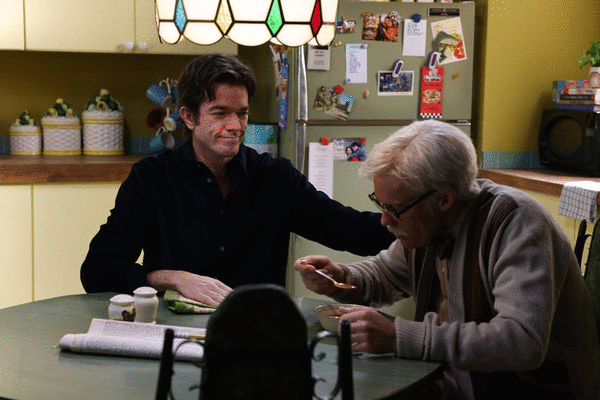
Over the weekend, “Saturday Night Live” shared a brutally accurate sketch about caregiving simply titled “Sister” that went viral across social media.
As actor and comedian John Mulaney, who plays the fake ad’s announcer and the son of an aging parent in the sketch, describes it, “Sister is a live-in 24/7 elder care provider that is completely free and also your sister. Now I can go back to my life and the stuff I like to do.” It was relatable because of the realistic scenarios it showed, from the caregiver calling doctors to dealing with insurance. But it also highlighted the issue of gender, that the default person caring often falls on the “sister” or the woman in the family.
I know firsthand what it feels like to be the one managing it all. As someone who was a primary caregiver to both of my parents, in childhood for my mother and then again in adulthood for my father. The sketch hit a nerve with millions of people because it reflected a difficult (and not recognized) reality in which women often are the ones to take on the burden of caregiving for aging parents.
According to a 2025 report from AARP and the National Alliance for Caregiving, there are currently 63 million adults in the U.S. providing ongoing care for family members. Of those, an estimated 61% (about 36 million) are women. The Women’s Bureau of the Department of Labor also found that women age 55 or older provide about 35 hours a week of unpaid care.
While the family may see her as the “helper,” the “organizer,” the “fixer” and the good daughter who will do whatever it takes to care for a parent, it often means the woman in that role is sacrificing her own well-being and life.
The joke at the center of the “SNL” sketch resonated because it mirrors real life. Many of the comments on its Instagram reposting said it was funny, but other viewers were upset because of how accurately the caregiver “sister” was portrayed. One commenter shared that, “All the sisters in the world are collectively crying (inside obviously, because we have lots of s— to do.).” Others called it a “documentary,” and one said, “This is more of a PSA than a skit. Thanks SNL!”
Although there are a number of factors that often contribute to a woman becoming the default caregiver to a parent, from societal pressures to cultural norms, those are not the only reasons.
“It’s a mix of expectations, economics and family dynamics,” Jason Resendez, president and chief executive for National Alliance for Caregiving, explained to me. “Social and cultural conditioning are definitely part of it. From an early age, women are taught that caring for others is their job, and families often assume a daughter will step in without anyone ever discussing it.”
When I began taking on the role as sole caregiver for my mother at age 13, after she suffered a traumatic brain injury at work, the burden took a significant toll on my mental health, social emotional development and academic performance. Decades later in adulthood, when my father experienced a series of heart attacks and was later diagnosed with colon cancer, he had to rely on me as his caretaker too. Again, it led to high levels of stress, as I had to manage his care, finances and doctor’s appointments while also navigating motherhood. In both situations, managing my parent’s activities of daily living— the need to assist them with daily functional tasks like dressing, feeding, walking and medication management — was entirely overwhelming. But, I did it because there was no alternative.
This experience isn’t uncommon for female caregivers to have an impact on their health and their life. One 2025 systematic review in Archives of Gerontology and Geriatrics, which assessed 47 studies and 14,919 caregivers, found that women experience a greater burden than men in this role. Another study from the Pew Research Center in early 2025 reported that although all caregivers can experience negative effects from the weight of their responsibility, women have more of a detrimental impact on their well-being and their physical health than men do.
This issue that women become the default person to care for aging and chronically ill parents goes far beyond the matter of how it affects their health. The larger misconception in society that women can and should do it all — while also managing a career and raising children — is unrealistic and unfair.
“Caregiving is deeply gendered, and that has shaped how we value it,” Resendez said. “Because caregiving has historically been seen as ‘women’s work,’ our policies and culture treat it as something done for free, out of love, behind closed doors. That’s why we still lack paid family leave, affordable child care and elder care.”
In order to repair this issue of women shouldering the burden of caregiving in the U.S., it’s critical to recognize that every single caregiver — but especially women — needs to be offered paid family and medical leave for the work they are doing. Resendez says policies that make care possible for everyone are also part of the solution, “so no one has to give up their financial security to care for someone they love.”
Women are also being forced to choose between their jobs and looking after their loved ones, said Ai-jen Poo, executive director of Caring Across Generations & president of the Domestic Workers Alliance. “This skit hit home for so many of us because as a nation, we have not put the policies in place to support the care our families need, or between raising children and caring for their parents in the sandwich generation.”
Poo says that if the U.S. had policies that universally supported families with caregiving responsibilities, like paid family and medical leave and universal long-term care or if Medicare covered long-term care, we could afford to bring in professional direct-care workers to support families in need. “If direct-care workers were paid family-sustaining wages with benefits,” Poo added, “we could count on a strong foundation of professional care workers to help care for us and our families long into the future.”
Millions of women, like me, saw themselves as the “Sister” in that “SNL” sketch because it was an accurate depiction of the very real mental and physical load we carry every single day. But, now is the time to do more than laugh at that moment. It’s an opportunity to continue the conversation on a national level. Whether you are a caregiver, or someone who knows one, we must all collectively push for change and challenge Congress to act now because every caregiver — especially women — deserves better.
____
Lisa McCarty is a journalist currently working on a reported nonfiction book about caregiving.
©2026 Los Angeles Times. Visit at latimes.com. Distributed by Tribune Content Agency, LLC.

















































Comments