Editorial: Violence interrupters in Chicago schools? It's an idea worth exploring
Published in Op Eds
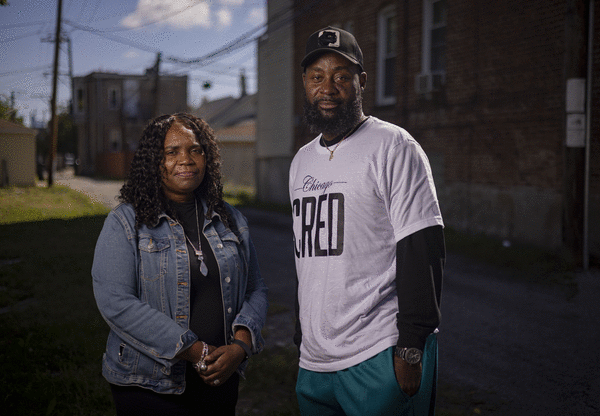
When we met last Wednesday with representatives from Chicago’s community violence intervention ecosystem, they came to talk about the need for broader investment in their preventive approach to curbing crime.
But they mentioned something else that made our ears perk up.
CVI operators often work with young Chicagoans. But they can’t operate inside Chicago Public Schools.
Young people make up a significant share of both victims and offenders, according to Chicago police data. Nearly a quarter of homicide victims are 21 or under, and of identified homicide offenders, nearly 20% were 21 or younger. Students are not immune to violence. In April, 16-year-old Kenyae Franklin was killed by a group of gunmen at 9:15 on a Tuesday morning. He was running, trying to get inside his school, Safe Achieve Academy. The building bore the marks of the killing in bullet holes and shattered glass.
“CPS students who are at the greatest risk of shooting or being shot are being denied the best resource that could keep them alive, the mentorship and support of near peers who have shared experiences,” Yolanda Fields told us. Fields is executive director of Breakthrough Urban Ministries, a Chicago nonprofit whose portfolio of services includes CVI.
The gang landscape in Chicago has changed much over the years, becoming much more fractured and thus more difficult to pin down. Early intervention could serve as a way to cut off the gang pipeline.
Among those leaders with whom we met last week was Arne Duncan, managing partner of Chicago CRED, a violence-prevention nonprofit focused on bringing down gun violence. Oh, and he also ran Chicago Public Schools from 2001 to 2009 before being tapped by President Obama to run the U.S. Department of Education. Meaning, he knows a thing or two about Chicago schools.
Duncan is uniquely positioned to comment on the idea of testing out a CVI program that works with at-risk CPS schools. That he knows both worlds — CVI and CPS — and endorses the notion carries much weight.
In terms of safeguards, Duncan told us, CPS would need to develop a clear policy. For example, he offered, schools could expressly not allow in anyone with outstanding warrants or a history of sexual crimes, and only people who have graduated from an approved CVI program could be allowed to do this work in schools. Even then, he added, school leaders should have to “establish clear conditions for engagement. Among other things, you have to get permission from parents.” Already, CPS requires outside vendors and volunteers who work with students to undergo rigorous background checks.
Yes. We think something like this deserves serious consideration.
A limited CPS CVI pilot program with appropriate safeguards could be a valuable asset for schools in neighborhoods where violence is concentrated, with the goal being that a temporary test of this model could tell us whether such an approach can have a positive impact on bringing down crime.
In a follow up, Duncan spitballed a rough sketch of what this could look like. First off, start in just a few places where gun violence is particularly prevalent. That handful of schools would get outreach workers with a caseload of 15 to 20 students each, under the assumption that the school has roughly 30-40 high-risk students. With that math, a pilot school would need about two outreach workers.
Such a setup is not unprecedented. Boston Public Schools has a history with CVI, and Oakland Unified School District in California has a school-based program. Boston’s pioneering Operation Ceasefire initiative, launched in 1996, was associated with a remarkable 63% reduction in youth homicides, earning the effort the nickname the “Boston Miracle.” The program combined law enforcement, community outreach and social services to reach young people at risk of gang violence. It wasn’t a school-based program, but its success offers compelling evidence that targeted interventions can make a difference.
We’re no Pollyanna on the counterargument to further CVI investment, whose detractors portray the method as paying gang members not to commit crimes.
Effective CVI workers, by virtue of the work itself, must be relatable — meaning, they understand the nature of crime because they’ve experienced it in some way, shape or form. We wrote in 2025 about the CVI worker who was pictured with Gov. JB Pritzker, and then, six days later, allegedly was part of a smash-and-grab gang that plundered a Louis Vuitton store on Michigan Avenue and killed an uninvolved driver on his way to work (this case has yet to go to trial).
Obviously, this is a serious problem, and we called for CVI employers to be more transparent about who they’re hiring and to have much stronger safeguards.
CPS has a history of failing to protect kids from abuse at the hands of adults entrusted with their care, which the Tribune documented in a 2018 investigative series. That history demands rigorous safeguards for any outside organization working with children, including comprehensive vetting, clear boundaries, close supervision and independent accountability. Those standards should apply to everyone, regardless of whether they have a criminal record.
There’s nothing neat and tidy about this work. But then there’s nothing neat and tidy about investing solely in efforts to stop crime on the back end, breeding generations of Chicagoans who cycle in and out of the criminal justice system and making it likelier that they won’t be able to lead otherwise productive lives.
CVI leaders told us they’re already working with Chicago kids, just not in schools. It’s worth exploring whether a pilot program could create a safer school environment more conducive to learning.
_____
©2026 Chicago Tribune. Visit chicagotribune.com. Distributed by Tribune Content Agency, LLC.

















































Comments