Commentary: Is AI going to kill math? Don't count on it
Published in Op Eds
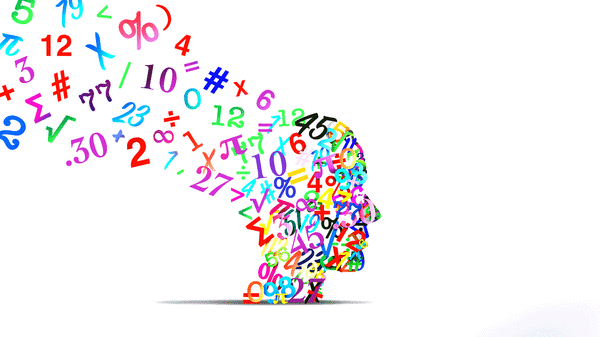
Scrolling through the news, you might get the impression that mathematics is solved. A Wall Street Journal headline reads, “AI Is Powerful Enough to Crack Our Hardest Math Problems — and Kill Us All.” Science says, “OpenAI breakthrough triggers ‘existential crisis’ in math.” Daniel Litt, a prominent researcher of mathematics at the University of Toronto, wrote a post titled “The End of Mathematics.” We are flooded with proclamations of doom.
I wouldn’t blame one for thinking that the rise of AI does signify the end of mathematics. No more children suffering through math classes. No need for professional mathematicians. Press a button and have all of your problems solved.
Look at the evidence: OpenAI recently announced a solution to the 90-year-old Navier–Stokes problem, one of the Clay Institute’s seven Millennium Prize Problems, each of which comes with a $1 million reward for a solution that withstands independent scrutiny. The company then released what it said were the proofs of several hundred major problems over all fields of mathematics.
Yes, AI is powerful. So much so that it threatens the very idea of human exceptionalism. So are human mathematicians needed in the age of AI?
Certainly mathematics itself is needed; it is the language of science. Every major technological advance in history, from CAT scans to the atomic bomb to cryptography to search engines to AI, is built on mathematics. Math will be even more important in a world reliant on AI. But still: Are human mathematicians necessary? As a research mathematician, my unequivocal answer is yes.
As a thought experiment, suppose AI can solve every one of our problems. Then perhaps decision-making can be offloaded, allowing us to focus our energy on leisurely pursuits. What could go wrong?
Consider politics. What if machines told us that an election had been tampered with, or not? Or that a patient should receive a certain treatment? Would we simply believe it? Of course we wouldn’t. We would want to see the evidence, and understand how the machine came to that conclusion.
This is where human mathematicians come in. We need people who can translate problems from the real world, understand how they are interpreted by machines, and explain the output of the machines to other humans. This is why scientists and mathematicians are critical components of a free and democratic society.
The word “mathematics” comes from the ancient Greek mathēmatiká, which means “the subjects of learning.” It is not the study of the Pythagorean theorem or the Navier–Stokes equations — solving hundreds of open mathematics problems was never the goal. As the great mathematician William Thurston said three decades ago, people could use computers to print out a table of the first 10,000 prime numbers. But in the end, they would realize that “what they really want is usually not some collection of ‘answers’ — what they want is understanding.”
This kind of understanding is cultivated in our mathematics classrooms, from kindergarten through college and beyond. Mathematics is one of our most effective testbeds for logical thinking. Arguments are provably correct or provably incorrect. In a world where the veracity of almost any claim can be questioned, it is more essential than ever that we know how to make valid logical arguments.
So, even if the importance of mathematics is a given, one might ask whether we still need human mathematics teachers to train students to think critically. After all, AI tutors — available any time, never tiring — are already effective and will only improve with time.
On the other hand, many aspects of teaching are uniquely personal. Human teachers show genuine concern, encouragement and empathy. We know what it feels like to fail or to not understand a concept that other students seem to grasp with ease. Yes, AI tutors can mimic these actions. But as social creatures, humans crave validation and inspiration from other humans, not from machines.
If you agree that human mathematics teachers are essential, you might still ask why we need human mathematics researchers, especially when AI seems to be outpacing us at our own game.
First of all, AI is built on the ideas of human mathematicians. It uses linear algebra, optimization, probability and statistics, to name a few. If we want to understand what our algorithms are doing, we need to understand all of this mathematics. The people who are best equipped to understand are the research mathematicians.
Yes, AI will continue to improve, and even self-improve. But the fact is that the great advances we have seen in the last few months are built on centuries of human mathematics. OpenAI picked up where we left off and beat us to the finish line on hundreds of problems. At the same time, its AI failed at several thousand open problems where human mathematicians had not supplied a viable approach in advance. So does the OpenAI announcement suggest the superiority of ChatGPT to human mathematicians, or its dependence on us?
Second, large language models explore mathematics in a manner similar to the way computer programs attack chess. If the model explores a large enough search space, it will find the checkmate. AI’s success is predicated on the immense resources that the companies are using. For Navier–Stokes, the electricity cost alone was in the millions of dollars. So much for that $1 million prize.
AI is remarkable, but it has not yet discovered a new general theory or method, it has not introduced any interesting open problems, and it has not provided new insight into older theories — even for Navier–Stokes, the mathematicians Diego Córdoba and Luis Martinez-Zoroa are credited with the key breakthrough.
Even when AI does improve at these skills, we will still need human research mathematicians. First, because mathematics is infinite. No matter how many theorems AI records in the next millennium, it will amount to a drop in the infinite ocean of mathematics.. Humans can and will, with the aid of AI, push the frontiers of mathematics in new and surprising directions.
For example, would a large language model have discovered calculus? I find this hard to believe. If a model was trained on all of human mathematics written before the age of Newton and Leibniz, it would have no basis on which to invent the infinitesimal, nor would it have reason to.
Just as musical composition is only partly encoded in sheet music, mathematics is only partly contained in the written record. The rest resides in our minds and bodies, our oral and written traditions. If we cease to do mathematics research, this knowledge and practice will evaporate. It will not be easy to resuscitate when we decide we need it.
The encroachment of AI is frightening, but it is also an opportunity for mathematics and for humanity. An idea that might have taken years to chase down to an inevitable dead end can be tested by AI within minutes. As mathematicians and scientists, we are freed from checking routine arguments or searching for counterexamples. Instead, we will build new theories, using our old theories as building blocks.
Just as human explorers found new horizons with the advent of sailing ships, airplanes and radio telescopes, human mathematicians and scientists will push the boundaries of human understanding ever further in the age of AI. This is not the end for mathematicians. It could instead be the start of a golden age for math — and humanity.
____
This column reflects the personal views of the author and does not necessarily reflect the opinion of the editorial board or Bloomberg LP and its owners.
Dan Margalit is the Stevenson Professor and chair of the Department of Mathematics at Vanderbilt University.
©2026 Bloomberg L.P. Visit bloomberg.com/opinion. Distributed by Tribune Content Agency, LLC.














































Comments