Commentary: Struggling families need new safety net
Published in Op Eds
Make no mistake: Nov. 3 was a change election, driven by widespread dissatisfaction with the economy. What must come next is real change.
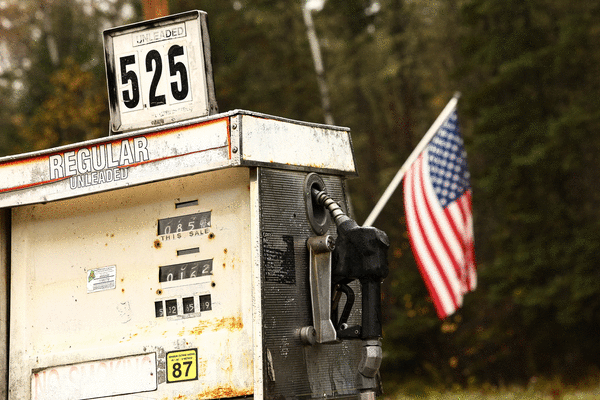
Americans have been struggling under the Trump administration’s tariffs, wars and cuts to safety net programs. Higher fuel prices from the Iran war alone are projected to cost U.S. families an extra $170 billion this year, nearly $1,200 per household. Rising costs due to tariffs are expected to add another $1,100 or so to average household costs.
But while President Donald Trump’s choices made life much harder, one thing I’ve heard from the low-income people I work with is that the current crisis of affordability didn’t begin with him.
For decades, the nation’s families have found their wages inadequate to match the rising costs of healthcare, childcare, education and housing. It’s a problem that, by and large, both parties have failed to reverse. So for most Americans, a return to the pre-Trump status quo is not good enough.
The families in need for whom I advocate have for years shared heartbreaking stories about working multiple jobs and still being unable to make ends meet. Finding adequate healthcare, housing, food or support for children with disabilities is a constant struggle.
Trump’s so-called One Big Beautiful Bill Act made historic cuts to safety net programs to fund tax breaks for corporations and the wealthy. Worse, many of these cuts were purposefully scheduled to take effect after this year’s midterms.
“I’m sick with worry about the cuts to SNAP and Medicaid that are barreling my way,” wrote Aidalis Martinez, a working mom in Bethlehem, Pennsylvania, in a recent column. “The uncertainty is causing so much stress.” She said it felt “like I’m waiting for a bomb to drop on me and my kids, and I’m not the only one.”
For families like Martinez’s, each cut sets off a cascading effect of downward mobility. The rising cost of healthcare affects the ability to afford rent. Cuts to food assistance make fixing a broken car in order to get to work unaffordable. Losing childcare puts employment out of reach.
This isn’t just a struggle for low-income families. A recent Marquette Law School Poll found that only 33% of Americans feel economically stable, while 46% say they are “just getting by” and 21% say they are actively struggling to make ends meet.
“I’m not asking for a handout,” Beth Lambert, a grandmother in Tom Bean, Texas, told me. “I’m trying to simply have an existence for myself and my disabled grandson in a home that can be heated and cooled, with medical care for both of us and nutritious food on the table. I need enough resources to weather a medical or transportation crisis without being pushed further down into poverty.”
Scaling back Trump’s reckless tariffs and ending his war on Iran are absolutely necessary. But the safety net was porous even before the One Big Beautiful Bill Act shredded it to pieces. What remains of the safety net cannot be repaired and must be replaced.
Under the Biden administration, the nation actually made progress toward solving these problems. An expanded Child Tax Credit cut child poverty in half while overall poverty fell to historic lows. Millions of American families saw their economic stability improve, as the economy grew and the nation avoided a recession, despite a global pandemic.
However, in the year after Congress allowed the expanded Child Tax Credit to expire, child poverty more than doubled. Other pandemic-era expansions — most notably expanded subsidies for Affordable Care Act plans — have also expired.
Democrats, buoyed by the Nov. 3 election results, should commit to policies proven to make housing, food and healthcare accessible. The American people deserve good wages and an economy that cares for our children, elderly and disabled loved ones.
Revoking massive tax cuts for the uber-wealthy and clawing back outrageous funding for wars of choice is a good place to start to reinvest our tax dollars in ways that benefit us all.
____
Karen Dolan directs the Criminalization of Race and Poverty Project at the Institute for Policy Studies. This column was produced for Progressive Perspectives, a project of The Progressive magazine, and distributed by Tribune News Service.
_____
©2026 Tribune Content Agency, LLC.















































Comments