Michael Hiltzik: The Democrats' first 'affordability' remedy should be raising the federal minimum wage
Published in Op Eds
The newly Democratic Congress faces a lengthy agenda once it's sworn in on Jan. 3 — reversing cuts in Medicare and Medicaid, reestablishing premium subsidies for Affordable Care Act health plans, holding President Donald Trump's incompetent cabinet members to account, investigating the self-dealing and corruption of this White House, etc., etc.
But there is an obvious initial fix for the economic pain suffered by ordinary Americans that falls into the issue of "affordability," which drove much of the pivot away from Republicans in last week's midterm voting: raise the federal minimum wage.
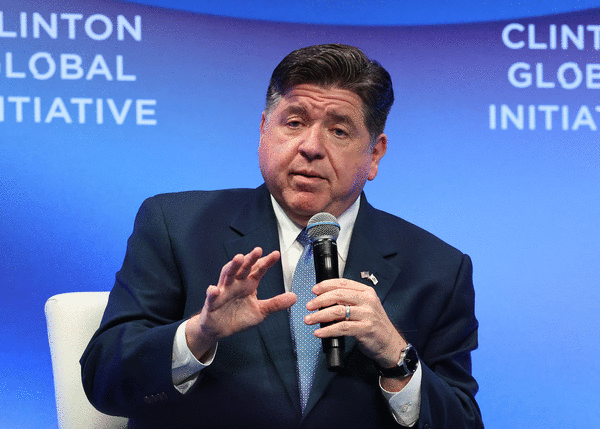
Illinois Gov. JB Pritzker named that reform as "an easy way to start" in advancing the Democrats' economic agenda during a post-election appearance on CNN.
He's right. The federal minimum has been frozen at $7.25 an hour since June 2009. Accounting for inflation, that figure has shrunk to $4.64 in buying power; putting it another way, if it were adjusted for inflation, it would be $11.33 today.
"You can't survive on $14,000 a year with a single full-time job," Pritzker told CNN's Kaitlin Collins. (Actually, $7.25 an hour at 40 hours a week would be about $15,000 over 52 weeks, but of course minimum wage laborers are especially vulnerable to lost working hours through furloughs and layoffs and generalized stinginess of employers.)
The federal minimum wage has long ranked as our most persistent relic of the economic past. Again in inflation-adjusted terms, its value peaked in 1968, when it was $1.60, or $15.81 in 2026 dollars.
The federal minimum applies in 20 states that haven't set their own rates higher. Those states, of which the largest is Texas, are home to about 129 million people, or nearly 40% of the U.S. population.
The other states, and some localities, have taken the issue in hand. The highest minimum wage is in the District of Columbia, at $17.25. Among the states, Washington leads the pack at $17.13.
California's statewide minimum wage is $16.90, though it's higher in many cities and counties: $18.42 in the city of Los Angeles and $18.47 in unincorporated portions of L.A. County, for example. California also has enacted higher minimum wages for certain occupations, such as $20 for fast food workers and up to $25 for many healthcare workers.
It's not as if Congress is insensitive to the ravages of inflation. The lawmakers last raised their own pay with a 2.8% raise to $174,000, effective in January 2009, six months before they enacted the last minimum wage increase.
Pritzker's conjecture that raising the federal minimum would be a relatively easy fix is because so many other economic reforms will be saddled with political complexities and focused opposition. That's especially true of healthcare reform, which ran into the brick wall of organized opposition from medical lobbies for decades until the 2010 enactment of the Affordable Care Act, a watered-down version of universal healthcare.
That's not to say that raising the federal minimum wouldn't run into any opposition. Commercial and industrial lobbies always have disdained the minimum wage, asserting that it suppresses hiring to the point where it costs average workers more than they gain. So it's proper to examine that claim.
The labor effects of the minimum wage are among the most heavily researched by economists. Their findings range widely, which suggests that they're not very substantial. The most striking claim was that California's fast-food minimum wage had cost the state 10,000 jobs even before it went into effect in April 2024. But as I reported at the time, this figure, which was retailed by the conservative Hoover Institution, derived from a freshman-level misinterpretation of employment statistics.
Other analyses have been figuratively all over the map. In 2019, the Congressional Budget Office, that nonpartisan judge of federal policy, reckoned that raising the minimum wage to $15 by 2025 would "boost the wages of 17 million workers who would otherwise earn less than $15 per hour," and that 10 million workers earning slightly more than $15 per hour might also receive a raise.
About 1.3 million other workers would lose their jobs, according to what CBO called its median estimate. Overall, the population of those with income below the poverty line would fall by 1.3 million.
The CBO also cautioned, however, that there was a two-thirds chance "the change in employment would be between about zero and a decrease of 3.7 million workers."
Put it all together, and the CBO study provided grist both for both the pro and con camps. The general feeling of perplexity about the labor effects of a higher minimum was exemplified by a 2015 poll of 42 leading economists by the University of Chicago's Booth School of Business on the question of whether a $15 wage would reduce employment of low-wage workers.
The most common response was "uncertain." That was the opinion of 38% of respondents. Most of the others were split down the middle, with 26% saying it would reduce employment and 24% saying it wouldn't.
The partisan divide is clearer. Put simply, Republicans tend to oppose an increase and Democrats favor one. Unsurprisingly, both Trump administrations have been satisfied with the cheeseparing $7.25 minimum.
The first Labor secretary in Trump's first term, Alexander Acosta, expressed his opposition to increasing the federal minimum wage in congressional appearances. In his testimony he made the fatuous claim that raising the federal minimum would be tantamount to allowing 29 states that had by then raised their minimums above the federal level to "impose their cost structures on the remaining 21 states."
In an interview with the Wall Street Journal, Acosta repeated a conservative talking point that a $15 minimum wage would "undermine this economy and job creation." He didn't offer an alternative proposal.
Trump's second-term nominee for Labor secretary, Lori Chavez-DeRemer, sedulously dodged the question of whether the federal minimum should be raised during a confirmation hearing last year. She did nothing to advance the idea of a raise during her brief tenure in the job, which ended when she was unceremoniously cashiered after about only a year, amid a slew of complaints about ethical shortcomings, among other things.
In the meantime, the Trump administration rescinded a $15 minimum wage for federal contractors that had been instituted under President Biden that chiefly benefited construction workers.
The advocates of a higher minimum wage have justice and economics on their side. The opponents largely have myths, the union-affiliated Economic Policy Institute maintains.
There's virtually no evidence that a higher minimum contributes meaningfully to inflation: The $20 fast-food minimum wage in California raised prices about 2.1%, or 8 cents on a $4 order, in the first six months after its implementation while increasing average weekly raises by 12% without reducing employment, University of California economists Denis Sosinskiy and Michael Reich reported in May 2025.
Nor is it true that most minimum-wage workers are teenagers on their first jobs, as opponents typically assert. EPI's analysis of the 2025 Raise the Wage Act, which would have increased the minimum to $17 by 2030, found that only about 14% of the workers who would be directly affected by the change were younger than 20.
But the anti-poverty effects of raising the minimum are hard to dispute and have been supported by the CBO's analysis, among others. Over the last year, rank-and-file workers have seen their economic condition move in reverse — average hourly wages increased by 3.1% over the 12 months through October, while prices rose by 3.7% in the 12 months through September. Workers' share of the economy reached a record low in the second quarter of this year, while corporate profits have risen inexorably.
Given these figures, there can't be much mystery about why "affordability" became a watchword for voter in this election. Raising the minimum wage won't reverse that dismal trend, but it will be a start.
©2026 Los Angeles Times. Visit at latimes.com. Distributed by Tribune Content Agency, LLC.















































Comments