Commentary: AI is coming for the economists in the White House
Published in Op Eds
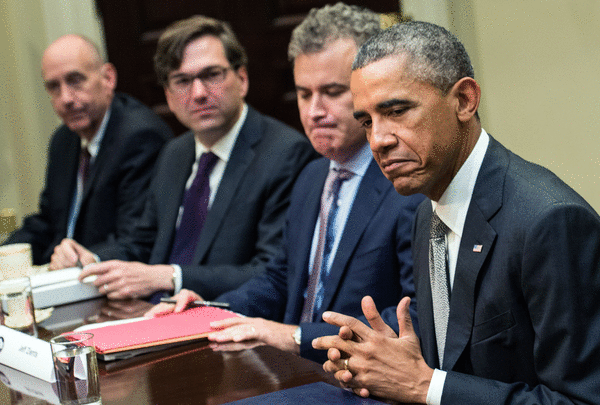
The AI debate, which economists have been having for years in various contexts, has come for the profession itself. Jason Furman, chair of the Council of Economic Advisers under President Barack Obama and now a professor at Harvard, recently said that if he were running the CEA today, he would “somewhat regretfully and sadly” use current AI systems instead of hiring 20 actual human economists. The chair’s job, he added, is safe.
After a lot of pushback, including from former staff like me, Furman softened his stance, calling for an “AI-intensive CEA with only a skeleton staff.” He would still largely replace the junior staff — recent college graduates and graduate students — with AI, since he couldn’t justify jobs where “the bulk of what they did could be done by an AI.” By his own logic, Furman admits, his job as a junior economist at the CEA under President Bill Clinton would have been cut, too.
The parameters of this debate may be narrow, but in broad outline it is similar to those going on elsewhere in the economy. And maybe it’s because this particular controversy cuts so close to home, but I have found it useful to ask a different question: Not which work AI can replace, but how AI can serve the mission of the organization.
Furman bases his argument on what AI can already do, which he illustrates with a website he built called Econvitals. It features reasonably good economic data dashboards, blog posts, memos, briefings and research papers. But he is putting the tasks before the mission. CEA’s mission still requires people, especially younger people.
Created in 1946, the CEA’s mission is to offer the president “objective economic advice on the formulation of both domestic and international economic policy.” The most important version of that: Stop bad ideas. CEA has a storied history as the wet blanket of the White House. Kenneth Arrow, a Nobel laureate, often recounted that the most valuable thing he did in his life was a memo he wrote as a CEA staffer in the 1960s opposing a plan to widen the Panama Canal with an atomic bomb.
AI models tend not to call out bad ideas; people do. Not everyone, of course. Dissent inside the White House tends to come from a distance. The chair and members are political appointees, chosen in part because they share the president’s priorities; the staff economists, many of them on leave from universities or detailed from the Federal Reserve or cabinet agencies, are not. They have less to lose by saying no, and in my experience they say it more often.
The same goes for distance from the profession. In my years working with junior staff at the Fed, CEA and elsewhere, the people who had not yet absorbed every tenet of economics were often the best at noticing when something did not add up. It is rarely as dramatic as Arrow’s memo. More often it is a confused look that tells you a project needs rethinking, or an argument needs refining.
Offering advice to the president is more than narrating lines on a chart. The most intense project of my year at CEA started with a magazine article in which the author reported that he was among the nearly half of Americans who could not cover a $400 emergency expense without borrowing or selling something. The president wanted to know how that statistic, which came from a Fed survey, could be true seven years into a recovery.
Economists did not have a good answer. We pulled every data set we could find, wrote several memos, and went a few rounds with senior staff and the president. AI would have made the data work faster. It would not have written a better answer, because nobody had one yet. Ours was a creative process, drawing on ideas from everyone on the team. I never quite let it go. A few years later, I was running the Fed survey with the $400 question in it.
A creative process plants seeds that bear fruit later. Furman worries about the pipeline if juniors are replaced with AI, and he should, but the loss is not only to their careers. It is to economic policy. The Sahm rule, my recession indicator, grew out of another CEA project and my early years at the Fed during the Great Recession. It took years to put the pieces together, and years more for others to see the value in automatic stabilizers. A question you cannot quite answer yet is the best motivation I know.
The advice CEA gives should be the highest quality possible, and here is where I am optimistic about AI. The CEA, even in Furman’s time, was a small team, always short on time to make the president’s nightly briefing book. Moving fast means making mistakes, and I made one that still haunts me, because a mistake from the CEA gets read as political spin, not an honest error.
AI can free up time and serve as another round of checks. It can also make room for the kinds of quality improvements nobody had time for, like going back to the researchers whose work we cited to ask whether their views had evolved or whether our first pass missed something. AI can also help research reach new audiences, like tailoring the annual Economic Report of the President to formats people will actually use. I still remember it being assigned in my college economics course.
The CEA will change with AI, and it should. Furman is right that juniors who spend their days babysitting bots would be a poor use of taxpayer money and their own talents. But that would be a choice about how to design the job, not a fact about what AI can do. The same tools can also free juniors from monotonous data pulls and formatting, creating time for quality improvements and the question nobody can answer yet. The president deserves a better CEA, not a smaller one.
____
This column reflects the personal views of the author and does not necessarily reflect the opinion of the editorial board or Bloomberg LP and its owners.
Claudia Sahm is the chief economist at New Century Advisors and a former Federal Reserve economist. She is the creator of the Sahm rule, a recession indicator.
©2026 Bloomberg L.P. Visit bloomberg.com/opinion. Distributed by Tribune Content Agency, LLC.








































Comments