Commentary: A Republican governor would bring productive tension to Sacramento
Published in Op Eds
A few bumps are bad for roads but good for government.
When I became mayor of San Diego in 2014, the city had spent years putting off street repair. Its pavement condition score had cratered to 59 out of 100. Residents felt that failing grade in their tires, their backs and their patience.
So we made a promise: Focus the budget on neighborhoods and fix 1,000 miles of streets in five years. We got to work, pouring slurry and laying asphalt, raising the citywide pavement rating to 72. Back in 2006, City Hall had repaired 24 miles all year. We scaled up to an average of 24 miles a month.
We fulfilled our pledge two years early, and by the time I left office in 2020 we had repaired about half the city’s street network.
I did this as a Republican mayor working with a City Council controlled by Democrats. That arrangement led to some heated debates. But it often made the results better. Every budget, every piece of legislation, every vote had to survive questions from people who saw the world differently than I did. When we agreed — like when we adopted landmark housing reforms or passed seven structurally balanced budgets that expanded services while building reserves — both sides owned a solution forged under pressure, and stronger as a result.
California has gone without that kind of productive tension since 2011. Democrats have held the governor’s desk, every other statewide office and both legislative houses for nearly 16 years. When one party commands every lever, groupthink sets in and hard questions tend to go unasked.
Consider what one-party rule has produced. The state budget has more than doubled since 2011, but it’s hard to name a state service that has gotten twice as good. High-speed rail was priced at about $33 billion; it now tops $126 billion, and not a single passenger has ridden it. The state auditor found California spent $24 billion on homelessness over five years without consistently tracking whether it worked.
Few in the Capitol have an incentive to rock the boat by asking, “Is this working?” So voters have been answering the question at the ballot box.
In 2020, the same electorate that sent Democrats back to Sacramento rejected the Legislature’s plan to end cash bail and overrode a state law on gig workers. In 2024, they passed Proposition 36 with more than two-thirds of the vote, undoing parts of a misguided criminal justice measure the state’s leaders had championed.
Now, voters are weighing Proposition 40, a tax on billionaires endorsed by the state Democratic Party. I’m voting no, because chasing job creators out of California could cost the state more than the tax ever collects, and nothing guarantees the next version stops at billionaires.
Californians keep electing Democrats and then voting for a counterweight one proposition at a time. I don’t think voters are confused. They want a second set of eyes on the big decisions. And when Sacramento won’t provide checks and balances, the public will.
The Legislature will remain in Democratic hands. But electing a Republican governor with a veto pen could force the deliberation and scrutiny Sacramento has gone without. Some may fear gridlock, but San Diego had the same arrangement and we adopted balanced, neighborhood-first budgets every year.
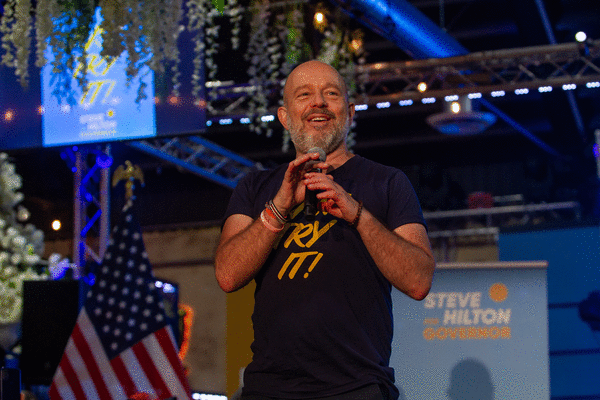
This year’s Republican candidate for governor, Steve Hilton, has built his campaign around the cost of living. He has pledged to eliminate state income tax on the first $150,000 people earn, get gas back to $3 a gallon and cut utility bills in half. And he aims to cut red tape that keeps young families from buying a starter home. A Democratic Legislature won’t agree with all of it. But a governor pushing ideas like these, and a Legislature that has to engage with him, could produce constructive friction and even compromise. That is how American government was built to work.
Californians don’t care which party fixes our problems any more than San Diego drivers cared which party paved their street. We want someone in Sacramento asking hard questions on our behalf.
Give and take between two parties is healthy, and for years San Diego was better for it. This November, voters can bring that balance to Sacramento by electing a Republican governor.
____
Kevin Faulconer was mayor of San Diego and is president and chief executive of the San Diego Lincoln Club Business League.
©2026 Los Angeles Times. Visit at latimes.com. Distributed by Tribune Content Agency, LLC.

















































Comments