Editorial: Ten reasons (and counting) to vote 'no' on Amendment 3
Published in Op Eds
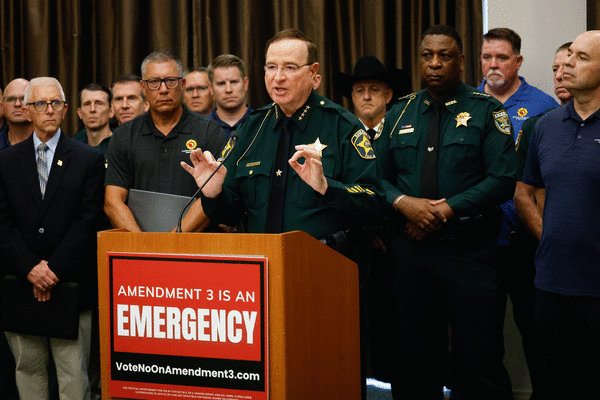
This November, Floridians will vote on Amendment 3, which would drastically increase the homestead exemption for local property taxes and, over the course of two years, almost completely eliminate non-school property taxes for homeowners.
This sounds good — but it’s not, because the cuts will almost certainly be offset by shifts to other forms of revenue — raising the annual tax bill for everyone (including homeowners). Local officials will also be forced into drastic service cuts that could raise expenses and reduce quality of life for all Floridians.
Today, we’re summarizing some of the compelling reasons to vote against Amendment 3, as reported by local leaders, policy institutes and some of the state’s most trusted government watchdogs, including Florida TaxWatch, the League of Women Voters, the Florida Sheriff’s Association, the Florida League of Cities and multiple chambers of commerce including the Seminole County chamber and the Orlando Economic Partnership. Tuesday, we’ll publish the rest of the list.
You should vote against Amendment 3…
1. If you get mad when people lie to you (and expect you to foot the bill for dishonest campaigns). In the runup to the legislation that created Amendment 3, state leaders — led by Blaise Ingoglia, who is currently acting as Florida’s chief financial officer — spent months traipsing around the state accusing local governments of rampant fiscal irresponsibility.
Here’s the problem with that: He almost never cited specific examples, and most of his gripes were penny ante (like his swipe at Orlando’s poet laureate program, which cost a few thousand dollars a year). Instead, Ingoglia used a calculation to determine the growth of local budgets and whether they outpaced local population growth. There were multiple problems with that: First, Ingoglia was repeatedly caught using the wrong figures for budgets and population. Second, his formula failed to account for expenses the state had forced onto local governments, or the growth in costs associated with issues like local flooding. We’ve demanded records of how much Ingoglia spent for his dog-and-pony show, but so far he’s defied the law and withheld that information.
2. If you can do basic math. When cities and counties see a major drop in revenue, they have only two choices: Cut spending, or raise money from other sources. And the potential cuts are massive: In Orange County, the first two years of Amendment 3’s implementation would suck $365 million from the county’s budget and almost $180 million from Orange municipalities. People who say they should just “cut the fat” are painfully naive. In most cities and counties, it’s close to impossible to find real examples of wasteful spending that would trim significant amounts from budgets.
3. If you want state lawmakers and the governor’s office making decisions about which services your community can afford. This one really should count twice because it’s a double-headed whammy. During debate on the language that became Amendment 3, many lawmakers acknowledged that some local cities and nearly half of Florida’s counties would be unable to maintain basic levels of service — and would need more help from state coffers. Doling that out will give state lawmakers more power over local decisions. At the same time, lawmakers pondered restrictions on local budgets that would prohibit cuts on police, fire and other select services, further throwing local budgets into turmoil — and Amendment 3 includes specific language that would let the Legislature demand that certain expenditures be prioritized, shifting that decision away from local residents.
4. If you want to see local property tax rates go up. To recoup some of the lost revenue — and maintain services people expect and are willing to pay for — some local governments will be forced to raise their tax rates. Amendment 3 would limit those increases to 5% a year, but most local governments try not to raise tax rates at all.
5. If you live in an apartment or other rental housing. Outside of the 5% cap, owners of rental properties get no benefit from Amendment 3. Instead, they are likely to see their tax bills increasing. Those costs will almost certainly be rolled into the rents they charge.
6. If you rely on municipal utilities and don’t want your bills to increase. Cities and counties that operate utilities (such as water, garbage or power) are allowed to make transfers from the utility fund to pay for general government expenses. If Amendment 3 passes, they may be forced to increase rates.
7. If you don’t want your city to go bankrupt. In some local municipalities — including Windermere, Belle Isle and Eatonville — the tax base is so heavily residential that they may be forced to disband, leaving residents to be governed under, and served by, county services.
8. If you dislike potholes and traffic jams. So-called “capital” spending — including road maintenance and construction — is often one of the first things to be deferred when budgets get tight. Osceola County estimates that it would lose about $40 million annually from its transportation budget, forcing it to delay resurfacing.
9. If you want your area missing out on federal and state grant funding because they don’t have matching funds. Many grant programs require recipients to match the funds they receive. If the coffers are bare, those grants disappear: For example, Seminole County could lose access to $1.1 million annually of housing-related grants that require matches of 25% to 100%.
10. If you’re a Realtor who can think for themselves. The biggest financial backers of Amendment 3 are real-estate interests, but many local professionals say they’re worried about the future: As quality of life declines in Florida, homes will be harder to sell and businesses will be unwilling to invest here.
This is nowhere near a complete list — in fact, we have at least a dozen more reasons, which we’ll get to on Tuesday with Part 2 of this editorial.
_____
©2026 Orlando Sentinel. Visit orlandosentinel.com. Distributed by Tribune Content Agency, LLC.

















































Comments