Editorial: AI's logic is no substitute for human emotion
Published in Op Eds
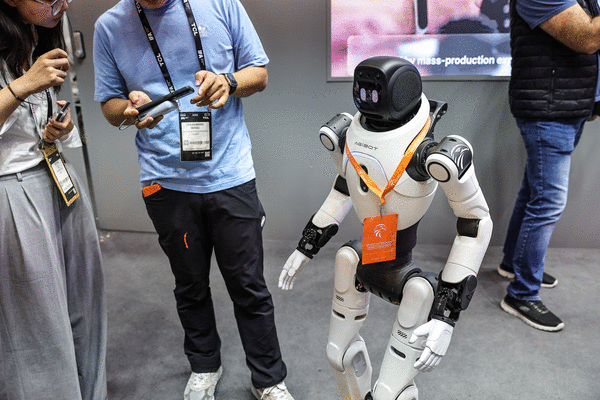
Artificial intelligence may be the closest thing our age has produced to “Star Trek”’s Mr. Spock: brilliant, analytical and seemingly governed by pure logic.
Ask AI a question, and it can process enormous quantities of information in seconds. It does not tire, become embarrassed or hesitate because of sentiment. Like Spock, it appears to calculate probabilities while human beings stumble through fear, hope, anger and love.
But the comparison contains a warning.
Spock was not a machine. He was half Vulcan and half human, and the tension between logic and emotion gave his character depth. Beneath his disciplined exterior were loyalty, friendship, conscience and the capacity for sacrifice. His logic did not eliminate his humanity; it struggled with it.
AI has no such struggle.
It does not suppress emotion. It has none. It does not overcome selfishness, because it possesses no self. It cannot be courageous because it cannot fear death. It cannot forgive because it has never been wounded. It cannot love because it has nothing to lose.
Yet AI can imitate all these qualities.
It can write a condolence letter that brings someone to tears, compose a gospel song about salvation or offer advice that sounds compassionate. But it does not feel the grief it describes, believe the faith it invokes or care whether the person reading its words survives the night.
That difference matters as we place AI inside schools, hospitals, courtrooms, businesses, churches and intimate relationships. We are allowing systems without conscience to influence decisions carrying profound human consequences.
Logic is indispensable, but logic alone cannot tell us what is sacred. Data can estimate the probability that a medical treatment will work; it cannot measure the value of one more day between a mother and her child. An algorithm can recommend a prison sentence from patterns in past cases; it cannot comprehend repentance, mercy or redemption.
Even Spock needed Captain Kirk, Dr. McCoy and the rest of the Enterprise crew. Their emotions sometimes clouded their judgment, but they also supplied intuition, empathy and moral courage. The genius of “Star Trek” was not that logic defeated humanity. It was that logic and humanity needed each other.
AI should serve that same supporting role. It can organize knowledge, detect patterns and help us consider choices. But it must never become the final authority over matters of life, justice, faith or human worth.
The greatest danger is not that AI will become too much like Spock. It is that human beings will begin aspiring to become like the machine measuring every relationship by efficiency, every person by productivity and every decision by calculation.
A civilization cannot be sustained by intelligence alone. It requires wisdom, conscience, compassion and love.
AI may calculate the stars, but it cannot wonder at them. It may describe the human soul, but it cannot possess one. And if we forget that distinction, we may surrender our humanity to a machine that was never human at all.
_____
©2026 The Baltimore Sun. Visit at baltimoresun.com. Distributed by Tribune Content Agency, LLC.


















































Comments