Editorial: What Fetterman's RNC performance says about both parties
Published in Op Eds
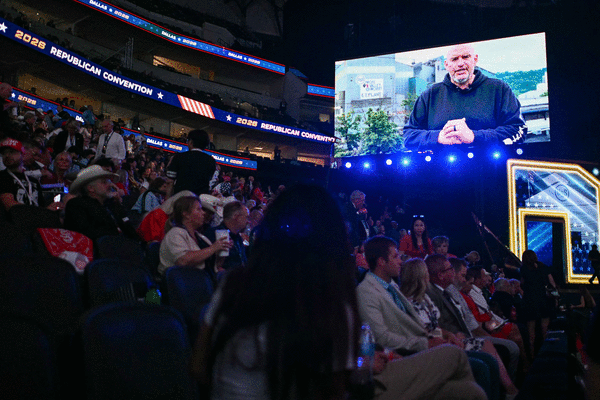
At the Republican National Committee’s midterm convention in Dallas, Democratic Pennsylvania Sen. John Fetterman appeared in a prerecorded video. It was a stunning and unconventional moment.
In the clip, Fetterman praised what he called “common-sense leadership,” criticized “extremes” on the left and used language that echoed GOP messaging about rejecting “anti‑American socialism.” His appearance was not announced beforehand, and the video was played to a cheering audience.
It was a telling moment for both parties. For Republicans, featuring a sitting Democratic senator at their midterm convention underscored a growing urgency to reclaim credibility with moderates in swing states. The cameo functioned as a symbolic outreach effort, essentially a way to signal that the GOP still has appeal beyond its base, even if it required borrowing a Democrat to make the case.
For Democrats, the moment highlighted just how far the party has drifted leftward. The fact that its most prominent moderate voice received a warmer welcome at the opposing party’s convention than he likely would at his own speaks volumes about the ideological gulf that has opened inside the Democratic coalition.
The Democrats furious with Fetterman are directing their outrage at the wrong target. His decision to appear in a GOP convention video is a symptom, not the disease. The deeper issue is a party that has drifted so far left that figures once considered mainstream liberals now find themselves out of step with its powerful activist class.
Over the past several years, Democrats have elevated and embraced voices whose politics sit well outside the traditional center‑left lane, including personalities such as Hasan Piker and elected or nominated politicians such as Zohran Mamdani. Their prominence reflects a party that increasingly rewards ideological maximalism, not moderation. In that environment, Fetterman’s presence at a Republican convention is less an act of betrayal than a mirror held up to a party that no longer knows what to do with its own moderates.
And underneath all the outrage, it’s worth remembering the stated reason Fetterman gave for appearing in the video at all. He was introducing his fellow Pennsylvania senator, Republican Dave McCormick. The two men represent something almost unheard of in modern politics: a pair of senators from the same state, sitting on opposite sides of the aisle, who openly and consistently support one another. Their partnership isn’t performative, and it isn’t transactional. It’s mutual, public and sustained. In an era defined by polarization and purity tests, that kind of relationship is rare.
At the end of the day, people upset about Fetterman’s appearance, whether they sit on the left or the right, need to understand how we got here. Voters are exhausted by politics built around outrage, absolutism and performative fury. They are crying out for moderate, common‑sense leadership.
That’s what the Fetterman-McCormick partnership represents. It’s a model of public service grounded in normalcy, cooperation, and respect for the country they serve. The louder figures in American politics thrive on division, but most Americans don’t.
They want leaders who can disagree without despising each other, who can govern without theatrics and who can speak to the broad middle of the country rather than the loudest fringes. Fetterman’s video didn’t create that reality. It revealed it.
_____
©2026 MediaNews Group, Inc. Visit at bostonherald.com. Distributed by Tribune Content Agency, LLC.













































Comments