Editorial: Cases like Clancy deserve fed jury protections
Published in Op Eds
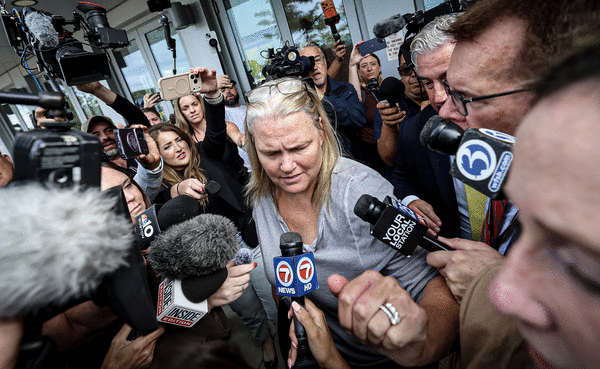
Serving as a juror on a high profile case is a distinctly stressful experience. When that case becomes a national media event, as in the trial of Lindsay Clancy, the need to preserve the jury’s anonymity is paramount.
The jurors in the Clancy case, who remain deadlocked and will return for a sixth day of deliberations Thursday, had that protection breached when a retired nurse allegedly filmed and took photos as they were leaving court Tuesday afternoon, according to Assistant District Attorney Nicole Piacentini.
According to Piacentini, Dawn Light had parked in a restricted area of the court parking lot where jurors were exiting after a day of deliberations.
State Police officers asked Light if she’d gotten pictures of the jurors, but she denied that she had, the prosecutor said. However, when troopers looked through her phone’s deleted images, Piacentini said they identified a video of jurors.
There’s nothing harmless about a candid photo of an anonymous juror in a case such as this.
In 2011, a judge released the names of the jurors in the trial of Casey Anthony, accused of murdering her 2-year-old daughter Caylee. After they found Anthony not guilty, jurors received death threats.
Clancy is charged with the first-degree murders of her three children. Crowds, including Clancy supporters, have gathered outside the courthouse during the trial. The jurors, who remain at an impasse, should be able to trust that their anonymity is protected.
Light pleaded not guilty to the charge of aggravated intimidation of a juror.
The incident should not have happened, and if the jurors know of it, they have to be rattled.
“High profile trials demand much more of jurors personally than other cases do,” states the U.S. Courts web site. “They can last for weeks or months, attract intense media attention, expose jurors to physical threats and emotional stress, and force them into long periods of isolation, with only their fellow jurors and court personnel for company.
“Federal judges have adopted a wide range of precautions to ensure that juries are protected from threats or harassment in high-profile cases. In some cases, they work with the U.S. Marshals Service to sequester jurors, housing them at hotels whose locations are kept secret and transporting them to the courthouse from varying pickup locations and in varying types of vehicles.”
Clancy’s is not a federal case, but when it comes to jury protection, it should be treated as such. Any case that reaches this level of national attention, especially one involving the murder of children, should get the same treatment for jurors as a federal trial.
The officers who stopped Light and examined her phone did a great job, but at this level of media attention, protection on the order of the Marshals Service wouldn’t go amiss.
Whatever decision the jury reaches, even if it remains deadlocked, jurors shouldn’t have to face the possibility of intimidation, harassment or worse.
_____
©2026 MediaNews Group, Inc. Visit at bostonherald.com. Distributed by Tribune Content Agency, LLC.















































Comments