Editorial: Meta settlement a good start to protect kids from tech
Published in Op Eds
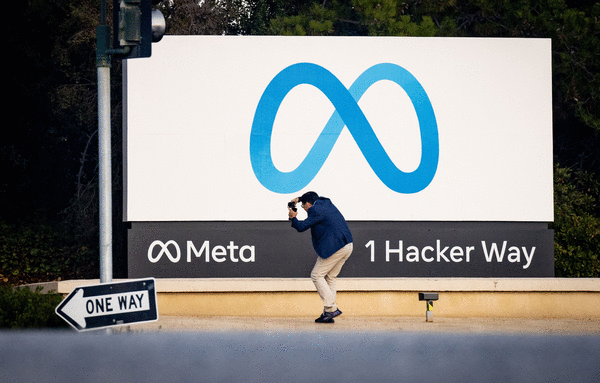
Limiting kids’ access to its addictive social media products Facebook and Instagram, Meta cut a worthwhile deal in a lawsuit with 47 states, D.C. and several U.S. territories. No more will children be glued to screens thanks to some needed reforms and Meta will write out at least $12 billion in checks to be doled out over 10 years, including up to some $1.1 billion for New York.
As a financial penalty, it may seem pretty big, but it is a pittance compared to 10 years’ worth of Meta’s revenue. Even the $200 billion that California, Colorado, Kentucky and New Jersey were expected to seek at trial would have been manageable for Mark Zuckerberg’s company, which despite a series of missteps including enormous losses on its metaverse projects has still been making money hand over fist as its capture of our collective attention and gobs of personal data has enabled it to be the default choice for advertising.
What Meta is really concerned about, though, is that the floodgates will open as public opinion turns, and that lawsuits like these — not just by states but by school districts, localities, individuals and so on — will start piling up.
That’s why it settled a case that it once would have fought for years in court, and that’s why the main result of this case is not about the civil penalties but the changes to its business practices aimed at youngsters.
Among other things, Meta will commit to imposing two-hour daily time limits on the use of its social media platforms by teens, limit usage between midnight and 6 a.m., block notifications during school hours, hide “like” counts and limit filters that have fed body image issues.
This puts the lie to the idea long promulgated by Big Tech that their methods are inevitable, a mere result of optimization and giving the customers what they want, and that any attempt to regulate them is standing in the way of progress and destined to fail.
The settlement will reach about $18 billion if and when the other social media giants like Snapchat, YouTube (owned by Google) and TikTok reach similar settlements and that will also cut in half kids’ daily time limit to just 60 minutes. We appreciate the somewhat novel strategy of conditioning part of the settlement on bringing peer corporations along.
This is not out of any particular altruism; Zuckerberg understands that, having set a standard for addictive design and practices for social media, he will get left behind if he is suddenly the only pusher no longer pushing. Whatever the reasoning, though, it is indeed important that these are industrywide shifts.
As welcome as this settlement is, it can only be one plank in a larger effort to regulate the social media giants and tech power. State attorneys general must closely monitor Meta’s compliance and seek these other settlements from the other companies; it’s also been up to states to take point here because Congress has been lagging, having let these companies amass enormous influence and fundamentally reshape how we relate to each other in society under the promise that they would be a net good for everyone. That promise has been broken, and not just recently, but lawmakers remain either paralyzed or in thrall to the tech interests. It’s time to step up.
_____
©2026 New York Daily News. Visit at nydailynews.com. Distributed by Tribune Content Agency, LLC.


















































Comments