Stephen L. Carter: America's surveillance problem is much bigger than Flock
Published in Op Eds
“You are being watched” was the tagline that opened every episode of the television series Person of Interest, which ran from 2011 to 2016 and already feels ancient. The conceit of the show was that the good guys, aided by a friendly AI, could use information from a sea of cameras and microphones to stop crimes before they happened.
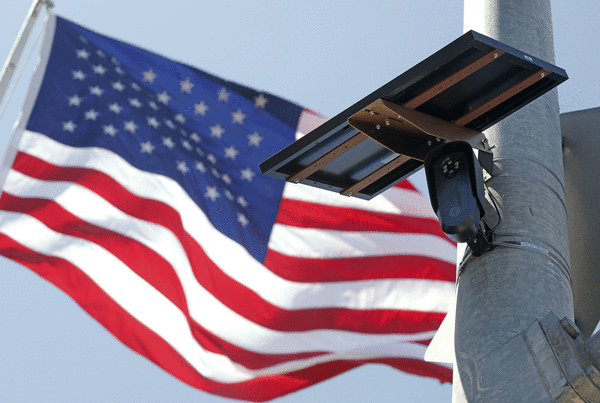
That fictional world comes to mind in light of the controversy surrounding Flock Safety, a company that has installed some 120,000 cameras in cities and towns across the U.S. Flock’s automatic license plate recognition system identifies passing cars and stores their identifying details (make, model, a Mets bumper sticker, a cracked rear window) in a searchable database. The utility to law enforcement is obvious.
But after years of strong growth, the company is facing a serious backlash. Dozens of jurisdictions have canceled their contracts with Flock since 2025. Some are angry that Flock has been used for immigration enforcement; others point to examples of law enforcement officers abusing the system. The ACLU has published a model resolution that city governments can use to end their relationship with Flock. Then there’s DeFlock, a crowdsourced effort to map the locations of as many license plate readers as possible. And back in February, Amazon publicly canceled a plan to link its Ring cameras with Flock’s systems.
My libertarian heart is always warmed when there are signs, however faint, that the future might contain less surveillance rather than more. And critics of Flock’s misuse are right to be alarmed. But Flock is only part of a much bigger problem. The more fundamental mistake was letting surveillance become a ubiquitous part of American life.
It’s hard to imagine now, but in the 19th century, when cameras were young, it was considered discourteous to take a person’s picture without permission. Now, once we’ve exited our homes, our images are being recorded constantly. In cities and suburbs and, increasingly, rural areas, cameras along the road are accepted as a fact of life.
That’s a problem.
In a democracy, we ought to have the right not simply to privacy but to anonymity — to go through the ordinary occupations of daily life without being tracked and surveilled. To be seen by real people — fellow walkers, fellow drivers — is one thing; to be constantly recorded is something else entirely.
It’s almost funny to see so many public officials who now profess to having had no idea that installing cameras all over their cities and towns would lead to mass surveillance. The cameras are mass surveillance. They capture images, which the AI then helpfully labels, and — surprise, surprise! — law enforcement suddenly wants to sift through those images.
That’s the heart of the problem. A traffic camera might seem innocuous, a device to discourage running red lights. A security camera up on the light pole might seem insignificant, a tool for fighting crime. A license plate reader might seem just a way of keeping track of cars in case a villain happens along. But combine enough bits of data, and the government can create what the Supreme Court condemned just this past June in its decision restricting the use of geofencing: “a virtual panopticon with which to scrutinize its citizens’ activities.”
Privacy advocates are calling for tighter controls before authorities can query Flock’s database, perhaps even a warrant requirement. Flock itself now audits law enforcement requests, and some of the officers who have been arrested for misusing it were, the company says, caught through its efforts. But no government will ever fully resist the temptation to mine whatever data is gathered. And in the long run, the Fourth Amendment will never keep up with technology.
“The Machine is everywhere,” Harold Finch of Person of Interest told his associate John Reese way back in the horse-and-buggy era of 2011. “Watching us with 10,000 eyes. Listening with a million ears.” The capital M referred to a particular AI system, which Finch had designed. But the eyes and ears didn’t belong to the Machine. They were just the background sounds and images that are constantly being recorded.
The Machine was fiction. The constant watching and listening are real.
That’s why the true issue isn’t just Flock. It isn’t ICE or a few bad cops. The problem is the government’s growing obsession with keeping a constant eye on those it exists to serve.
_____
This column reflects the personal views of the author and does not necessarily reflect the opinion of the editorial board or Bloomberg LP and its owners.
Stephen L. Carter is a Bloomberg Opinion columnist, a professor of law at Yale University and author of “Invisible: The Story of the Black Woman Lawyer Who Took Down America’s Most Powerful Mobster.”
_____
©2026 Bloomberg L.P. Visit bloomberg.com/opinion. Distributed by Tribune Content Agency, LLC.
















































Comments