Mary Ellen Klas: Susie Wiles' exit won't fix Trump's corruption problem
Published in Op Eds
Americans have loudly proclaimed they’re fed up with government corruption. The problem for both Democrats and Republicans is that while President Donald Trump has used government to enrich himself, not all the corruption oozing from Washington emanates from him.
For decades, a revolving door of government insiders and K Street lobbying firms from both parties has normalized an industry that profits off government connections and pay-to-play politics. Trump has just supercharged it.
For the lobbying firms on K Street, real cleanup could be uncomfortable — but it’s long overdue.
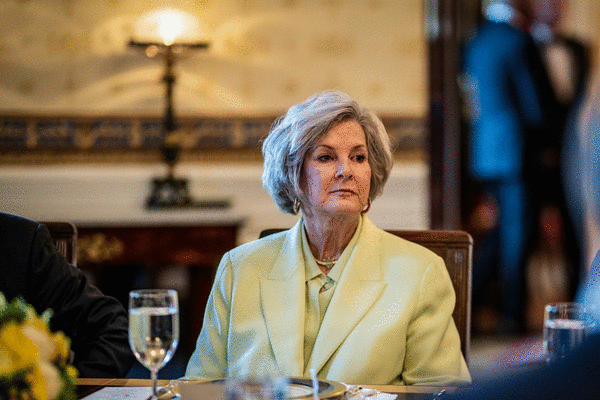
A telling example emerged as Trump’s Chief of Staff Susie Wiles departed earlier this month. Calley Means, who had left his position as an adviser to Health and Human Services Secretary Robert F. Kennedy Jr. weeks before, accused Wiles of using her status to do the bidding of two DC lobbying firms close to Trump — Ballard Partners, where Wiles worked for roughly a decade, and Continental Strategy, where Wiles’ daughter is a partner.
In an interview on Joe Rogan’s podcast, Means said that Wiles helped relax restrictions on flavored vaping and kratom products, enabled an executive order that helped block increased regulation of the controversial herbicide glyphosate and tanked a definition of “ultraprocessed” foods that would have limited their use in school lunches. All had been popular parts of Kennedy’s "Make America Healthy Again" agenda, and were opposed by the corporate clients of the two lobbying firms.
A spokesperson for Wiles blasted the allegations as “outrageous, defamatory, and provably false.” Continental Strategy called the charges “inaccurate and baseless.” Brian Ballard, the founder of Ballard Partners, called the claims false.
There’s no indication that anything Means has alleged is illegal. But isn’t that the problem?
Although Trump once promised to “drain the swamp,” in his second term he has positioned his office at the center of the cesspool. On his first day in office, he repealed the longstanding executive order on ethics that every recent president — including him during his first term — had followed. It required executive personnel such as Wiles to recuse themselves from discussions regarding their former lobbying clients.
Policy changes that should be debated in the open by Congress are made behind closed doors through executive order — all but inviting companies to hire lobbyists with insider access. For example, Trump’s tariff policies created new opportunities for industries to lobby for carve-outs. His immigration crackdown enabled billions in no-bid contracts for detention facilities and deportation flights. He’s looked the other way on behalf of Big Tech titans and cryptocurrency speculators. And most of those players donated to Trump-affiliated political committees, his ballroom project or his presidential library.
Wiles was the logical person to orchestrate this cacophony, said Jon Golinger, a lawyer with Public Citizen who detailed her work as a registered federal lobbyist during and after the first Trump administration. Wiles had spent years representing corporate clients who sought to have federal regulations dropped, laws modified and enforcement actions ignored, he told me. And that was before Trump tapped her to run his reelection campaign and then become his powerful chief of staff.
Many of those corporate clients have since hired Ballard Partners and Continental Strategy — firms that promote their access to the White House and its staff. Ballard Partners is now the top‑grossing federal lobbying firm in Washington, according to a Bloomberg Government analysis — up 350% in 2025 and another 84% in the first half of this year. Continental Strategy, founded by Carlos Trujillo, a former Florida state representative, grew 1,423% last year.
It’s no accident that the two lobbying firms closest to Trump got their start in Florida. The lobbying corps and the Republican-controlled state government in the nation’s third-largest state have perfected the conditions for legalized pay-to-play politics. It’s also no accident that Ballard has been one of Trump’s top fundraisers for decades. But just because this system is legal doesn’t mean it’s not corrupt.
When elite insiders put their thumbs on the scale, they distort the free market and erode public trust in government. Businesses that play by the rules are punished, while those who buy proximity to power are rewarded.
Exit polls showed that 90% of midterm voters considered corruption a major factor in their vote for Congress. The American people are demanding change — and that should include an end to the monetized relationships between the White House and K Street lobbying firms.
The “Drain the Swamp Act” now before Congress is one place to start. It would codify the ethics rules adopted by previous presidents and make them federal law. Among its provisions, it would prevent people from lobbying government officials they previously worked with and require lobbyists who take a government job to wait two years before having any influence related to their former clients. The bill should go further, however, and require any elected official to disclose who is lobbying them and their staff and for what purpose.
Lobbying has a role in the American government tradition, but nothing in the Constitution says that because you can write a bigger check, you should have a bigger voice.
_____
This column reflects the personal views of the author and does not necessarily reflect the opinion of the editorial board or Bloomberg LP and its owners.
Mary Ellen Klas is a politics and policy columnist for Bloomberg Opinion. A former capital bureau chief for the Miami Herald, she has covered politics and government for more than three decades.
_____
©2026 Bloomberg L.P. Visit bloomberg.com/opinion. Distributed by Tribune Content Agency, LLC.




























Comments