'A large and growing mandate': Alaskans vote to keep ranked choice voting and open primaries
Published in Political News
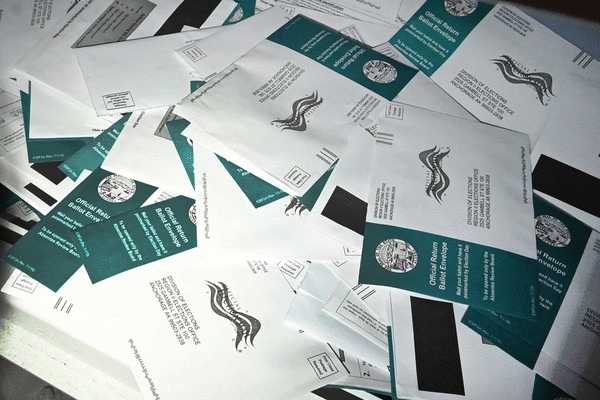
ANCHORAGE, Alaska — A ballot measure that sought to overturn Alaska's election system has failed, marking the second unsuccessful effort to repeal the state's open primaries and ranked choice voting method in as many years.
This year's Ballot Measure 2 — which would have also repealed campaign disclosure laws — is on track to fail by seven percentage points, after a 2024 repeal measure was voted down more narrowly.
Alaskans first adopted the voting system by ballot measure in 2020.
The method has been credited with promoting bipartisanship in the Alaska Legislature, as moderate and centrist candidates are less likely to lose to more partisan challengers. But it has also come under consistent attack from the Alaska Republican Party and President Donald Trump, who has called the system "disastrous and very fraudulent."
This year's repeal initiative was sponsored by three Republicans — Judy Eledge, Ken McCarty and Bernadette Wilson, who also lost a gubernatorial bid. Leaders of the Alaska Republican Party also advocated in favor of the initiative, making it a centerpiece of their message to voters.
In an interview Wednesday with Right Side Broadcasting, a right-wing platform, Wilson said she hoped that another effort would be mounted to repeal ranked choice voting in 2028. She is not alone: Phil Izon, who sponsored the unsuccessful 2024 initiative, has also said in a series of post-election social media posts that he would look to place another effort on the ballot ahead of 2028.
Bethany Marcum, who ran the campaign supporting this year's ballot measure, said the activists behind the initiative have not yet decided whether they would launch another effort.
"This was an entirely grassroots effort, and the grassroots will decide if it's going to happen again," Marcum said in an interview Friday. Such a repeat undertaking would have to begin quickly.
"The signature gathering process is a monumental effort, so really the signature gathering would have to happen next year," she said.
Either way, this month's result means that Alaskans will again use ranked choice voting and open primaries in 2028, when another high-stakes U.S. Senate race will be on the ballot, with Republican U.S. Sen. Lisa Murkowski up for reelection.
This year's repeal campaign had focused on ranked choice voting, describing the voting method used in Alaska's general elections as confusing and messy. But the initiative backers did little to persuade voters to eliminate the campaign finance reporting requirements that had also been adopted in 2020, along with an open primary method that puts all candidates on the same primary ballot, regardless of party affiliation. Backers of the system say it is more in line with the Alaska electorate, a majority of whom are not registered members of a political party.
Marcum attributed this year's loss to a fundraising disadvantage. The campaign supporting Ballot Measure raised $2.5 million. But the opposition campaign raised $10.4 million, relying on the same wealthy backers that helped fend off a previous repeal effort.
"It was the same problem we've had in the past as far as being majorly outspent," said Marcum.
Marcum said that she believed the ballot measure would have been adopted if it had been on the ballot in 2028, rather than this year, when the measure was disadvantaged by both the more moderate midterm electorate and the nationwide wave of support for left-leaning candidates and causes.
Scott Kendall, who helped write the 2020 initiative that put the voting system in place, agreed that "a midterm electorate is slightly less partisan," which aided defenders of ranked choice voting.
But he said that fact alone doesn't account for the growth in support for keeping the state's election system, relative to the 2024 initiative, which failed by around 700 votes. The margin this year is in the thousands of ballots.
Kendall described this year's results as "even better than what I thought was a best-case scenario."
"To me, it is a large and growing mandate," he said, adding that "time is the friend of the reform."
"As young voters come into the system, they love the system," he said. "Nearly a quarter of Alaska's current registered voters have never voted any other way in Alaska — so it's the normalization."
"I just think the trajectory of support is only going one direction from here on out," Kendall said.
© 2026 Anchorage Daily News. Visit www.adn.com. Distributed by Tribune Content Agency, LLC.
















































Comments