Department of Justice sending election monitors to 7 Michigan cities
Published in Political News
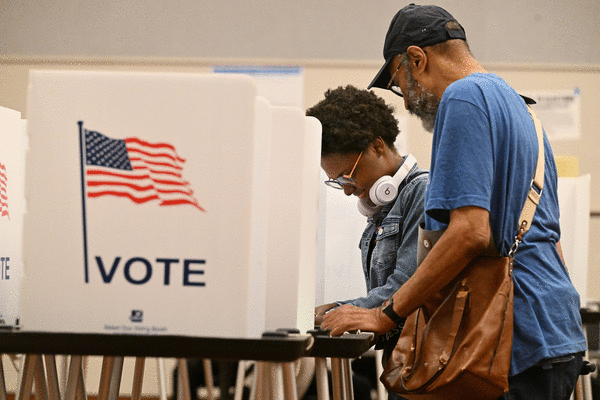
DETROIT — The U.S. Department of Justice plans to send election monitors to polling places in seven Michigan cities this fall, as voters in the battleground state prepare to pick a new governor and decide a series of races that could sway control of Congress.
Less than two weeks before the midterm election, the federal department within Republican President Donald Trump's administration provided local officials in Detroit, East Lansing, Flint, Grand Rapids, Hamtramck, Lansing and Warren with information about the monitoring effort, according to an Oct. 22 announcement from state leaders.
"As the Civil Rights Division has done in the past, our monitors only observe," said an Oct. 21 email to the East Lansing clerk from James Catania, a lawyer with the U.S. Department of Justice. "They do not intrude or interfere in any way in the voting process."
The email didn't explain why East Lansing, where Michigan State University is located, had been selected for monitoring. Officials in other Michigan cities, including Lansing Mayor Andy Schor, said they were uncertain why their municipalities had been picked.
"They have not told me why," Schor told The Detroit News.
Detroit, Grand Rapids and Warren are Michigan's three largest cities. Lansing and East Lansing are within the swing 7th Congressional District, a seat currently held by U.S. Rep. Tom Barrett, R-Charlotte, that both parties are hoping to win this fall. Barrett is facing Democrat Will Lawrence.
Warren is in the 10th District, Michigan's only open seat for Congress, featuring a competitive race between Republican Mike Bouchard and Democrat Christina Hines.
For the primary, the Department of Justice sent monitors to at least three Michigan cities: Detroit, Lansing and East Lansing. The department's messages ahead of the primary claimed Lansing officials didn't use the statewide voter registration list as the official registration list at polling places in the city in the 2024 election and suggested there were "long lines and lengthy waiting periods at some voting locations."
Lansing Clerk Chris Swope previously said the statement by the Department of Justice was false. Long lines have generally not been an issue in Michigan as absentee voting and early voting have become frequently used methods of casting ballots, Swope said.
"We did not have long lines in 2024," Swope said.
Catania's new email about East Lansing said monitors would be working to ensure federal voting rights laws were being followed, including the National Voter Registration Act and the Help America Vote Act.
Warren Clerk Sonja Buffa said she was planning to have a conversation with officials from the Department of Justice later in the day on Oct. 22.
Asked why the seven Michigan cities were chosen, Kiersten Pels, spokeswoman for the Department of Justice, said monitors will be in all 50 states, "doing the routine election monitoring the department has done for decades."
"Every monitor has the same role: observe for potential violations of federal law and report concerns to the department, which the department will review after Election Day and act where appropriate," Pels said.
Democratic leaders in Michigan described the monitors as a standard part of the election process. Yet, they've received more attention this year after Republican President Donald Trump advanced a series of unproven claims about widespread voting fraud in Michigan and elsewhere.
In February, Trump suggested federal officials might take over local responsibilities for administering elections, something opponents said would violate the law.
Democratic Michigan Attorney General Dana Nessel said she anticipates the federal monitors will comply with state and federal laws, as they did during the August primary.
"But make no mistake, my office stands ready to hold accountable those who attempt to unlawfully interfere with or intimidate Michigan voters or election workers, regardless of who they may be," Nessel added.
Democratic Gov. Gretchen Whitmer told reporters on Oct. 22 that her office has been working closely with Nessel's team and Secretary of State Jocelyn Benson's team ahead of the Nov. 3 election.
Benson is the Democratic nominee for governor this fall. Whitmer can't run again because of term limits.
"We take these threats seriously," Whitmer said at a campaign event in East Lansing for Benson. “We will do everything we can to ensure that people can have absolute confidence that they will be safe to go to the polls.”
Whitmer said people can vote early through absentee ballots. Nine days of early, in-person voting begins statewide on Saturday, Oct. 24.
"Avoid lines," the governor said. "Avoid any shenanigans that the Trump administration may or may not explore undertaking as we get close to this election.”
Department of Justice monitors are typically federal lawyers and staff, Nessel's office said.
Federal monitors have been present in Michigan for several past federal elections. The law does not expressly provide for monitors, so their presence at polling places is akin to any other member of the public who may observe an election as a poll watcher, Nessel's office added.
The monitors can't speak with voters, touch election equipment or ballots, or interfere with the administration of the election, Nessel's office said.
Schor, the Lansing mayor, said he welcomes the monitors as long as they follow their traditional procedures.
"They’re not allowed to interrupt," Schor said. "They’re not allowed to go after voters. They’re allowed to monitor.”
Benson, Michigan's top election official, noted that hundreds of local administrators across the state are in charge of carrying out elections. They are prepared to ensure things go smoothly, she said.
________
©2026 www.detroitnews.com. Visit at detroitnews.com. Distributed by Tribune Content Agency, LLC.














































Comments