We’ve tracked $80M of spending on almost 170 AI-generated political ads this year – it’s weird
Published in Political News
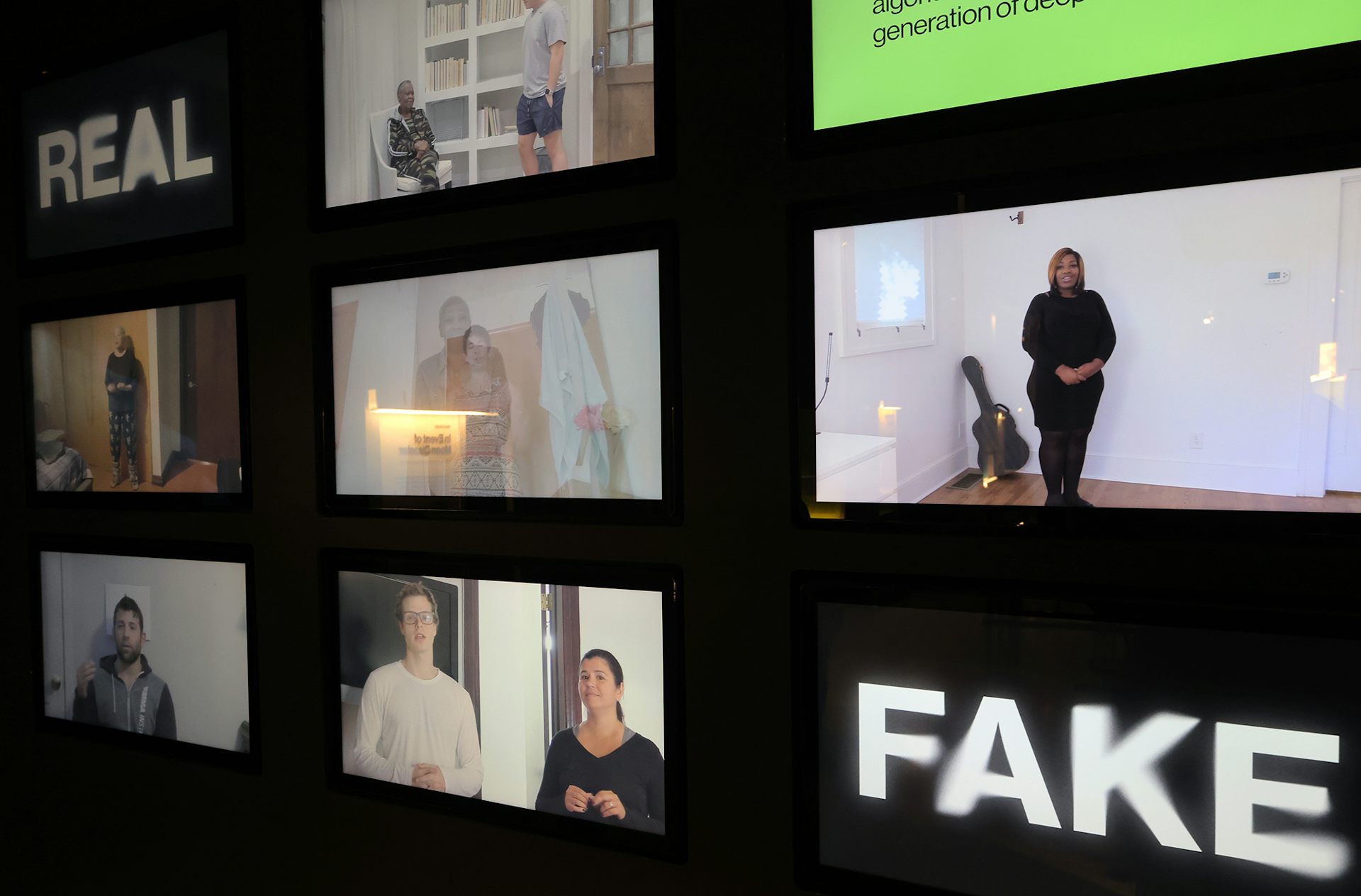
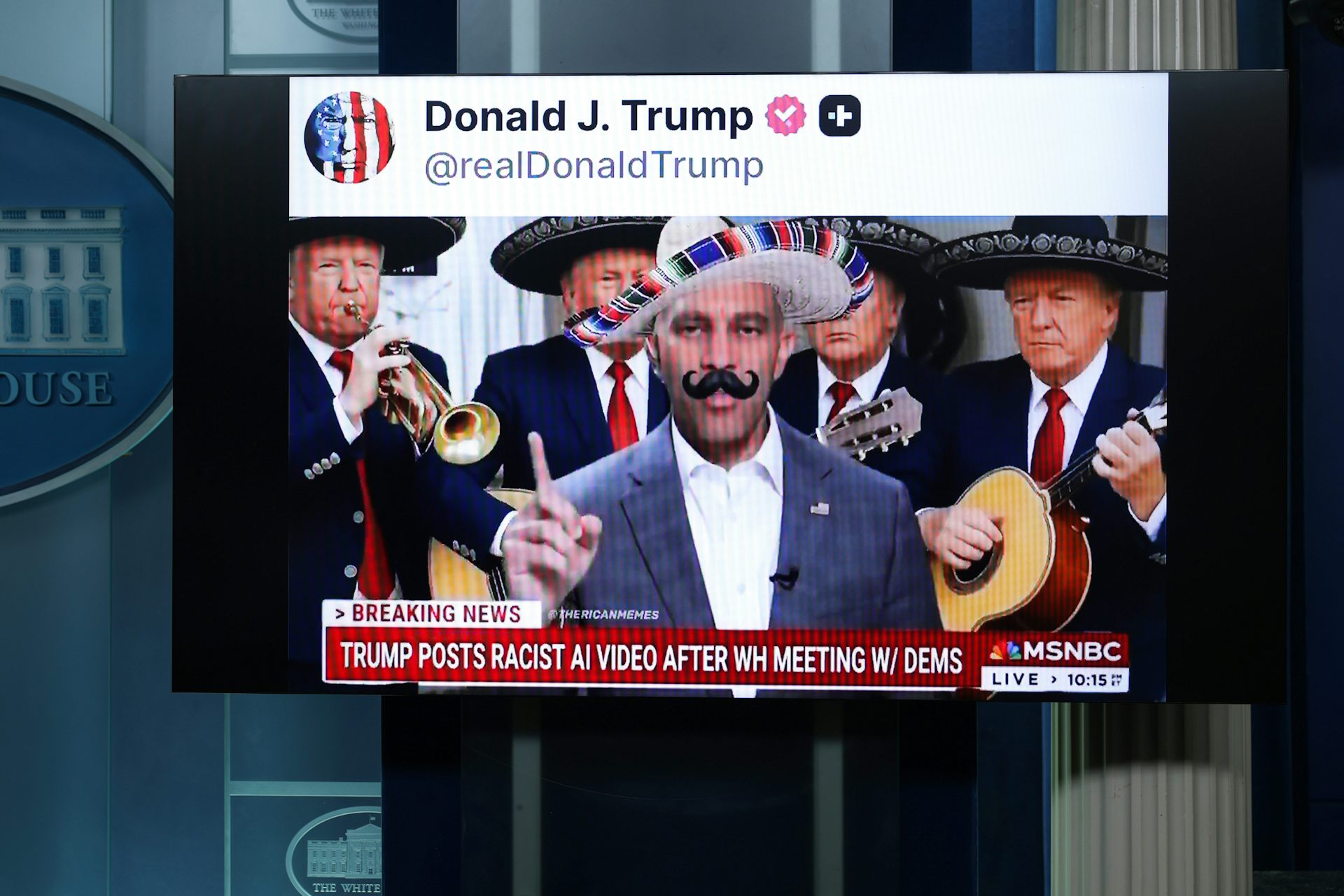
The 2026 U.S. midterm campaigns are the first in which AI-generated political ads are regularly appearing on people’s televisions and social media feeds.
We are researchers who have been studying political advertising through the Wesleyan Media Project since 2010. This election cycle – using data from media reports, student coders and AdImpact, a firm that tracks political ad spending – we’ve tracked about US$80 million in spending on almost 170 unique ads that use AI.
What we found has surprised us: AI use spans from hyperrealistic deepfakes to subtle enhancements; Republican sponsors – both candidates and interest groups – are much more likely to use AI than are Democratic sponsors; and, thanks to a patchwork of state legislation, many of these ads do not disclose the use of AI at all.
An assortment of politicians and watchdog groups have expressed concern about campaigns using generative AI to produce deepfakes – synthetic videos showing people doing things they did not do – that might deceive voters.
We’ve noticed several ads containing hyperrealistic deepfakes of famous politicians, including Donald Trump, Nancy Pelosi, Barack Obama, Kamala Harris and Alexandria Ocasio-Cortez. Ocasio-Cortez, in particular, is a favorite among Republican advertisers, appearing in at least five ads.
We’ve seen deepfakes in which a Republican Senate candidate from Louisiana drives a school bus full of undocumented immigrants, a Republican candidate for governor from South Carolina walks arm in arm with drag queens, and an ad in which Liz Cheney, Mitt Romney and Mike Pence are seen carrying pitchforks on the White House lawn.
People who are not politicians made appearances, too, including a fake Dr. Anthony Fauci, seen running around a state fair with a huge syringe, presumably eager to vaccinate everyone. We’ve also noticed several ads in which AI was used to generate crowds or constituents.
In several cases, AI was used to enhance visuals rather than generate something new. One ad from Chip Keating, a Republican candidate for governor in Oklahoma, includes an AI disclaimer, but it doesn’t specify exactly how AI was used. Ads that use AI to enhance visuals don’t necessarily look different from ads that were created in the pre-AI era, which makes it difficult for viewers to discern whether they depict something false.
Republicans – both candidates and groups such as super PACs and 501(c) organizations – are much more likely to use AI in their ads than are Democrats, according to our research.
In fact, Republican candidates or pro-Republican groups were behind 80% of the ads we tracked and 83% of the spending.
We can only speculate as to why Republicans dominate the use of AI in political advertising in 2026. In general, Democrats tend to take on a regulatory mindset when it comes to political campaigns, favoring limits on campaign spending and required disclosures. In 2022, for instance, only Senate Democrats and two independents voted to advance the DISCLOSE Act that would have required additional campaign finance disclosures for super PACs, labor unions and corporations. Republicans, by contrast, tend to be more in favor of a free market approach.
These more general philosophies may be reflected in the parties’ use of generative AI for political advertising, something about which voters are worried. Polling shows broad support for more regulation, with 78% of registered voters favoring a ban on AI content that makes deceptive claims about candidates.
Because regulation of AI in advertising depends on a patchwork of state legislation, many of these ads are not required to disclose the use of AI. This lack of disclaimers makes tracking AI use in ads challenging. Our team has relied on media coverage and trained student coders to flag ads that are potentially AI-generated.
Across 35 states, only 31% of the ads we tracked – representing 22% of the spending – disclosed the use of AI tools. The wording of these disclaimers was all over the map. For example, one Georgia ad included the disclaimer, “This video has been manipulated or generated with artificial intelligence,” while an Oklahoma ad said, “Political satire. AI-generated images do not depict actual events.” A North Carolina state Senate ad said, “You guessed it! AI was definitely used to generate these silly video clips.”
Some advertisers voluntarily disclose the use of AI even when they are not required to do so. Sometimes, the opposite occurs – advertisers don’t include disclaimers even when state law requires them to. In fact, we’ve found that a state law that requires disclaimers on ads that use AI has very little relationship with the actual use of disclaimers.
In states without laws governing the use of AI in political ads, 32% of ads contained a disclaimer; by contrast, in states with laws governing the use of AI, 29% contained a disclaimer. This comparison, however, is not perfect, as some of the ads in our database aren’t covered by their state’s law. Some states, such as Colorado, have laws that apply only to candidate deepfakes and thus exclude other uses of AI. In other instances, such as in Louisiana, an AI law was enacted after the ad aired.
Minnesota law generally bans deepfakes in political ads, but an ad featuring synthetic video of Democratic Senate candidate Peggy Flanagan aired in May 2026 anyway. Whether it violated state law is uncertain, as the law requires that the media be “so realistic that a reasonable person would believe it depicts speech or conduct of an individual who did not in fact engage in such speech or conduct.”
Moving forward, the real policy challenge will revolve around transparency, the enforceability of existing laws and simply figuring out what type of disclosure would be helpful to voters.
This article is republished from The Conversation, a nonprofit, independent news organization bringing you facts and trustworthy analysis to help you make sense of our complex world. It was written by: Travis N. Ridout, Washington State University; Erika Franklin Fowler, Wesleyan University, and Michael Franz, Bowdoin College
Read more:
As AI political deepfakes go viral, lawmakers struggle to keep up – 2 states’ laws show limits of what they can do
AI‑generated political videos are more about memes and money than persuading and deceiving
Unregulated online political ads pose a threat to democracy
The authors do not work for, consult, own shares in or receive funding from any company or organization that would benefit from this article, and have disclosed no relevant affiliations beyond their academic appointment.














































Comments