Politics
/ArcaMax
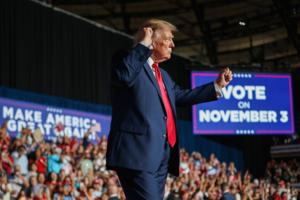
Trump says he won't let Iran strike L.A. or San Diego: 'Not going to let that happen'
President Trump told a crowd in Texas on Wednesday night that he would not allow Iran to attack San Diego or Los Angeles, a comment that came two days after he made off-the-cuff remarks suggesting the West Coast cities could be struck.
"You want to see a horror show? You want to see problems? Let them hit San Diego, let them hit Los Angeles," ...Read more
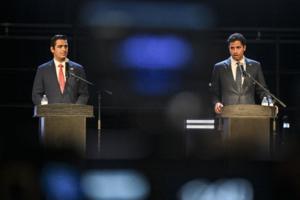
Barbed comments, and sharper rejoinders, dominate debate in Colorado's 8th District
BERTHOUD, Colo. — The candidates vying to represent Colorado’s 8th Congressional District clashed on stage Wednesday night, with U.S. Rep. Gabe Evans calling his opponent the “most radical candidate” while former state lawmaker Manny Rutinel claimed Evans “seeks the approval of one man” — Donald Trump.
The debate, which drew ...Read more
Trump defends border policies in Texas as Senate race heats up
President Donald Trump defended his immigration policies during a visit to Texas on Wednesday as he sought to boost struggling GOP Senate candidate Ken Paxton ahead of November’s midterm elections.
“The only thing standing between you and the migrant conquest, the invasion that you had just two years ago — for four years you suffered — ...Read more
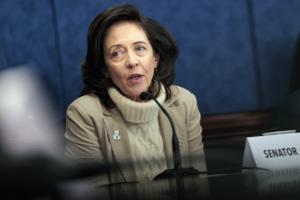
Sen. Maria Cantwell looks to federal testing role in AI safety framework
Senate Commerce Committee ranking member Maria Cantwell, D-Wash., released a framework for artificial intelligence regulation Wednesday that includes a major role for the federal government in setting safety standards and testing models for catastrophic risk.
The six-point framework, which does not include legislative text, stands in contrast ...Read more
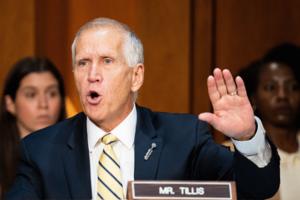
Thom Tillis is joining a new Davidson College initiative after leaving Senate
U.S. Republican Sen. Thom Tillis is set to take on a new role at Davidson College after his time in the Senate.
Tillis will serve as a leader-in-residence with Davidson’s new D.G. and Harriet Wall Martin Institute for Public Good, the college announced Wednesday. Former U.N. Ambassador Susan Rice and Arab American Institute President James ...Read more
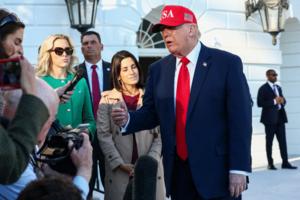
Trump sued by Democratic Party over taxpayer-funded TV ads
The Democratic National Committee filed a lawsuit accusing the Trump administration of unlawfully using government money to pay for advertisements lauding the president that have been airing on cable and broadcast television stations across the U.S. in recent weeks.
The complaint filed Wednesday in federal court in Washington by the Democratic ...Read more
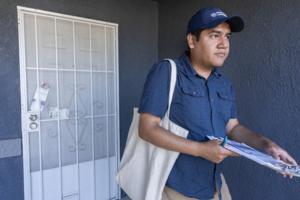
Valadao and Villegas clash in Central Valley debate over gas prices, war in Iran
SACRAMENTO, Calif. — In their first and only debate of the campaign Tuesday night, Rep. David Valadao, R-Hanford, and progressive challenger Randy Villegas laid out sharply different strategies for winning over Central Valley voters.
Villegas repeatedly attacked Valadao’s record, calling it a failure for working families while pushing for a...Read more

Rogers shifts gears, calls for end to Trump's 'tariff war' with Canada
WASHINGTON — Republican U.S. Senate candidate Mike Rogers appears to be breaking with President Donald Trump on another key issue less than a month before Election Day.
"Drinking a Labatt and watching the Red Wings, man, it just doesn't get any more Michigan than that," Rogers said in a new ad released Oct. 7. "Here in Michigan, we know that ...Read more
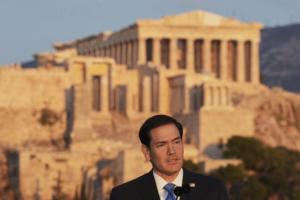
Rubio says US 'unapologetic' about power in warning to Europe
Secretary of State Marco Rubio used a dramatic backdrop in Greece to remind the world of the Trump administration’s focus on the “unapologetic” pursuit of power, and issued another warning to Europe about the dangers of Western decline.
In a speech on a hill in front of the Acropolis in Athens, the top U.S. diplomat invoked Renaissance ...Read more
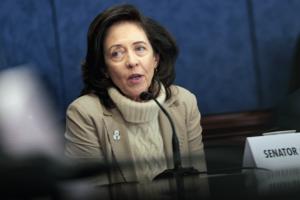
Cantwell unveils AI safety framework as Congress stalls ahead of election
WASHINGTON, D.C. — Sen. Maria Cantwell, the top Democrat on the Senate committee overseeing artificial intelligence, on Wednesday unveiled a set of principles for regulating AI, making a fresh push for congressional action as concerns proliferate over the safety of the technology.
Cantwell's framework would put enforceable federal safety ...Read more
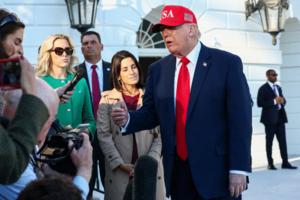
Trump on ensuring 'dividend' dollars spent at home: 'It's not going to be a big problem'
WASHINGTON — The White House has been unable to describe how it could ensure over $1 trillion President Donald Trump has promised American citizens in exchange for their midterm election votes would be spent in the United States.
During a GOP midterms convention in Dallas last month, Trump promised all U.S. adult citizens a $5,000 payout if ...Read more
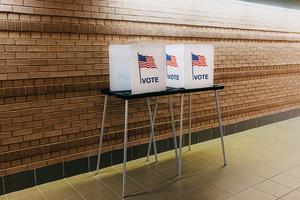
These state supreme court races could decide abortion access and trans rights
In the heated news coverage of what’s at stake in the 2026 midterms, state supreme court races are drawing relatively little attention. Yet these are highly significant elections.
Thirty-one states are holding supreme court elections in 2026, with voters nationwide picking judges to fill more than 60 open seats.
As a law ...Read more
Federal judge blocks Trump rule behind million-dollar fines against immigrants
A federal judge has temporarily blocked a Trump administration regulation used to impose massive immigration fines, granting relief in a lawsuit brought by two women, including a South Florida resident, who were hit with a $1.82 million penalty while pursuing a path to permanent residency.
U.S. District Judge George A. O’Toole Jr. in ...Read more
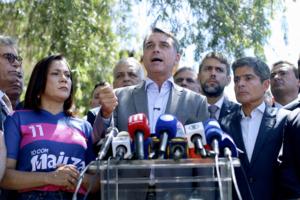
Bolsonaro racks up new party endorsements for Brazil presidency
Brazil presidential candidate Flávio Bolsonaro won the backing of two center-right parties on Wednesday, a day after a veteran lawmaker endorsed him, bolstering his campaign ahead of a tight runoff.
The União Brasil party and the Progressistas, known as PP, endorsed the right-wing hopeful, Senator Tereza Cristina Dias told reporters in ...Read more
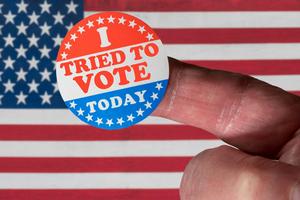
Armed poll watchers: New Jersey’s 1981 racist voter intimidation campaign is a cautionary tale ahead of 2026 midterms
In the history of voter suppression in the United States, including attempts to stop Black and Latino people from voting, Republican tactics in the 1981 New Jersey gubernatorial race stand out.
That November, voters in several cities saw posters at polling places printed in bright red letters: “WARNING. This area is being patrolled ...Read more
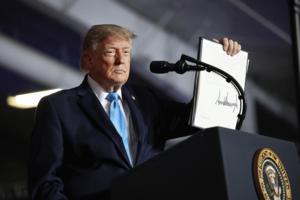
Red-dyed diesel order unlikely to stem red ink from high prices
WASHINGTON — A White House bid to address sky high fuel prices by allowing temporary expanded use of untaxed diesel will have a limited impact on businesses and consumers feeling the pain at the pump, experts say.
President Donald Trump signed an executive order while at a Nebraska campaign event on Monday allowing the sale of red-dyed diesel...Read more
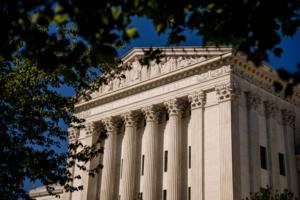
Editorial: Supreme Court must support the Constitution, not Trump
Having undermined the law and the Constitution with some terrible opinions in deference to President Donald Trump, this week brings the new U.S. Supreme Court term, and with it the risk that our nation’s highest judicial body will continue to make us a less fair, less moral and less safe society.
As with other recent terms, the weightiness of...Read more

Commentary: Brazil's elections appear to be another win for Donald Trump
If there’s anything President Donald Trump likes more than campaigning for Republicans, it’s watching his preferred candidates win their elections. In Latin America, he’s having remarkable political success.
Over the last year and a half, right-wing candidates have won seven presidential elections in a part of the world Washington ...Read more
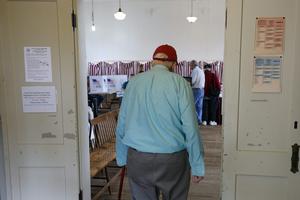
This year’s primary elections showcase some of the problems with US electoral system
The last 2026 primary elections were held on Sept. 15 in Delaware. Although totals are not yet available, there is evidence that turnout was higher than in most prior election years.
This year’s primaries were also the most competitive in recent history; 13 congressional incumbents were defeated, the largest number since the 1950s ...Read more
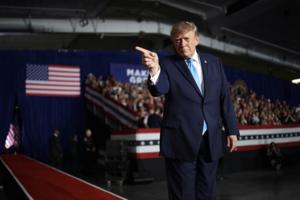
Gavin Newsom orders threat monitoring after Trump says 'let them take out Los Angeles'
Comments by President Donald Trump at a Nebraska political rally interpreted by some as a suggestion Iran could “take out” Los Angeles or San Diego prompted a backlash in California.
Gov. Gavin Newsom said Tuesday on X that he has directed the State Threat Assessment Center to monitor for any possible threats to California following the ...Read more
Popular Stories
- Armed poll watchers: New Jersey’s 1981 racist voter intimidation campaign is a cautionary tale ahead of 2026 midterms
- Editorial: Supreme Court must support the Constitution, not Trump
- Commentary: Brazil's elections appear to be another win for Donald Trump
- These state supreme court races could decide abortion access and trans rights
- 'Unbelievably distressing': Latest comments from Trump outrage elected leaders across San Diego, California
Related Channels

ACLU
By The ACLU

Amy Goodman
By Amy Goodman

Armstrong Williams
By Armstrong Williams

Austin Bay
By Austin Bay

Betsy McCaughey
By Betsy McCaughey

Bill Press
By Bill Press

Bonnie Jean Feldkamp
By Bonnie Jean Feldkamp

Cal Thomas
By Cal Thomas

Clarence Page
By Clarence Page

Danny Tyree
By Danny Tyree

David Harsanyi
By David Harsanyi

Dick Polman
By Dick Polman

Erick Erickson
By Erick Erickson

Froma Harrop
By Froma Harrop

Jacob Sullum
By Jacob Sullum

Jamie Stiehm
By Jamie Stiehm

Jeff Robbins
By Jeff Robbins

Jessica Johnson
By Jessica Johnson

Jim Hightower
By Jim Hightower

Joe Conason
By Joe Conason

John Stossel
By John Stossel

Josh Hammer
By Josh Hammer

Judge Andrew Napolitano
By Judge Andrew P. Napolitano

Laura Hollis
By Laura Hollis

Marc Munroe Dion
By Marc Munroe Dion

Michael Barone
By Michael Barone

Mona Charen
By Mona Charen

Rachel Marsden
By Rachel Marsden

Rich Lowry
By Rich Lowry

Robert B. Reich
By Robert B. Reich

Ruben Navarrett Jr
By Ruben Navarrett Jr.

Ruth Marcus
By Ruth Marcus

S.E. Cupp
By S.E. Cupp

Salena Zito
By Salena Zito

Star Parker
By Star Parker

Stephen Moore
By Stephen Moore

Susan Estrich
By Susan Estrich

Ted Rall
By Ted Rall

Terence P. Jeffrey
By Terence P. Jeffrey

Tim Graham
By Tim Graham

Tom Purcell
By Tom Purcell

Veronique de Rugy
By Veronique de Rugy

Victor Joecks
By Victor Joecks

Wayne Allyn Root
By Wayne Allyn Root
Comics