Politics
/ArcaMax
How due process, not the First Amendment, got the White House ban on reporters blocked in court
A federal judge ordered the Trump administration to temporarily restore journalists’ access to the White House on Sept. 24, 2026. As he had in a similar case in 2018, U.S. District Judge Timothy Kelly decided the revocation of the reporters’ press passes likely violated their Fifth Amendment right to due process.
His decision ...Read more
Kentucky Supreme Court says it will not change opinion after voiding Lexington judge impeachment
LEXINGTON, Ky. — The Kentucky Supreme Court ruled Thursday it will not change its stance that the state General Assembly wrongfully tried to impeach Lexington Judge Julie Muth Goodman.
Facing significant criticism from Republican lawmakers over decisions she made in court, Goodman was impeached by the Kentucky House earlier this year. The ...Read more

AI tools can help Americans meet their civil legal needs
Most Americans know that in all criminal cases – those filed by the government against an accused individual – the defendant has a constitutional right to a lawyer. The Supreme Court established this right in 1963 in the landmark case Gideon v. Wainright.
What many people may not know is that no such right exists in civil cases. ...Read more
CNN, MS NOW and Politico still shut out of White House after judge lifts Trump's press ban
A federal judge issued a temporary restraining order Thursday that removes President Donald Trump's ban on three news outlets from White House grounds, a rebuke of the administraton's most severe attack yet on the Washington press corps.
But the showdown is far from over. Journalists from CNN, MS NOW and Politico were still denied access to the...Read more
Judge lifts White House press ban of CNN, MS NOW and Politico
A federal judge issued a temporary restraining order Thursday that removes President Donald Trump's ban on three news outlets from White House grounds, a rebuke of the administraton's most severe attack yet on the Washington press corps.
U.S. District Judge Timothy Kelly said in his ruling that the administration's ban is likely unconstitutiona...Read more
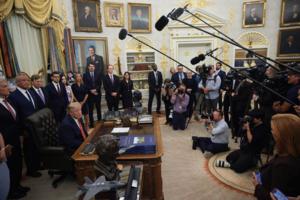
Editorial: Trump should restore White House press access
President Donald Trump has often sparred effectively with the mainstream media outlets. His latest skirmish, however, is a misstep.
On Friday, Trump announced that CNN, MS NOW and Politico were no longer welcome in the White House. He justified this decision by writing on Truth Social that they constantly report “fake news.”
Over the ...Read more
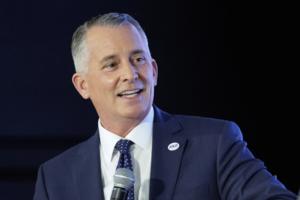
Editorial: Candidates shouldn't avoid face-to-face debates
“You can’t debate a liar.” That’s the rationale given by Democratic gubernatorial nominee David Jolly, who announced earlier this week that he would not participate in a debate with Byron Donalds, his GOP counterpart.
We vehemently disagree. In fact, face-to-face debate is often one of the best ways to challenge a rival on their beliefs...Read more

In South Texas, Bobby Pulido urges voters to see beyond red and blue
GOLIAD, Texas — Standing on a stage draped with patriotic bunting in this red pocket of the Lone Star State, Bobby Pulido prodded the audience of several hundred to look past the “D” next to his name.
Pulido, a Tejano singer who has two Latin Grammy Awards and broad name recognition across South Texas, is the Democratic nominee for a ...Read more
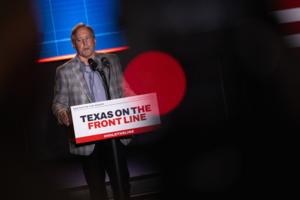
Commentary: Taking back Congress should be a slam dunk for Democrats
There may never be a more favorable setup for a midterm election cycle than the current iteration.
As we roll into the thick of this year’s fall campaigns, Democrats are all wringing their hands about taking Congress back. We will get the House, they stoutly declare, then add a frail whisper that the Senate could be a long shot.
The ...Read more

Trump denies report of talks to add his name to Ford's Theatre
President Donald Trump denounced reporting by MS NOW that administration officials have floated attaching his name to Ford’s Theatre, the playhouse where an assassin killed President Abraham Lincoln in 1865.
“The story that the White House, or me, want to affix my name to Ford’s Theater, in Washington, D.C., where Abraham Lincoln was ...Read more
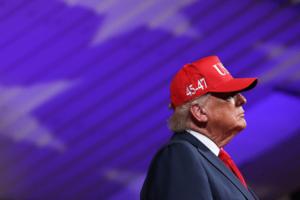
Trump and Vance stumped in NC for Senate candidate Michael Whatley. But did it help his campaign?
A phrase used repeatedly through the years is that “the road to the White House runs through North Carolina.”
But in 2026, the road to control of the U.S. Senate starts in North Carolina, seen by many as the most likely state to flip party control in November.
Which helps explain why President Donald Trump and Vice President JD Vance ...Read more
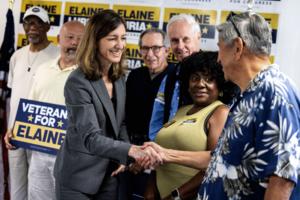
2nd Congressional District nominee Elaine Luria holds affordability roundtable on campaign trail
VIRGINIA BEACH — Rhena Hicks considers herself fortunate that she and her husband were able to save money and buy a house five years ago at a low interest rate. If they were shopping for a home today, Hicks believes it would be a different story.
“I don’t know if we could do it, or we would be in a much smaller place, or maybe not as nice...Read more
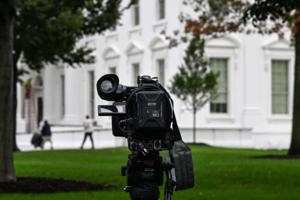
Judge weighs Trump White House ban of CNN, MS NOW, Politico
WASHINGTON — A federal judge appeared skeptical of the Trump administration’s argument that the president had valid national security grounds for banning three news outlets from the White House, but didn’t immediately rule on whether to reinstate their access.
U.S. District Judge Timothy J. Kelly, at a hearing Wednesday in Washington, ...Read more
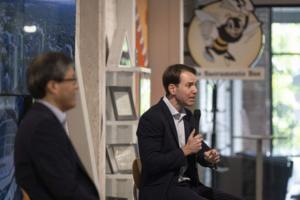
Rep. Kevin Kiley demands TV station stop airing 'Duck' ad tying him to Trump
SACRAMENTO, Calif. — Rep. Kevin Kiley’s campaign has sent a cease-and-desist letter to a Sacramento television station over a new political advertisement that compares the congressman to a duck and highlights his past endorsement from President Donald Trump.
The 30-second ad — titled “Duck” — began airing Monday on ABC10 (KXTV) and ...Read more
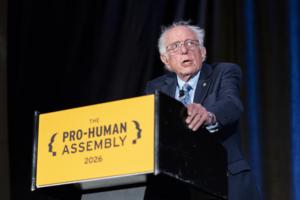
AI 'superintelligence' ban proposed by Casar, Sanders
WASHINGTON — Amid industry and government calls for a pause on the most advanced artificial intelligence development, leading progressives are drawing a line in the sand on one type of AI.
Sen. Bernie Sanders, I-Vt., and Rep. Greg Casar, D-Texas, who chairs the Congressional Progressive Caucus, unveiled legislation Wednesday that would ban AI...Read more
In South Texas, Bobby Pulido urges voters to see beyond red and blue
GOLIAD, Texas — Standing on a stage draped with patriotic bunting in this red pocket of the Lone Star State, Bobby Pulido prodded the audience of several hundred to look past the “D” next to his name.
Pulido, a Tejano singer who has two Latin Grammy Awards and broad name recognition across South Texas, is the Democratic nominee for a ...Read more
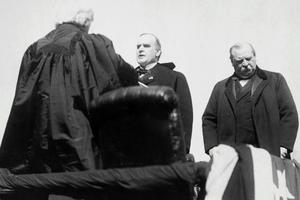
2 midterm elections that brought on new eras in US politics
The conventional wisdom is that the Democratic Party has the advantage in the 2026 midterm elections and could become the majority party in one, or both, chambers of Congress. The margin of that anticipated victory is harder to predict.
And the size of a party’s majority makes a difference. To see why, it’s worth looking back to ...Read more
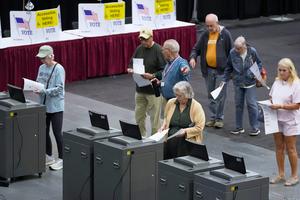
Election officials are fighting wavering voter trust by making mundane processes visible and recruiting citizens to help
Recently, I moderated a national event that had college students speaking with election officials, something I often find myself doing this time of year. This year, a new question kept coming up: “If I’m voting by mail, can I trust my ballot will actually show up?”
For college students, such considerations have urgency. Many are...Read more
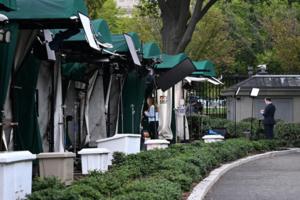
Editorial: White House takes aim at First Amendment with media ban
President Donald Trump announced Friday that CNN, MS NOW and Politico would be barred from the White House because of reporting he characterized as false and unfair. Reporters from the three organizations were subsequently denied access, and the outlets filed a federal lawsuit alleging violations of their First and Fifth Amendment rights.
The ...Read more
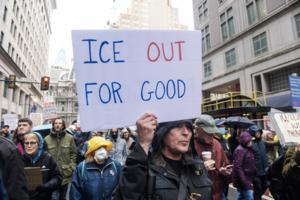
Editorial: Pennsylvania's shameful contribution Trump's immigration crackdown
A disturbing innovation of President Donald Trump’s deportation dragnet has replaced confrontational invasions of big cities like Minneapolis and Los Angeles with a quieter and, unfortunately, more effective crackdown in the nation’s least visible corners.
Pennsylvania’s coal country is among the unlikely targets of this latest wave of ...Read more
Popular Stories
- Rep. Kevin Kiley demands TV station stop airing 'Duck' ad tying him to Trump
- Commentary: Taking back Congress should be a slam dunk for Democrats
- 2nd Congressional District nominee Elaine Luria holds affordability roundtable on campaign trail
- Trump and Vance stumped in NC for Senate candidate Michael Whatley. But did it help his campaign?
- AI 'superintelligence' ban proposed by Casar, Sanders
Related Channels

ACLU
By The ACLU

Amy Goodman
By Amy Goodman

Armstrong Williams
By Armstrong Williams

Austin Bay
By Austin Bay

Betsy McCaughey
By Betsy McCaughey

Bill Press
By Bill Press

Bonnie Jean Feldkamp
By Bonnie Jean Feldkamp

Cal Thomas
By Cal Thomas

Clarence Page
By Clarence Page

Danny Tyree
By Danny Tyree

David Harsanyi
By David Harsanyi

Dick Polman
By Dick Polman

Erick Erickson
By Erick Erickson

Froma Harrop
By Froma Harrop

Jacob Sullum
By Jacob Sullum

Jamie Stiehm
By Jamie Stiehm

Jeff Robbins
By Jeff Robbins

Jessica Johnson
By Jessica Johnson

Jim Hightower
By Jim Hightower

Joe Conason
By Joe Conason

John Stossel
By John Stossel

Josh Hammer
By Josh Hammer

Judge Andrew Napolitano
By Judge Andrew P. Napolitano

Laura Hollis
By Laura Hollis

Marc Munroe Dion
By Marc Munroe Dion

Michael Barone
By Michael Barone

Mona Charen
By Mona Charen

Rachel Marsden
By Rachel Marsden

Rich Lowry
By Rich Lowry

Robert B. Reich
By Robert B. Reich

Ruben Navarrett Jr
By Ruben Navarrett Jr.

Ruth Marcus
By Ruth Marcus

S.E. Cupp
By S.E. Cupp

Salena Zito
By Salena Zito

Star Parker
By Star Parker

Stephen Moore
By Stephen Moore

Susan Estrich
By Susan Estrich

Ted Rall
By Ted Rall

Terence P. Jeffrey
By Terence P. Jeffrey

Tim Graham
By Tim Graham

Tom Purcell
By Tom Purcell

Veronique de Rugy
By Veronique de Rugy

Victor Joecks
By Victor Joecks

Wayne Allyn Root
By Wayne Allyn Root
Comics