Editorial: Will a new Congress do its job? Wanna make a bet?
Published in Op Eds
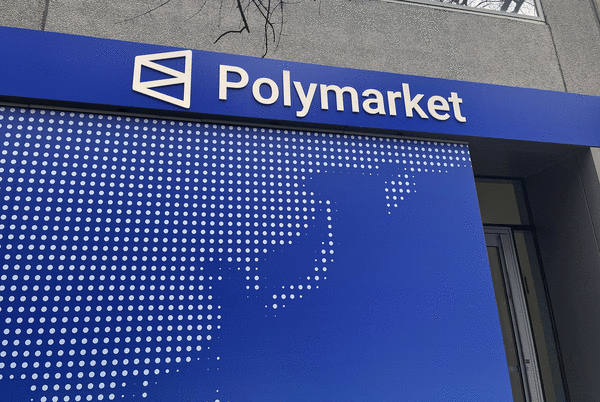
Kalshi and Polymarket have taken the trading world by storm in recent years, and now Illinois has become a battleground for the future of “prediction markets.”
These newfangled exchanges make it easy for everyday people to trade on simple yes-or-no questions: Will the Chicago Bears win the Super Bowl? Will President Donald Trump be impeached again? Will the Federal Reserve raise rates next month?
With these exchange apps on their smartphones, customers can wager on thousands of timely questions like these. Advocates call Kalshi and Polymarket “truth machines” because they collect the best guesses of people who put their money behind their opinions. Sometimes, as in the Nov. 3 midterm elections, the results can be surprisingly accurate. Plus, they’re simple to use, attracting a young, enthusiastic audience.
But does trading on the Super Bowl sound like gambling to you? Yes, it does to us, too.
These markets have upended decades of legal precedent giving states the authority to ban, regulate, license or tax casinos, sports books and other gaming. Courts across the country are struggling to determine whether Kalshi and Polymarket belong in the same regulatory framework as Chicago’s futures and options — instead of being treated like online casinos.
State and federal regulators have a big stake in the outcome, as do casino operators, tribal governments, financial institutions, tech giants, everyday people who enjoy trading these products and professionals who have figured out how to profit from them.
With billions of dollars on the line, Chicago’s respected Seventh Circuit Court of Appeals is wading in.
A federal judge in Illinois recently ruled these yes-or-no contracts can qualify as swaps, a sophisticated financial tool mostly regulated by the U.S. Commodity Futures Trading Commission [CFTC]. Since federal jurisdiction supersedes state law, the ruling gave a victory to Kalshi and Polymarket. The loser was Illinois Attorney General Kwame Raoul, and other state officials who want prediction markets to comply with their gaming rules.
In Wisconsin, however, a federal judge reached the opposite conclusion, saying sports-related contracts are a form of gaming — not equivalent to swaps — and subject to state oversight. Now it’s up to the Seventh Circuit, which handles appeals from Illinois and Wisconsin, to sort out the contrary rulings. Appellate courts in other jurisdictions are wrestling with related high-stakes issues.
The conflict is likely to reach the U.S. Supreme Court, which is expected to base its decision on laws approved before prediction markets hit it big. The Commodity Exchange Act of 1936, CFTC Act of 1974 and Dodd-Frank Act of 2010 all address federal regulation of innovative financial markets and, as the split in the circuits indicates, both sides can draw on them to muster strong arguments.
New Jersey already has petitioned for the Supreme Court to step in. Utah, which bans gambling, has brought criminal charges against Kalshi for making its markets available to residents. We worry that either a fast-growing financial innovation will be beaten down and driven offshore, or, conversely, that Illinois and other states reliant on gaming revenues will see their budgets blown up.
Neither outcome is acceptable. It’s time for Congress to do its job by clarifying the law to guide this dispute into a conclusion that serves the public interest.
There is room for compromise. At last week’s Futures Industry Association conference in Chicago, a co-founder of Kalshi voiced her company’s willingness to pay state taxes if the company can be federally regulated rather than subject to 50 different state rule books. “We have no problem paying tax,” she told the conference.
This federal-vs.-state question concerning financial markets is more than a century old, dating back to a case where the Chicago Board of Trade won a Supreme Court ruling after being accused of violating state gambling laws by trading grain futures. In the latest instance, it’s increasingly clear the law has not kept up with the marketplace.
As it stands, for instance, prediction markets self-certify that their contracts are not prone to manipulation before listing them. That process is supposed to be thorough, but Kalshi and Polymarket list so many new yes-or-no questions every week that it has become a check-the-box affair. These markets have proven vulnerable in some instances to insider trading by government officials and others.
Another problem is the CFTC is in no position to make lasting decisions on its own. It lost experienced staff in a Trump-led purge, and the administration has appointed just one Trump-aligned commissioner on what’s supposed to be a five-member, bipartisan board. Anything this weakened agency decides today very well could be reversed once it gets back to full strength.
A new Democrat-controlled Congress debuts in January, and we’re hopeful market regulation will be on the agenda. Prediction markets need to be addressed along with such other new developments as perpetual contracts and tokenization of stocks. Cryptocurrency regulation also is up for grabs.
The U.S. needs to remain a leader in financial innovation and America’s lawmakers need to pave the way.
___
©2026 Chicago Tribune. Visit at chicagotribune.com. Distributed by Tribune Content Agency, LLC.









































Comments