Commentary: The deceptive math behind America's billion-dollar lottery surge
Published in Op Eds
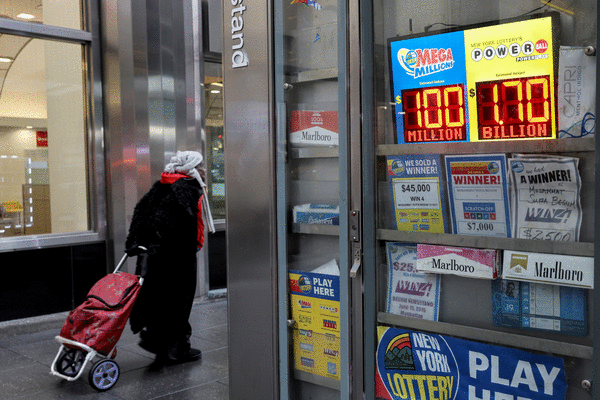
The midterm elections drew most people’s attention last week, but some may have noticed that the Powerball and MegaMillions jackpots both crossed the $500 million mark. A person from Illinois won the Powerball jackpot of $1.04 billion back in August. The largest recent Powerball jackpot was $1.817 billion won on Dec. 24. This was also the second largest lottery jackpot in history, with the cash value for the winner more than $834 million. (Historically, over 90% of winners opt for a lump sum rather than a 30-year annuity.)
All lotteries are in business to make money, and the way to achieve this objective is to collect more money than they pay out. Their very regressive nature means that those least able to afford it are disproportionately contributing to the bottom line.
Large jackpots are the best marketing tool that lotteries have at their disposal. News media are more than happy to report what the jackpot is, sharing such information at no cost to the lottery. The jackpot speaks for itself.
Large jackpots push lottery ticket sales higher. For example, in the five drawings leading up to the Dec. 24 winning of the $1.817 jackpot, the total sales were over $1 billion. In comparison, the total sales in the five weeks after this jackpot was won were around $116 million, nearly 90% smaller.
Like all gambling businesses, profits earned are in direct proportion to the volume of bets placed. For lotteries, this means that as more tickets are sold, more revenue is earned, independent of the size of the jackpot.
For every $2 Powerball ticket sold, around $0.32 on average is returned to the purchaser for the non-jackpot prizes, which is where most winning tickets come from. So when Powerball advertises that the overall odds of winning a prize are 1 in 24.87, excluding the multiplier prizes, it is saying that around 4% of people buy a winning ticket. Moreover, of those who do have a winning ticket, 96% of them win the $4 prize.
This mathematical imbalance exposes the structural reality of state lotteries: They function as a highly regressive tax, systematically extracting wealth from those who can least afford it. Households with incomes below $25,000 spend an average of 3.8% of their annual income on lottery tickets. In contrast, households making over $75,000 spend just 1.4%.
To further support this point, players in the lowest-income brackets spend nearly three times as much on tickets annually as higher-income earners. Furthermore, lottery retailers are disproportionately clustered in low-income and minority neighborhoods, creating a localized geographic drag on household wealth.
States add profits earned from lotteries to their general fund. Over two-thirds of states earn over 25% of the total revenue as profit, with West Virginia topping the list at 38.7%. Oregon is an outlier, returning 92.5% of lottery revenue back in prize money.
The Powerball numbers indicate how lucrative lotteries are for states. The jackpots serve as an enticement for people to buy more tickets, with the basic premise of volume driving profits, the factor that enables lotteries to remain profitable.
Of course, those who support lottery participation argue that participation is entirely voluntary and that the proceeds fund worthy entities such as public school systems. However, multiple legislative audits have historically revealed a “ substitution effect,” with lawmakers shifting existing general fund dollars away from education once lottery money arrives. This shell game leaves schools net-neutral while lower-income communities bear the real financial burden.
One avenue to salvage lotteries is prize-linked savings accounts. By shifting the lottery idea into a banking mechanism in which ticket entries are tied to personal savings deposits rather than spending, states could leverage the lottery jackpot to build generational wealth instead of dismantling it. Of course, states would stop earning lottery revenue on the backs of those who can least afford it.
None of this analysis will change anyone’s mind about buying a lottery ticket when the jackpot reaches stratospheric levels. What is $2 when one has a chance, no matter how remote, of winning over $1 billion? The opportunity to enjoy such a dream is well worth the cost of the ticket, even if nothing is won.
Whether the jackpot is tens of millions or even a billion dollars, the odds of winning are absurdly low. There are over 292 million possible number combinations for Powerball, and getting the right one by chance is a rare event.
This is why buying lottery tickets is not a pathway to wealth. It is nothing more than a form of entertainment, a highly regressive $2 tax that allows a person to indulge in a dream until the winning numbers are drawn, after which the ticket is tossed into a waste basket with other items that no longer hold any value.
____
Sheldon H. Jacobson is a computer science professor in the Grainger College of Engineering at the University of Illinois Urbana-Champaign.
___
©2026 Chicago Tribune. Visit at chicagotribune.com. Distributed by Tribune Content Agency, LLC.
















































Comments