Commentary: The next Congress shouldn't let Iran become a 'background war'
Published in Op Eds
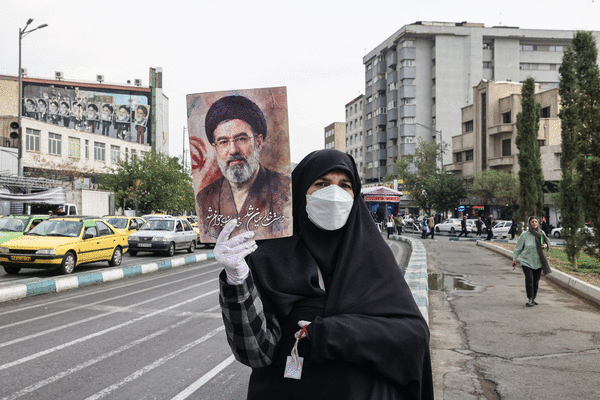
Whether they represent cornfields or skyscrapers, members of the incoming Congress discovered on the campaign trail a common winning message about the war with Iran: “This has to end.”
Yet even as the 120th Congress prepares to take office, intense planning is supposedly underway at the other end of Pennsylvania Avenue to restart the Iran war. Three aircraft carrier groups have been dispatched to the Middle East.
To be fair, unilateral warmaking isn’t an impulse unique to presidents from one side of the aisle. No military draft, unlimited deficit spending and no meaningful objection from a deferential legislative branch have all combined in recent decades to make launching far-flung combat operations one of the easiest things to do as president.
As long as folks back home don’t feel the costs in daily life, these wars can simmer endlessly in the background of the public’s consciousness. American combat boots are currently on the ground in Ecuador. Somalia has received more than 80 American airstrikes this year alone. Still, the lion’s share of foreign policy discourse leading up to November has focused on the Strait of Hormuz’s effect on what Americans pay at the gas pump.
However, legislators eager to mollify constituents furious about the war with Iran will face two drastically different options: either push the administration for a complete stop or settle for it becoming another “background” war.
Truly ending a war of choice is hard. Anything short of total victory, especially for the American psyche, is unsatisfying. If the home front can be insulated from its consequences, the temptation is strong to wade deeper into a no man’s land between peace and war in search of a more palatable outcome. With Venezuelan oil on the way to rescue gas prices, perhaps just a few more months of conflict with Iran could secure a more face-saving end?
The hard-learned answer is no. Allowing the White House to continue to wage a conflict in the background, with no pressure to meet deadlines or clear metrics of victory, is like ignoring a steady drip from a pipe and acting surprised when the basement is eventually flooded.
Seven years after the “end of the combat mission” was announced in Afghanistan, the final American soldier actually left the combat zone. Just this year, the last American soldier departed from Iraq — 23 years after the commander in chief declared“major combat operations have ended.” Repeated promises in recent months of an end just around the corner to the fighting with Iran sound eerily familiar.
This war with Iran has already racked up serious costs in its first year, both fiscal and strategic, that threaten to swamp America if left running in the background as definitions of victory endlessly shift.
A single Patriot missile costs nearly $4 million and takes more than three years to build. In the first weeks of the conflict, the U.S. is estimated to have fired at least 1,060 Patriots. MQ-9 Reaper drones — each worth about $50 million— have been shot down by the dozens.
Even if cheaper tactical innovations allow the war to slip from the headlines, it will continue to act as a self-inflicted headwind on other key American diplomatic goals.
Pulling air defense systems from South Korea to replace stocks exhausted by conflict with Iran sends a message to Seoul (and other Asian partners) that “your security is not our priority” at a time when Washington seeks to earn the confidence of potential counterweights to China.
Likewise, waiving sanctions on Russian oil may be a short-term bandage to oil prices but will fuel Russia’s ability to continue its costly war on Ukraine — working directly against American efforts to bring both parties to the negotiation table.
Oh, and 21 American servicemembers have lost their lives so far in this conflict. Background wars are still wars, where people die. What rate of flag-covered coffins per year will the American people stomach? For how many years?
Perhaps members of the new Congress will arrive in D.C. ready to pass another War Powers Resolution that seeks to rein in the administration’s deployment of troops. But before this devolves into yet another partisan fight over loyalty to the current occupant of the White House and then collapses in the face of a veto, savvy negotiators should consider a more tactful route.
It’s an unpleasant truth that to end the war, both sides need a way to declare victory. Neither the president nor Iran benefits from the war continuing, even in the gray zone, but neither can be expected to risk seeming like they caved.
Finding offramps will be crucial. Perhaps Iran does get to charge a toll in Hormuz. Oil markets are quickly diversifying away from that route anyway, but a tollbooth would give Tehran the chance to gloat to its citizens. Perhaps the president gets to wave an “unprecedented deal” about Iran’s armaments and is even nominated for some international prize for his peacemaking efforts.
If offered a face-saving way to step back from war, Tehran will take it. Despite bellicose public rhetoric while Iran and Israel traded missile salvos in spring of 2024, Israel calibrated strikes and sent back channel messages to Iran to give Iran the chance to de-escalate.
Iran accepted, telling its own public that the explosions they heard were simply the interception of a rogue quadcopter drone. No further conflict immediately followed.
It will take creativity and plenty of ceding credit, but there is a way out of this potentially disastrous slow bleed of American lives and resources. Regardless of the details, voters will reward the legislative leaders who save the country from the worst-case scenario of another background war.
The most tragic wars are never simply won or lost. They limp on in the background.
____
Andrew Jarocki is a contributing fellow at Defense Priorities.
©2026 Los Angeles Times. Visit at latimes.com. Distributed by Tribune Content Agency, LLC.

















































Comments