Commentary: Our best shot against bird flu starts on our plates
Published in Op Eds
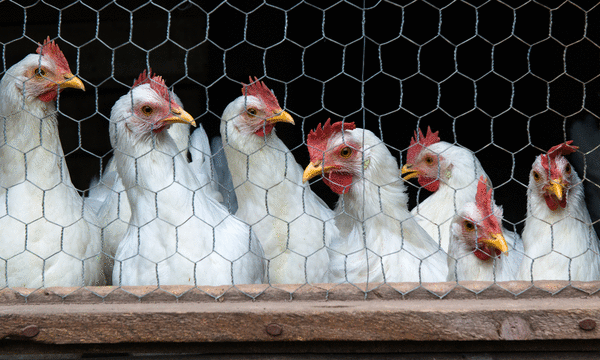
Every fall, Americans hear the familiar reminder: Get your flu shot. It’s sound advice. But as bird flu continues to spread among animals, there’s another preventive step we can all take: going vegan.
Highly pathogenic avian influenza, or H5N1, has spread through poultry operations, dairy herds and wildlife populations. And while health officials continue to monitor the threat to humans, countless animals are already paying the price.
Animal factories make matters worse. Chickens and turkeys raised for food are packed by the thousands into filthy sheds, where disease can spread rapidly. When bird flu is detected, the response often isn’t to rethink this dangerous system—it’s to kill entire flocks. Millions of birds have been suffocated, overheated or otherwise killed in mass “depopulation” efforts intended to stop outbreaks.
Then the industry breeds more animals, confines them in crowded facilities and starts the cycle all over again.
It’s a remarkably shortsighted approach. We worry about outbreaks, kill enormous numbers of animals when disease strikes, disinfect the buildings—and then refill them with more animals. We focus on containing the latest crisis while perpetuating the conditions that help make the next one inevitable.
Cows have now been pulled into that cycle, too. H5N1 has spread among them, providing another reminder that a virus called “bird flu” doesn’t necessarily stay with birds. Viruses don’t care about the labels humans put on other species—or the artificial boundaries between a chicken shed, a dairy operation and the world beyond them.
We can’t know what H5N1 will do next. But waiting until a virus becomes an even greater threat to us is hardly a sensible prevention strategy. We can keep responding to outbreaks after they occur, or we can address one of the conditions that helps diseases spread: raising enormous numbers of animals for food.
And those animals aren’t simply potential hosts for viruses. Chickens form friendships, recognize one another and communicate with their chicks before they hatch. Cows develop close bonds and nurture their calves. Each is a thinking, feeling individual who wants to live—and none deserves to suffer on a factory farm or be killed because disease has swept through one.
For them, bird flu isn’t a hypothetical future threat. Animals have already suffered and died from the virus, while countless others have been killed simply because they lived in facilities where it was detected.
Going vegan won’t eliminate every infectious disease. But by choosing cruelty-free foods instead of meat, eggs and dairy, each of us can help reduce demand for products from industries that crowd, exploit and kill animals by the millions. Instead of asking only how we can contain the next outbreak, we should also ask why we keep supporting a system that leaves so many animals vulnerable to one.
Vaccines are an important tool for protecting human health. But prevention shouldn’t begin and end with a needle.
This flu season, roll up your sleeve. Then pick up your fork. Going vegan gives animals—and all of us—a better shot at a healthier future.
____
Scott Miller is a staff writer for the PETA Foundation, 501 Front St., Norfolk, VA 23510; www.PETA.org.
_____
©2026 Tribune Content Agency, LLC.
















































Comments