Editorial: State police powers don't eclipse the Bill of Rights
Published in Op Eds
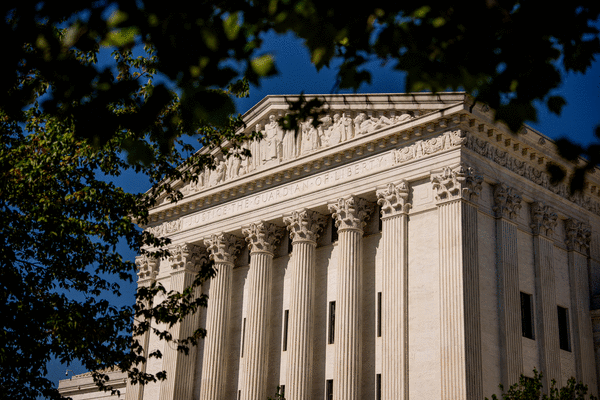
The midterm elections have largely overshadowed the U.S. Supreme Court’s most recent term, which began this month. Last week, the justices missed a prime opportunity to invigorate the Fifth Amendment’s taking clause.
The Bill of Rights prohibits governments from taking private property “for public use without just compensation.” Yet some lower courts have carved out a loophole for this protection when it comes to actions taken by law enforcement officers carrying out their duties. Yet no such language exists in the text of the Fifth Amendment.
The absurdity of the exception is embodied in recent cases involving Amy Hadley and Carlos Pena.
Hadley’s Indiana residence was damaged in 2022 after police fired more than two dozen tear gas canisters into her domicile to draw out a criminal suspect they mistakenly thought had entered the home. They later smashed windows and tore out walls in search of the fugitive. It turned out the suspect had never been there. Hadley tallied the damage at $16,000.
Pena experienced a similar horror. He owned a printing shop in Southern California that police destroyed in 2022 when they sought to flush out a suspect who had broken into the business. The fugitive eventually escaped, and the damage caused during the confrontation amounted to $60,000.
In each case, however, the authorities refused to compensate the property owners. Both Hadley and Pena sued but were rebuffed in federal court. The 7th U.S. Circuit Court of Appeals held in Hadley’s case, Reason magazine reports, that the exercise of legitimate police power is not subject to the takings clause. The 9th Circuit ruled in Pena’s case that the police were not liable because their actions were “necessary.”
Rather than step in, the high court this month turned away both appeals. Yet an alliance of the liberal Sonia Sotomayor and conservative Neil Gorsuch expressed skepticism about giving the police a blanket exemption to the Fifth Amendment.
“It is still an ‘open question’ whether these or any other approaches are consistent with this court’s precedents,” Justice Sotomayor noted in a statement joined by Justice Gorsuch. “Few of these decisions likewise explain the source of any such police-power exception to the takings clause. ... Such questions thus continue to ‘benefit from further percolation’ in the lower courts before this court chooses to intervene.”
She went on to say, “I again encourage courts considering this issue to take care that due deference to state police powers does not eclipse constitutional rights.”
This is a clear indication that some justices are seeking a more appropriate “test case” involving law enforcement actions and the takings clause. The sooner the court finds one, the sooner justice can be served.
_____
©2026 Las Vegas Review-Journal. Visit reviewjournal.com.. Distributed by Tribune Content Agency, LLC.















































Comments