Editorial: This consumer watchdog should be a normal agency
Published in Op Eds
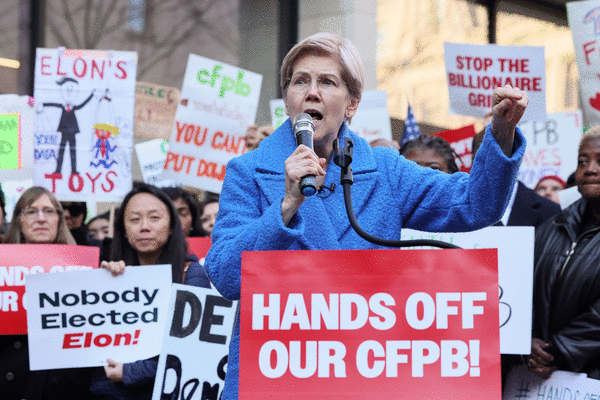
Most Americans are ill-equipped to understand the dizzying array of financial products they encounter. Many struggle to contend with payday lenders, credit reports or novel payment apps. A growing share is falling behind on their debt. Meanwhile, a record $16 billion was lost to fraud last year. If only there was a federal agency empowered to protect consumers from predatory financial actors.
As it happens, the Consumer Financial Protection Bureau was established in 2011 to do precisely that. Unfortunately, the CFPB has been whipsawed by politics from the start. A new bill, introduced in the House last month, may finally put the bureau on a firmer and more durable footing — to the great benefit of consumers.
Over almost a decade and a half, the CFPB has returned more than $20 billion to some 200 million Americans, levied more than $5 billion in penalties on lawbreakers, required clearer disclosures on mortgages and overdraft fees, and helped consumers get timely responses to millions of complaints. Few federal agencies can boast of a more effective track record.
Yet the bureau has long been a partisan weather vane. Democratic administrations have boosted the agency’s staff and interpreted its mandate expansively, at times overreaching. Republicans, objecting to the CFPB’s unorthodox design and aggressive enforcement, have sought to impede it at every turn. The current White House has tried to defund the bureau altogether. (That effort has been blocked in court.)
Here’s hoping the new bill can end this partisan cycle. Known as the Consumer Financial Protection Accountability and Reform Act, it would address Republicans’ chief complaint about the CFPB — that it was funded and supervised by the Federal Reserve — and bring it back under normal congressional appropriations and oversight. That makes sense: An effective and focused agency should be able to win funding support from both parties.
Next, the bill would create a dedicated inspector general, which would improve transparency and accountability, and empower the Office of Management and Budget to periodically review major rules to ensure they work in practice and justify their costs. Such changes ought to cut down on busywork and excessive burdens on businesses while discouraging politicized enforcement.
That said, the proposal is also larded with unnecessary constraints and carve-outs. For example, small-dollar credit products, often among the most abusive, don’t deserve a safe harbor. A drastic reduction of the maximum penalty for violations that are knowingly committed seems unhelpful. And surely threatening consumers with perjury charges if their complaints contain inaccuracies is a bit heavy-handed.
If both parties negotiate in good faith, a compromise bill should be eminently achievable. The goal should be to confer long-term legitimacy on the agency and impose reasonable restraints while also granting it the resources and leeway needed to do the job Congress created it to do. After all, both parties should see the need for a watchdog that responds to complaints and protects consumers from financial misconduct, especially as markets and technology rapidly evolve.
In time, the CFPB should become less of a political lightning rod and more of a humdrum federal agency, doing an important job well. The American consumer would only benefit.
_____
The Editorial Board publishes the views of the editors across a range of national and global affairs.
_____
©2026 Bloomberg L.P. Visit bloomberg.com/opinion. Distributed by Tribune Content Agency, LLC.
















































Comments