Commentary: Donald Trump's fight with Volodymyr Zelenskyy reveals a deeper frustration
Published in Op Eds
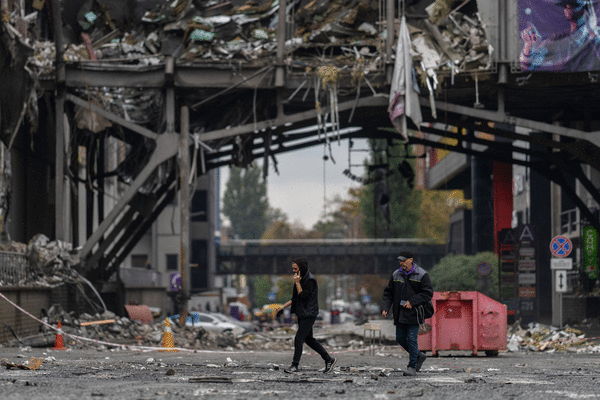
The last 10 days have arguably been one of the toughest periods of Ukrainian President Volodymyr Zelenskyy’s tenure since the war with Russia commenced more than four years ago. Ukrainian cities are getting pummeled daily with Russian missiles. Ukraine’s stock of missile interceptors is running dangerously low. And Ukraine’s political leadership is once again in a rhetorical knife fight with President Donald Trump, whose policy decisions of late have caused a mix of anger and confusion in Kyiv and Europe.
Poor relations between Zelenskyy and Trump are nothing new. Recall the infamous shouting match in the Oval Office, when Trump and Vice President JD Vance scolded the Ukrainian president for being ungrateful for the support the United States provided over the years. But the last week has a different feel. The Trump administration has made a number of moves that many foreign policy observers and even some Republican lawmakers have labeled pro-Russia. On Oct. 9, Trump unveiled a deal with Russian President Vladimir Putin that would immediately bring nearly 3 million barrels of Russian diesel onto global markets. Days later, access to Starlink, which helps the Ukrainian military shoot down Russian ballistic missiles, was blocked. And last Friday, Trump waived additional sanctions on the Russian economy, explaining that he didn’t want to jeopardize peace negotiations.
At first blush, it sure looks like Trump is single-handedly turning the United States into Putin’s ally. Democratic lawmakers are beside themselves and have already introduced legislation to block Trump’s diesel deal. Washington’s European allies are wondering whether U.S. pressure on Ukraine is a harbinger of things to come, up to an outright abandonment of the NATO alliance.
However, most of the explanations for why Trump is doing what he’s doing are too sinister. While it’s abundantly clear by now that Trump holds some affinity for Putin, that’s altogether different from saying that Trump wants Putin to colonize Ukraine. The likelier driver for Trump’s latest war of words with Zelenskyy is frustration — that is, frustration that the war he promised would be solved in 24 hours is instead dragging on toward its fifth anniversary. Rightly or wrongly, he blames Zelenskyy more than he blames Putin for this sad state of affairs and believes that pressuring the Ukrainian president to settle is more effective than pressuring the dictator sitting in a bunker somewhere in the Kremlin. He’s likely to be disappointed either way.
From the moment Trump entered the Oval Office in January 2025, he elevated ending the war in Ukraine as a principal foreign policy objective. The immediate goal was to establish a ceasefire between Moscow and Kyiv, which would freeze the front line and afford both sides the time needed to hash out the thorny details of a peace settlement— what security assurances to offer Ukraine, how fast sanctions on the Russian economy would be removed and how much of Ukraine’s Donbas region would be handed over to Moscow. Trump plunged face-first into the effort. Even Zelenskyy’s dressing-down in the Oval Office could be seen as a tactic to push the Ukrainians into cooperating with the U.S.-facilitated peace process.
Unfortunately, the Trump administration’s efforts to date have hit a wall so many times that Trump is starting to look like Charlie Brown with the football — and Zelenskyy and Putin are taking turns playing the role of Lucy. Through it all, Trump has oscillated between calling Zelenskyy a dictator, sanctioning Russian oil companies, assisting the Ukrainian military’s deep strike campaign against Russian infrastructure and threatening to cut off intelligence support to Kyiv. Through it all, he comes out each time scorned, angry and oblivious to the notion that it’s Zelenskyy and Putin, not Trump, who will ultimately determine how long the war will go on.
The examples are almost too long to recount. In March 2025, after multiple rounds of talks with Ukrainian and Russian officials, the Trump administration announced that both sides would stop targeting each other in the Black Sea. That so-called truce broke down in a few days after the Russians insisted that no such deal could come into force until Europe lifted restrictions on a key Russian state bank. The Europeans rejected Moscow’s demand, and the ceasefire withered away as fast as the Chicago Cubs’ World Series aspirations.
Fast-forward to November 2025. Trump, again, thought he was on the cusp of a diplomatic victory. By the White House’s own interpretation, Ukraine and Russia agreed on a peace outline that would finally end the war for good. According to the peace draft, Ukraine would give up the Donbas, NATO would offer Kyiv security guarantees against another Russian invasion and sanctions against Moscow would be lifted. Yet the combatants had other ideas. Ukraine had major issues with the draft’s provisions over territory and met with U.S. officials to modify the language. When the Russians saw the new draft, they walked away.
The same old story played out this month. Out of the blue, Trump proclaimed that Zelenskyy and Putin had signed an energy ceasefire: Ukraine would stop striking Russia’s refineries, and Russia would do the same. But neither country knew what Trump was talking about. When asked about the ceasefire, Zelenskyy said he first learned about it through the media. The Kremlin was characteristically dismissive and continued to send bombs into whatever Ukrainian gas facilities were still working. Kyiv eventually lost patience and resumed its own attacks, bringing Trump’s blood pressure to a boiling point.
In his desire to cement a peace deal, Trump has tried pretty much everything. He’s threatened Ukraine with U.S. military and intelligence restrictions. At times he has bad-mouthed Putin as someone who doesn’t want a peace deal. He has invested political capital into a peace process. None of it has worked.
It turns out you can’t will a peace deal into existence.
____
Daniel DePetris is a fellow at Defense Priorities and a foreign affairs columnist for the Tribune.
___
©2026 Chicago Tribune. Visit at chicagotribune.com. Distributed by Tribune Content Agency, LLC.

















































Comments