Andreas Kluth: The US-Iran war is making world hunger much worse
Published in Op Eds
Step away from the minute-by-minute news cycle for a moment and consider what two of the five permanent members of the United Nations Security Council have wreaked: Russia and the United States, with their illegal wars against Ukraine and Iran, share much of the blame for reversing a whole generation’s progress in the fight against hunger.
According to the new Global Hunger Index, released last week just before World Food Day, the combined scourges of undernourishment, child stunting and child wasting — all symptoms of relative starvation — have become worse, halting a two-decade trend of improvement.
The numbers in this year’s index reflect hunger conditions in 122 countries during the years 2021-2025. But as the report’s experts make clear, the war that President Donald Trump launched against Iran in 2026 will exacerbate the deterioration, condemning tens or hundreds of millions to hunger in the years to come, in addition to the estimated 645 million who were “undernourished” in 2025.
The spread of hunger of course has many causes in these times of “polycrisis,” ranging from factors beyond human control, including weather patterns such as El Nino, to disruptions in which we humans had an unhelpful hand, such as climate change.
The crucial addition to those problems, though, is the increase in wars. The Uppsala Conflict Data Program, which collects such statistics, counted 65 state-based armed conflicts in 2025, the most since World War II.
Wars are deadly in many ways, but one of them is keeping food away from civilians. That’s true from Sudan to the Democratic Republic of Congo and the Gaza Strip. Last year, for the first time since the UN developed a ranking method for hunger crises, catastrophic famine was declared in two places at once, Sudan and Gaza.
But if all wars starve, some starve a lot further afield from their battlefields than others. Russia’s war of aggression against Ukraine is an example. Before Moscow’s invasion, those two countries accounted for roughly 30% of global wheat exports. When those shipments, largely through the Black Sea, were disrupted in 2022, food prices spiked and the people worst affected were in poor countries in Africa and Asia.
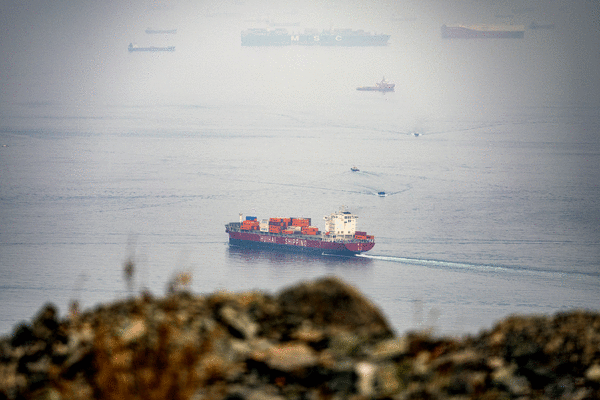
This year’s U.S.-Israeli war against Iran is a similar shock, which will show up in the next hunger index. Consumers in America, Europe and other rich countries feel the war’s effects mainly at the pump, through higher fuel prices caused by oil being throttled on its way through the Strait of Hormuz. People in poor countries also suffer from more expensive energy.
But they face a bigger problem. Before the war, about 30% of the world’s fertilizer exports traveled through the Strait of Hormuz — everything from urea and ammonia to phosphates and sulfur. Those flows stopped for a while, and are now returning to trickles. The World Bank projects the price of urea, for instance, to spike by 60% this year, before stabilizing only in 2027 (provided the war doesn’t flare up again).
Farmers in poor countries are in effect priced out. In that way the shortages of fertilizer caused by the war directly cause starvation and child stunting and wasting elsewhere. (Stunting refers to children being too short for their age, wasting to being underweight.) These shocks typically persist long after hostilities end, because agricultural markets take time to recover, and farmers have already missed entire planting and harvesting seasons.
Even a rise in food prices of 1% correlates with higher mortality of children under the age of five. Households that struggle to afford food tend to cut back on the most nutritious meals first, with lifelong effects for the children. (For example, Indonesians who were children of poor parents during the Asian financial crisis of 1997-98 are on average shorter and more obese than those in other age cohorts.) The Iran war of 2026 will stunt many Africans, Asians others for decades to come.
The overall scale of suffering is in fact impossible to quantify. Moses Chrispus Okello, an Ethiopia-based researcher at the Institute for Security Studies, points out that the new food crisis caused by the Iran war hits countries in Africa all the harder because they have no money but a lot of debt and refugees, and are already reeling under droughts caused by climate change.
Hunger caused by a distant war also tends to ignite new conflicts, which then lead to even more instability and starvation. Abdoulaye Mohamadou at the Permanent Inter-State Committee for Drought Control in the Sahel argues that the relationship between hunger and war in that African region is “circular.” War restricts access to agricultural land and pastoral mobility and also disrupts markets, supply chains, humanitarian access and trade. The absence of fertilizer and the arrival of famine then worsen war.
And how is the United States under Trump responding to this hunger crisis? Certainly not by attempting to slow climate change — Trump pulled the U.S. out of the Paris Agreement that’s meant to limit global warming.
Nor by sending humanitarian aid. The administration dismantled what used to be the U.S. Agency for International Development. Those cuts demonstrably led, among other effects, to spikes in violence and conflict in Africa. America, along with other countries, has also slashed funding to the UN’s World Food Program, and ordered the WFP to stop work on specific projects it had financed, from Yemen to Sudan and Haiti. Such defunding will result in additional millions of deaths, especially of young children.
So much for the second of the UN’s 17 so-called sustainable development goals, which was to achieve “zero hunger” by 2030. Trump, who disdains the UN, will no doubt blame this failure on that institution rather than his own policies, or the war of choice he launched in the Middle East.
____
This column reflects the personal views of the author and does not necessarily reflect the opinion of the editorial board or Bloomberg LP and its owners.
Andreas Kluth is a Bloomberg Opinion columnist covering U.S. diplomacy, national security and geopolitics. Previously, he was editor-in-chief of Handelsblatt Global and a writer for the Economist.
©2026 Bloomberg L.P. Visit bloomberg.com/opinion. Distributed by Tribune Content Agency, LLC.
















































Comments