Commentary: The time for keeping beluga whales captive for our entertainment has passed
Published in Op Eds
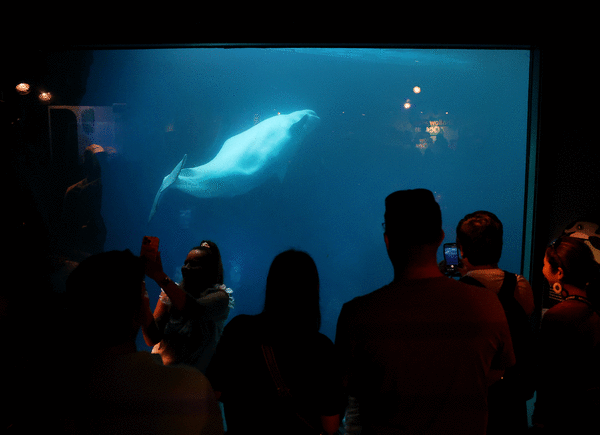
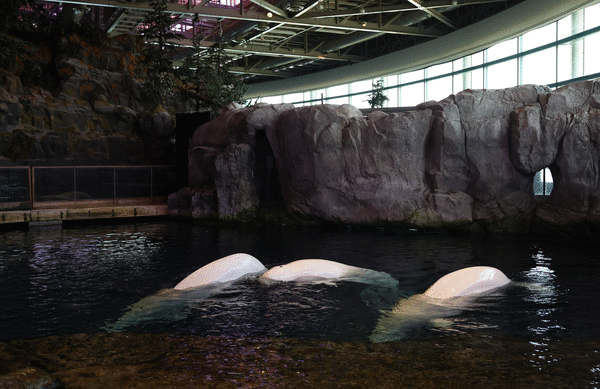
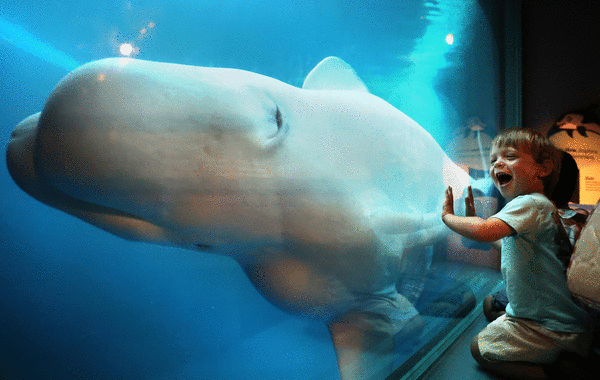
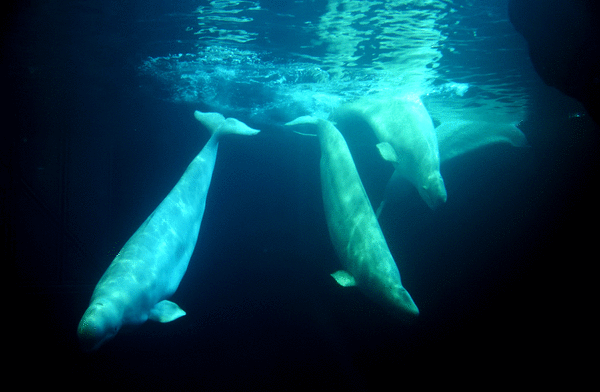
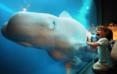
The tragic deaths of four beluga whales at Chicago's Shedd Aquarium, three of which were transferred as rescues from Canada’s Marineland and one that was a longtime resident, call attention to the injustice and suffering these intelligent, social animals face when taken from their natural homes and confined to small aquarium spaces.
Beluga whales deserve better, and the time for imprisoning them for our entertainment or “education” has passed.
The Shedd’s history with belugas goes back to 1991, when the aquarium built its Oceanarium and introduced whales, as well as dolphins, captured from the wild.
The capture of belugas involves motorboats circling them in shallow waters where they hunt and throwing large nets over them. This is done to the dismay of experts and activists who have fought mightily to stop the efforts, arguing that imprisoning these marine mammals is not about animal welfare, education or advancement of science but rather a means of increasing paying visitors to grow a budget, staff and profits.
For the Shedd, the plan worked — at first. The public couldn’t wait to get a look at these unusual whales, and attendance almost instantly doubled.
This encouraged the Shedd to expand its beluga pod. In 1992, the aquarium announced its intention to capture four more whales, winning a court battle in which animal rights groups tried in vain to prevent the Shedd from adding to this carnival attraction. The four whales were taken from the northern Canadian waters of Hudson Bay and dumped into their small tank. Two weeks later, two of them died within minutes of each other after being given an anti-parasite drug.
Since those early days, the Shedd continued to expand and profit from its beluga and dolphin displays.
Zoos and aquariums often rely on the excuse that they are saving species from extinction. Although that might be true in some cases, it does not apply to belugas worldwide. They are considered endangered in Alaska’s Cook Inlet, but in general, their existence is far from threatened across the Arctic. The Red List of Endangered Species compiled by the International Union for Conservation of Nature, the most comprehensive source on global extinction, lists belugas as being of “least concern” and claims there are “likely more than 200,000.”
There is no legitimate reason for us to deprive belugas of the right to “flourish.” That’s the word University of Chicago professor Martha C. Nussbaum used in her book, “Justice for Animals: A Collective Responsibility.” Board members and staff at the Shedd should read Nussbaum’s proposal for giving the creatures of the earth and water a chance to flourish, enjoy good health, use their senses and imagination, play and have pleasure, and have relationships with each other and other species.
That is only possible in the vast open ocean, where belugas, called the “Canaries of the Sea,” can live out their long lives, typically 60 years, in their complex social pods. Compare captive belugas forced to swim in circles in confined spaces to wild belugas that have annual open-water migratory travels of thousands of miles. In hunting for food such as Arctic cod, they can dive up to 3,000 feet. The Shedd tank is around 30 feet deep, and the whales do not hunt but are fed just as we feed death row prisoners.
That analogy is not much of an exaggeration given the tragedies at the Shedd and other aquariums, including the many captive-born infants that have died. Even the Georgia Aquarium, the largest in the U.S. and a global leader in the world of aquariums, has lost at least six belugas since it opened its waters to these white whales.
It is also worth noting that a 2019 Canadian law prohibits breeding whales for nonresearch purposes, but there are no federal protections here. The U.S. aquariums that have accepted the Canadian belugas have not agreed to abandon breeding operations.
That’s why the transfers are not heroic or humane, according to Lori Marino, a neuroscientist specializing in animal behavior and founder of The Whale Sanctuary Project. She claims that transferring belugas from one captive environment to another so they can possibly be bred is not a heroic or humane act to be celebrated. In fact, the collapse of Canada’s Marineland should be a turning point that ends the cycle of breeding and captivity.
There is no doubt marine mammals are challenged today by climate change, pollution and contaminants; overfishing by humans; and noise disturbance from ships. If the Shedd wants to save whales and dolphins, it should join international efforts to bring attention to their plight and enlist Illinois’ congressional delegation to build legislative and political support for stronger efforts to protect these animals.
In the meantime, the Shedd should not accept any more belugas and should commit to ending its breeding efforts. It should also phase out its acquisition and breeding of dolphins, working toward the goal of giving all marine mammals the freedom to flourish in their native waters.
____
Bob Kustra was an Illinois lieutenant governor, state legislator and president of Boise State University; he now hosts “Reader’s Corner” on Boise State Public Radio. Jenny Kustra-Quinn, his daughter, is a writer and editor based in the Chicago area and president of Kustra-Quinn Communications, a public relations and communications consulting firm.
___
©2026 Chicago Tribune. Visit at chicagotribune.com. Distributed by Tribune Content Agency, LLC.


















































Comments