Commentary: Your emergency go bag is only part of disaster preparedness
Published in Op Eds
We’ve just come through the hottest summer ever recorded in the contiguous United States, with August setting a record of its own. And cooler autumn days don’t mean we can stop worrying about extreme weather. El Niño has already surged into record territory months before its expected peak, supercharging extreme weather and raising the threat of devastating consequences across much of the country this fall and winter.
Now is a good time to prepare. Keep flashlights, water, medications and other essentials handy, and know where you’ll go if you need to leave in a hurry. And for those of us who share our homes with animals, make sure they’re part of the plan.
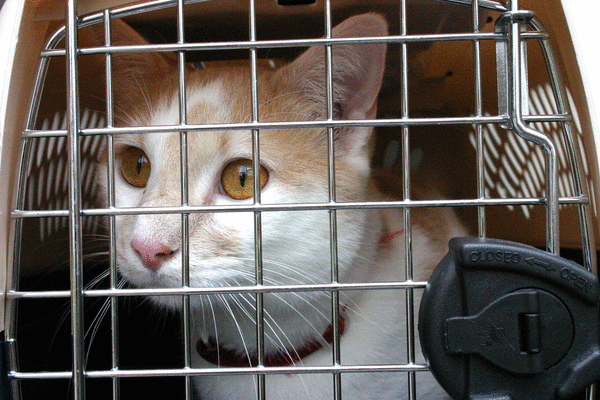
In a crisis, you may not have time to search for a terrified cat under the bed or coax a panicked dog out of a corner. Leave carriers out so the animals become familiar with them, and practice gathering everyone while things are calm. Pack a go bag with at least a week’s worth of food, water, medications and medical records. Check that identification tags are current, and keep recent photos of yourself with your animals in case you become separated. If you have to evacuate, take your animals with you.
Preparing for the next natural disaster is only part of the picture. We can also reduce our contribution to the climate catastrophe through something as ordinary as what we put on our plates.
Raising animals for food takes a tremendous toll on the planet. The meat industry clears forests that could absorb carbon as it makes room for grazing land and crops grown to feed farmed animals. It consumes enormous amounts of land, water and grain, then uses still more energy to slaughter animals and process, refrigerate and transport their flesh. Producing one calorie of animal protein requires about 11 times as much fossil fuel as producing one calorie of plant protein. Cows and other ruminants release methane as they digest food, and the enormous quantities of manure generated by animal agriculture add still more greenhouse gases to the atmosphere.
No one can stop a hurricane or a heat wave by ordering a veggie burger, but even small changes add up. Research has found that meat-eaters are responsible for nearly twice the daily dietary greenhouse-gas emissions of vegetarians and about two and a half times those of vegans.
The environmental cost is only part of the story. Cows, pigs, chickens, turkeys, fish and other animals used for food can spend their days crowded into sheds or cages, separated from their families. They’re mutilated without pain relief and ultimately killed. Yet each one is an individual with a personality, preferences and a life that matters to them—just like the dogs and cats who share our homes. By eating vegan, each of us can spare nearly 200 animals every year.
Fortunately, some of the easiest changes are also the tastiest. Make a hearty vegan chili, pour oat milk into your coffee or try a delicious black bean burger at your favorite restaurant. With cooler fall days perfect for soups and stews, it’s an especially exciting time to give new foods a try.
So prepare for emergencies that may well lie ahead. Pack the go bag. Store water. Keep the carrier handy. Never leave an animal behind. But don’t stop there. Choosing vegan meals is one of the simplest ways to reduce our impact on a warming planet and spare animals from suffering. As we prepare for tomorrow’s emergencies, we can also help prevent a worse future today.
_____
Melissa Rae Sanger is a licensed veterinary technician and a senior writer for the PETA Foundation, 501 Front St., Norfolk, VA 23510; www.PETA.org.
_____
©2026 Tribune Content Agency, LLC.


















































Comments