Editorial: Candidates shouldn't avoid face-to-face debates
Published in Op Eds
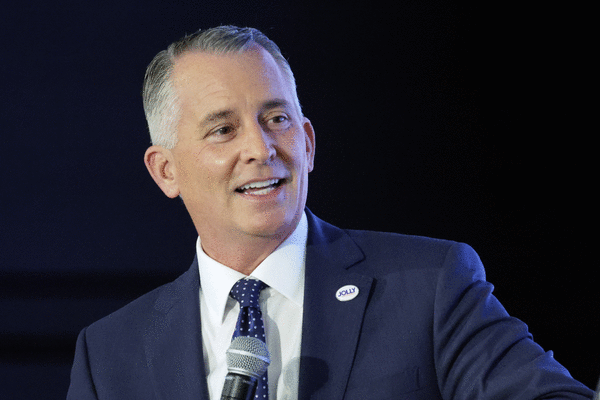
“You can’t debate a liar.” That’s the rationale given by Democratic gubernatorial nominee David Jolly, who announced earlier this week that he would not participate in a debate with Byron Donalds, his GOP counterpart.
We vehemently disagree. In fact, face-to-face debate is often one of the best ways to challenge a rival on their beliefs, their values and the information they rely on to support their positions. More importantly, debates — or even less-confrontational interviews, such as the ones the Sentinel’s editorial board arranges — give voters a chance to see candidates side-by-side, evaluate their sincerity and make up their own minds about the candidates who would best represent their own values.
Unfortunately, a growing number of candidates are shying away from opportunities to appear in forums or other events that put them in proximity with their opponents. Many seem to be intimidated by the idea of a venue they can’t control. Others seem to be acting on the (bad) advice of consultants, who strive to convince their clients that they won’t be treated fairly.
In reality, most third-party groups that set up debates — including media outlets and civic organizations like local chambers of commerce or League of Women Voters chapters — go out of their way to ensure that candidates are treated fairly and given the opportunity to present their views. Ground rules are communicated clearly and moderators do their best to ensure that they are enforced. And in the most high-stakes situations — including the race to become Florida’s next governor — those rules are often open to negotiation, with a back-and-forth exchange that can include venue, the size (or absence) of an audience and ground rules for the questions themselves. Usually, neither candidate gets everything they want. But that’s OK: The most important thing is for voters to get what they need.
Jolly’s supporters defend his position by pointing out that he’d originally agreed to two debates, but insist that Donalds wanted ground rules that weren’t fair to both parties. Then, in media appearances last week, Jolly trotted out the “liar” line. It’s clear that his refusal was intended to cut off the chance to bargain for terms that he would consider more equitable.
We urge him to step back. That doesn’t mean agreeing to a setting that (in his view) gives Donalds an unfair advantage. It means engaging in honest negotiations, or accepting ground rules that might not seem perfectly favorable, but will still give voters information that goes beyond the slick, stage-managed personas that candidates present through TV and radio ads and campaign mail. Maybe those honest negotiations are still happening in private, but Jolly’s public message suggests they are not.
The bottom line is this: Once the elections are over, the winners of every election will have to confront the reality of public service, which will inevitably include situations that can’t be polished into campaign sound bites, and unavoidable decisions that will be guaranteed to upset somebody. Debates and other public appearances are often the only way voters have to judge how candidates might react when things get messy.
Yes, debates carry risks. Many Floridians still remember the 2010 faceoff between Rick Scott and Alex Sink, where GOP operatives pounced on Sink for reading a message sent by an aide in the closing moments of the event. A week later, Sink lost to Scott by a razor-thin margin.
But voters should not reward candidates who hide behind weak excuses when avoiding debates and other unscripted events. Instead, they should remember that the people they elect should be able to handle high-pressure situations and answer tough questions. In the end, voters are choosing people for important jobs that don’t come with polite moderators and audience applause cues.
In the face of a Category 5 hurricane or an unfolding political scandal, campaign flyers and 30-second TV ads are useless. And candidates who can’t take the heat of an hour-long debate raise serious questions about how they would handle the very real challenges that they would face if elected.
_____
©2026 Orlando Sentinel. Visit at orlandosentinel.com. Distributed by Tribune Content Agency, LLC.












































Comments